International headlines today paint a complicated picture: the United States is perceived at once as a source of concern and as a field for tactical manoeuvring. Front and centre are fears stemming from trade and tariff pressure, as well as risks of escalation in conflicts. At the same time, some countries and commentators speak as sharply as possible, while others prefer to act by revisiting rhetoric, maintaining diplomatic contacts, and using carefully calibrated pauses—aiming to reduce damage and preserve room to manoeuvre and exert influence. Attention is focused not only on official government offices, but also on political forces that are changing their tone toward Washington, using gestures of solidarity or negotiating formats rather than confrontation. This material is based on publications from www.facebook.com (Venezuela), www.poderyliderazgo.cl (Venezuela) and www.infobae.com (Venezuela).
Populism, Tariffs and Regional Risks in Latin America
In several Latin American outlets, Donald Trump and his policies are not just a topic of foreign news, but a prompt for discussion about populism, fear, economic vulnerability and the political cost of confrontation. In a Venezuelan commentary on Trump’s line toward Mexico and immigration, his rhetoric is described as an example of aggressive populism and political showmanship: the author highlights a contradiction—Trump himself comes from a family of immigrants, yet he is building a hardline anti-immigration agenda, especially aimed at Mexicans. In the original piece that the article cites, this is presented as a journalistic assessment rather than neutral reporting: original material. For Venezuelan readers, this perspective is particularly sensitive because the topic of migration, national dignity, and external pressure in the country is experienced through the country’s own experience of crisis and mass population exodus. The author sees in Trump’s harsh rhetoric an attempt to mobilize voters through fear and the image of an “enemy”. For the Venezuelan audience, it sounds like a familiar logic in the region: seeking an external adversary often helps those in power consolidate at home.
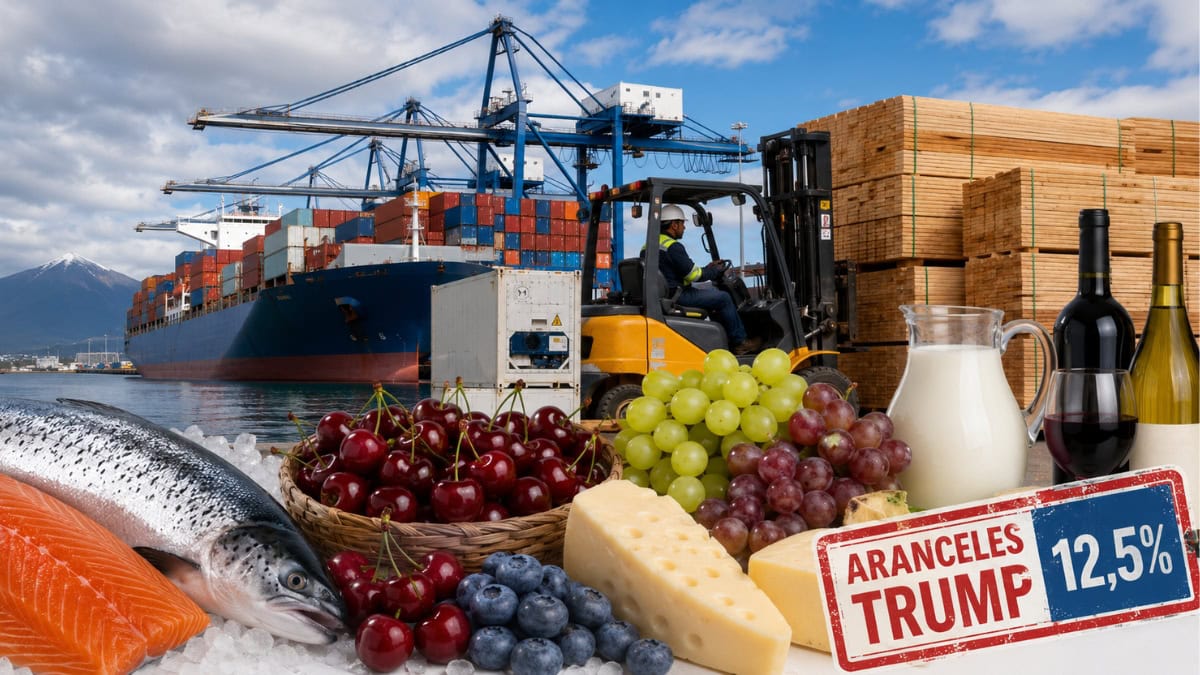
A similar theme, but already in economic terms, appears in a Chilean column about Trump’s tariffs published on PoderyLiderazgo. Here, the new tariff policy is viewed as a direct blow to Chile’s regional economy. The article refers to a 12.5% surcharge on salmon, fruits, wines, dairy products and timber—goods that are especially important for jobs, logistics and small business in the regions. Under pressure, the material notes, are O’Higgins, Maule, Ñuble, Biobío, La Araucanía, Los Lagos, Aysén and Magallanes—territories where exports are closely tied to agriculture, the forestry sector and aquaculture. The Chilean Minister of Finance, Jorge Quihroc, acknowledges that this is a “revés” (a setback), and reminds readers of Chile’s commitment to free trade and multilateralism. Deputy head of the SEI, Paula Estévez, says the government is already negotiating the exclusion of sensitive goods from the tariff. Former Foreign Minister Hernaldo Muñoz, by contrast, sharply criticizes the government’s course, calling the tariff a “discriminatory blow” and urging that Chile not “kowtow” to the Trump administration. The article also emphasizes that the United States excluded copper and lithium, which are necessary for American industry, but left tariffs in place for labour-intensive sectors that provide jobs in the regions. For Chile, this is seen as unfair and as another reminder that, in global trade, strategic resources are often more important than the interests of workers in rural and forested areas.
In an Argentine storyline described by Infobae, the focus shifts away from Washington toward a conflict between Argentina and Brazil, triggered by harsh attacks by Javier Milei on Lula da Silva. The reaction of Argentina’s opposition is built not only around the diplomatic tone, but also around the threat to the economy and regional integration. Brazil is presented here as a “principal socio comercial” and an “actor estratégico” (a strategic actor). Milei’s opponents warn that an ideological conflict could put at risk “fuentes de trabajo, inversiones e intereses colectivos” (“sources of employment, investment and collective interests”). Kicillof puts it particularly bluntly: “No en nuestro nombre, Milei,” underlining that the president cannot speak on behalf of the whole country. Wado de Pedro calls Milei’s trip “hecho de enorme gravedad” (“an act of enormous gravity”) and reminds people that “un Presidente no puede poner sus diferencias ideológicas por encima de los intereses nacionales” (“a President cannot place his ideological differences above national interests”). Guillermo Michel provides a specific figure: 14% of Argentina’s exports go to Brazil. Gabriel Katopodis links the conflict to industry, stating that “el 80% de nuestra producción industrial se exporta a ese país” (“80% of our industrial production is exported to that country”). The text includes representatives from almost the entire anti-government spectrum—PJ, Frente Renovador, La Cámpora, Trotta, Solá, Stolbizer, Pichetto and even Marcela Pagano—and all of them agree that the president has crossed a permissible line. In Argentine, and more broadly South American, political culture, this is perceived as an issue of sovereignty and national dignity: the symbolic humiliation of a neighbour is interpreted as an удар (a blow) to one’s own country. For a Venezuelan perspective, this scene feels especially familiar: when foreign-policy showmanship is put above economics, the price is paid not by leaders, but by citizens, industry and jobs.
Taken together, these materials point to one common regional nerve: in Latin America, populist rhetoric, trade decisions and diplomatic conflicts quickly go beyond symbolic gestures and start affecting real incomes, exports and employment. In the Venezuelan commentary, Trump is fear and the search for an “other”; in the Chilean text, tariffs are a blow to “territorios productivos” (productive territories); in the Argentine piece, political confrontation that can harm trade and production. In all cases, the issue is not only foreign policy, but also how leaders’ decisions and words are reflected in people’s everyday lives across the region.