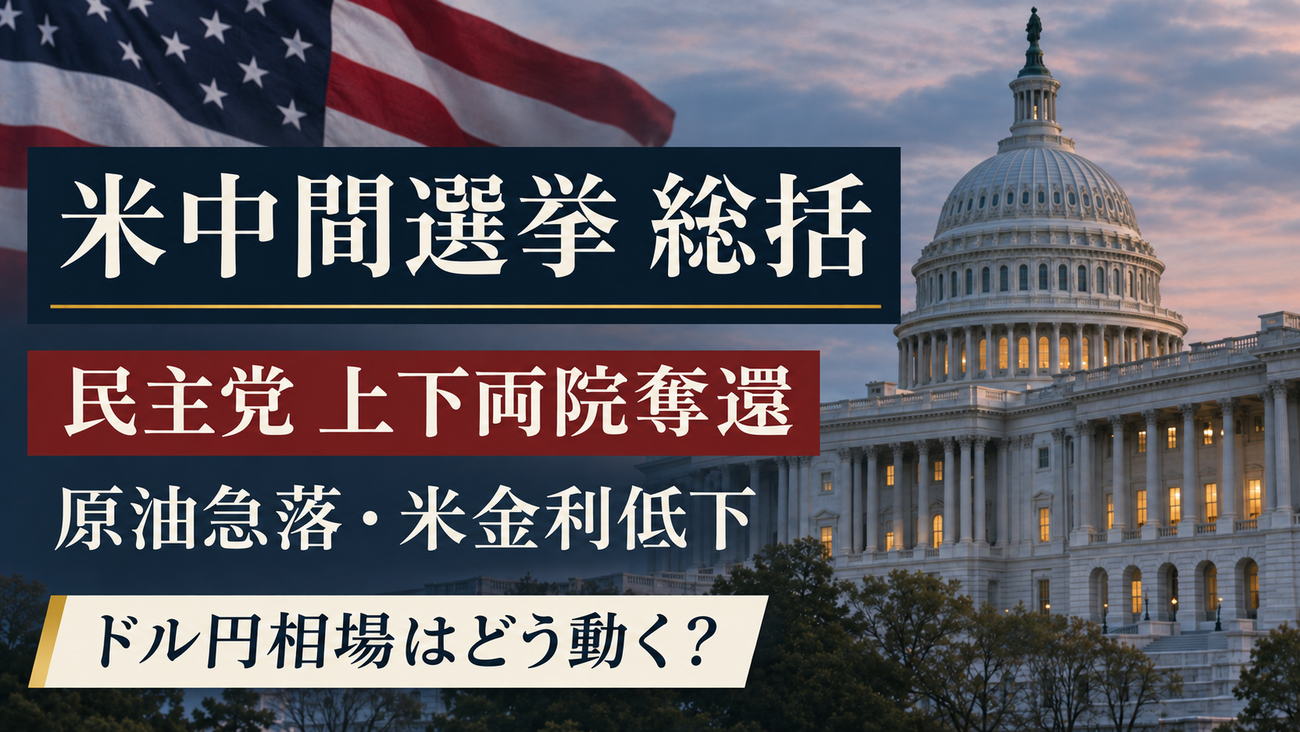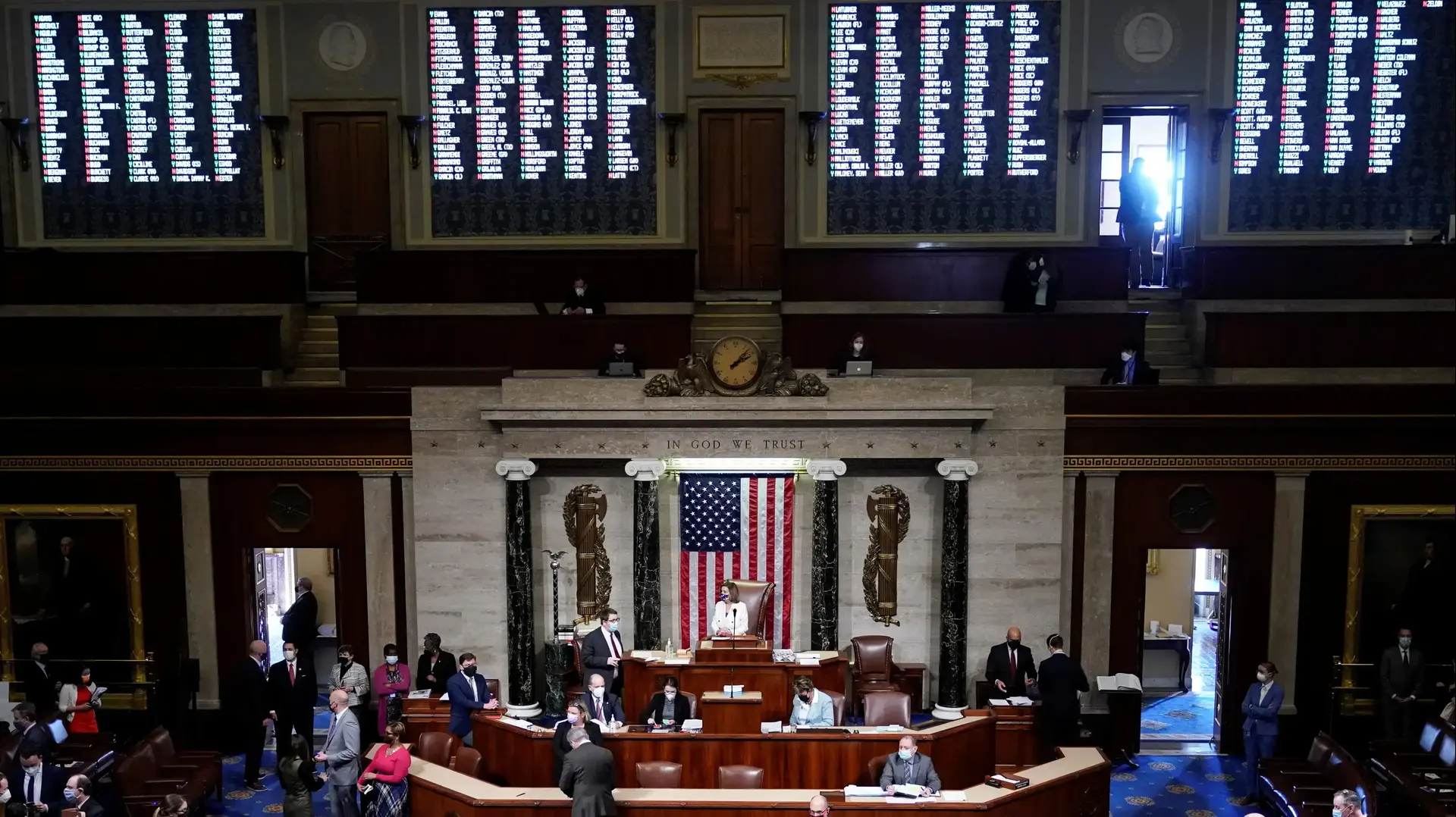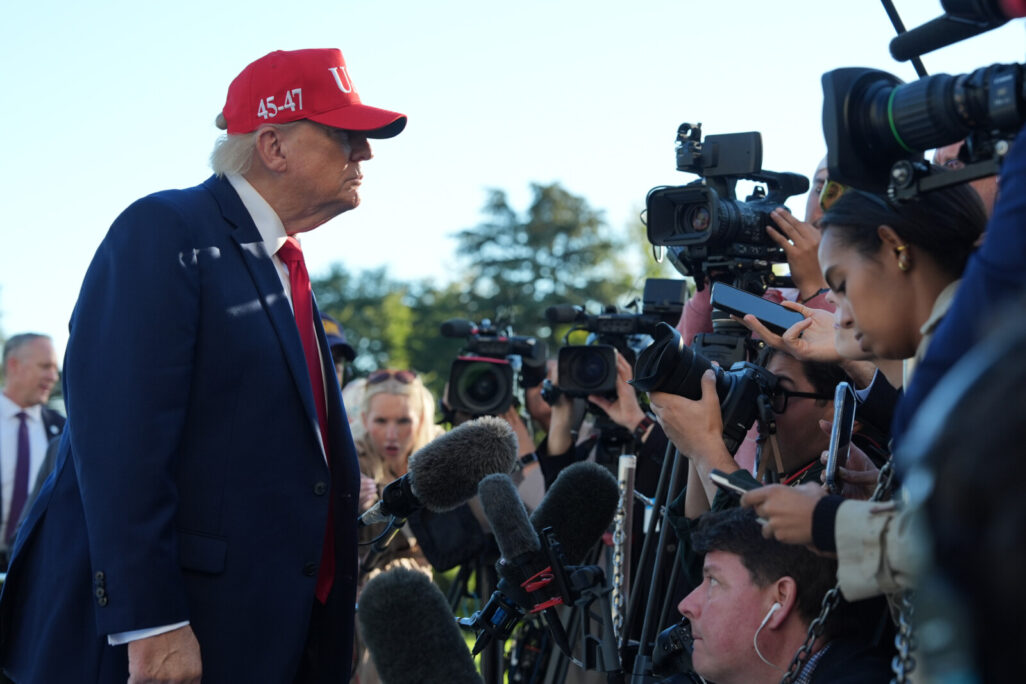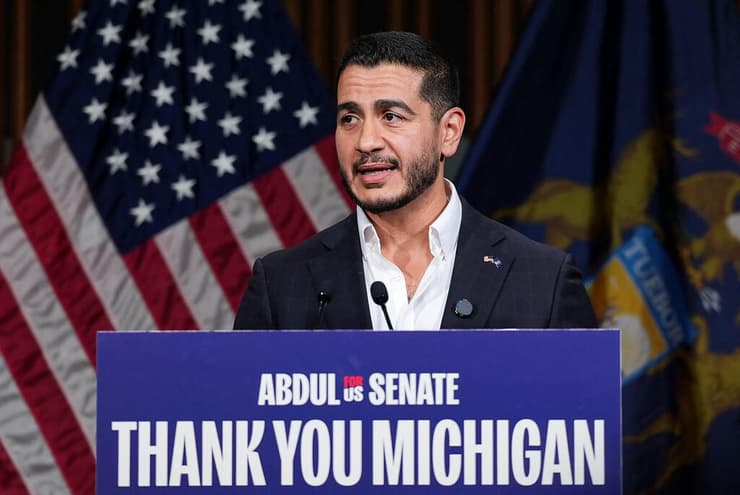
The main American story to prompt an immediate response in Ukraine, Japan and Israel was the outcome of the November 3, 2026 midterm elections, in which Democrats regained control of both chambers of Congress. But the same news brought very different threats into focus in each country. For Kyiv, the main concern is that the White House may face limits on its pressure on Ukraine—and the possibility that military support could be restored. For Tokyo, it is a sign that the Trump administration’s domestic weakness could make its foreign policy in Asia and the Middle East even more unpredictable. For Israel, it is a warning that relying on a Republican Washington no longer guarantees either steady assistance or political protection.
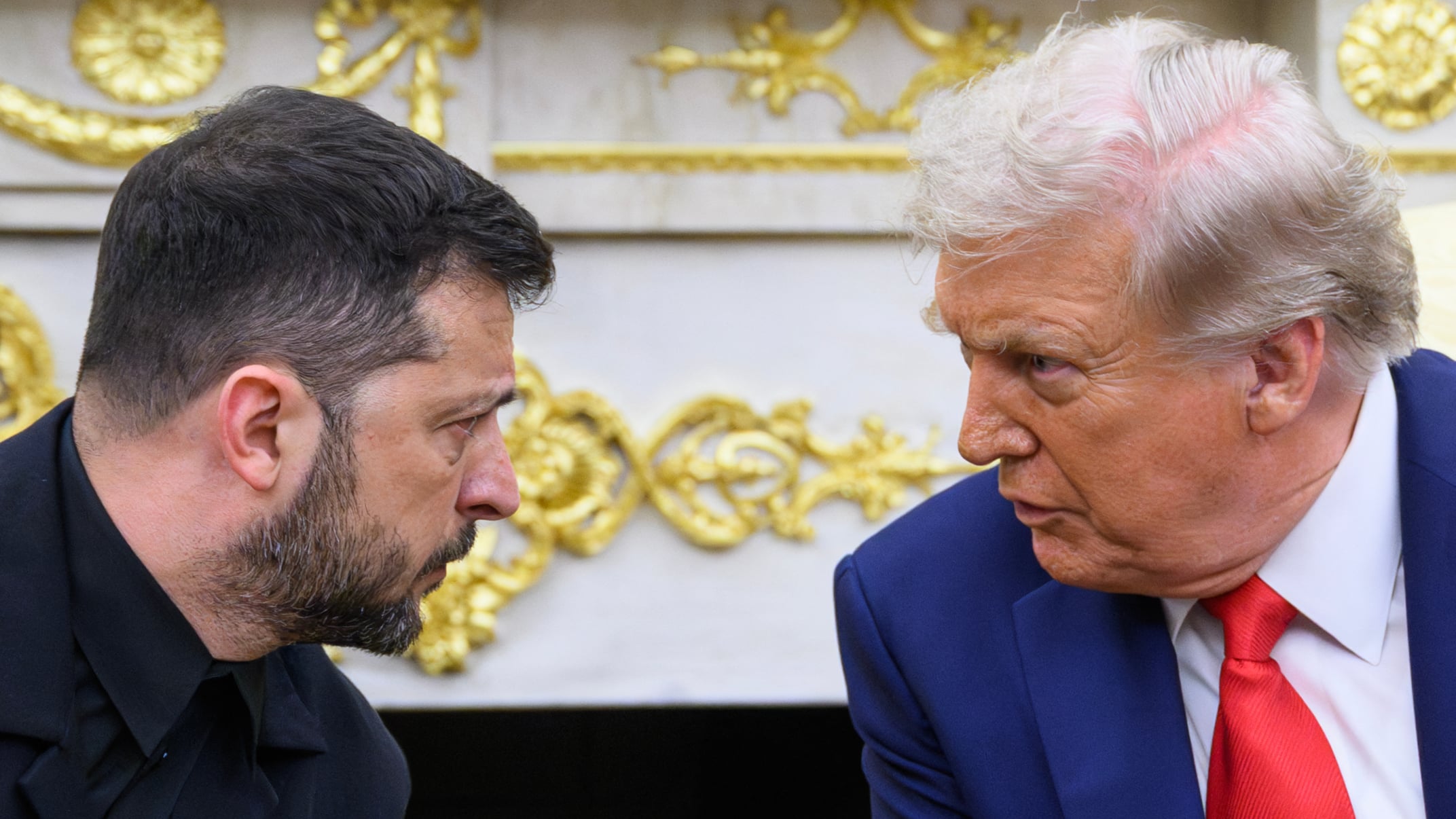
Ukraine’s response to the “blue turn” in Congress is cautiously optimistic, but free of illusions. An analysis by hromadske described the elections as a test of how far Congress could limit the White House’s freedom of action on mediation with Russia, sanctions and military aid. Former U.S. ambassador to Russia Michael McFaul stated Kyiv’s hope bluntly in an interview with Deutsche Welle: “American pressure on Zelensky will stop after these elections” [translated from Ukrainian]. He believes a Congress controlled by Democrats will make further concessions to Moscow politically extremely difficult and could pave the way for new sanctions and aid packages for Ukraine. (amp.dw.com)
However, the more typical response among Ukrainian experts is not triumphalism but a sober institutional assessment. Political scientist Oleksandr Kraiev of the Ukrainian Prism Foreign Policy Council warned on Ukrainian Radio that Trump would pay less attention to Ukraine after the elections, and that a change in the congressional majority would not automatically improve the situation. Mezha makes the same point: the new Congress matters to Kyiv, but the vote was not a mandate from American voters specifically to increase support for Ukraine. In Ukraine’s view, the main problem lies less with the legislature than with the executive branch: the president still has influence over intelligence, supplies, diplomacy and the pace of negotiations. (mezha.net)
This points to a particularly important feature of Ukraine’s perspective: Kyiv views American politics not through the familiar lens of “Democrats are pro-Ukraine, Republicans are against it,” but in terms of whether Washington’s checks and balances will return in practice. At a discussion hosted by the Democratic Initiatives Foundation, Oleksandr Khara, director of the Centre for Defence Strategies, called the election result an opportunity to partially constrain the president’s unilateral decisions. This is telling: for a country at war, what matters is not an abstract victory for one U.S. party, but a predictable American political process. (dif.org.ua)
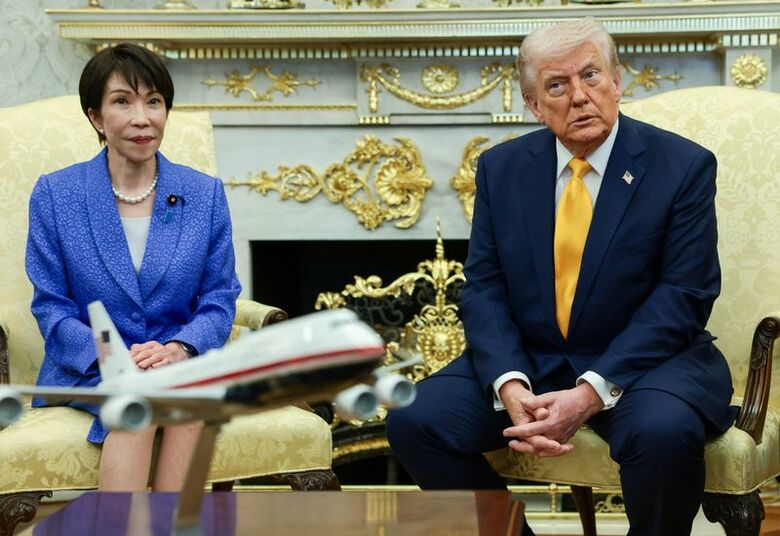
Japan’s debate is far less focused on Ukraine and far more on the cost of American instability to Japan’s economy and security. In a Japan Research Institute briefing, economist Tomohisa Ishikawa warned before the vote that a Democratic victory could deepen political divisions in the United States. Tokyo’s takeaway, he said, was that it needed both to keep the U.S. engaged in Japan’s security and to develop its own diplomatic strategy to ease tensions with its neighbors. (jri.co.jp)
After the elections, Japanese financial analysts have focused above all on the chain of “war with Iran — expensive energy — inflation — the yen exchange rate.” In a Gaitame.com Research Institute commentary, the Republicans’ defeat is attributed in part to public discontent over the rising cost of living and the military operation against Iran. For Japan’s markets, this has set opposing forces in motion, pushing the dollar lower while prompting yen sales. For Tokyo, an American war is no distant geopolitical abstraction: it quickly translates into fuel import costs, currency volatility and risks for Japanese companies. (gaitame.com)
Japanese observers also fear more than the economic fallout. A Newsweek Japan report, citing Japanese officials, describes concerns that a weakened Trump might try to create a foreign-policy “legacy” by seeking closer ties with China or North Korea. After the elections, these concerns became more concrete: TV Asahi reported that people close to the prime minister feared the domestic political deadlock in the U.S. could push Washington toward risky decisions over Iran. (newsweekjapan.jp)
Israel’s response, by contrast, sees the American elections as a matter of immediate national security. Two issues have converged: the war with Iran has become a political liability for Trump, while his announcement that regular U.S. military aid to Israel would end by the close of 2026 has turned that liability into doubt about the future of the alliance. A Walla opinion piece warned bluntly that the new Congress could usher in a “new, difficult and negative chapter” in U.S.-Israel relations. The author pointed to a growing number of Democrats prepared to publicly call for restrictions on arms aid and sanctions over Israeli policy in the Palestinian territories. (walla.co.il)
What Israeli media found particularly painful was not the scale of the aid that might be canceled, but its symbolic significance. Globes stresses that U.S. funds flow back into the American defense industry through orders from the Israeli military. This is therefore not one-way charity, but part of a broader military-industrial partnership. Yet the Israeli newspaper sees another message in Trump’s decision: the government in Jerusalem will have to deal with a Washington where support for Israel is increasingly seen as something less than an unconditional bipartisan consensus. (en.globes.co.il)
A Davar commentary offers a more measured conclusion: ending regular aid need not immediately harm Israel’s economy, and Trump may remain willing to provide emergency support. But, the publication argues, the main problem is not financial. Israel is losing its accustomed confidence that it can build relations with the U.S. around Netanyahu’s personal ties to Republicans and evangelical voters. Americanist Kobi Barda put it even more bluntly in Ynet: Israel is paying the price for deciding to “put all its eggs in one basket—the Republican and evangelical one” [translated from Hebrew]. (ynet.co.il)
The most unexpected common thread linking Kyiv, Tokyo and Jerusalem is that all three capitals now view the U.S. not as a source of guaranteed policy, but as a country whose domestic pressures can change its foreign policy faster than its international commitments. Ukrainians hope that political competition within the U.S. will stop the pressure on Kyiv. The Japanese fear it will lead to diplomatic improvisation and new market shocks. Israelis see the war against Iran and aid to Israel becoming part of America’s electoral debate.
That is why the current international response to America cannot be reduced to the question of whether “Trump has been weakened.” Something else matters more: U.S. allies and partners are beginning to operate on the assumption that American policy is shaped not only by treaties, strategy and leaders’ personal relationships, but also by the price of gasoline for American voters, the struggle between Congress and the White House, and growing public fatigue with foreign wars.