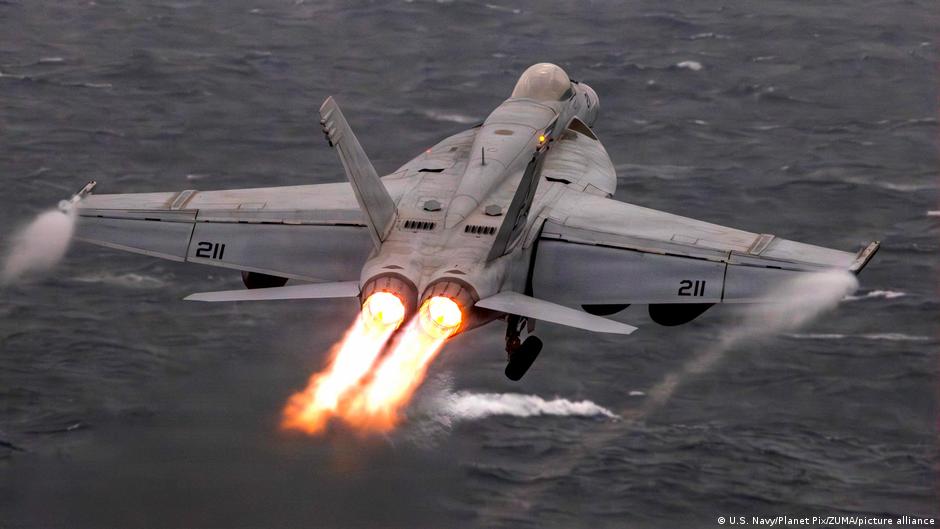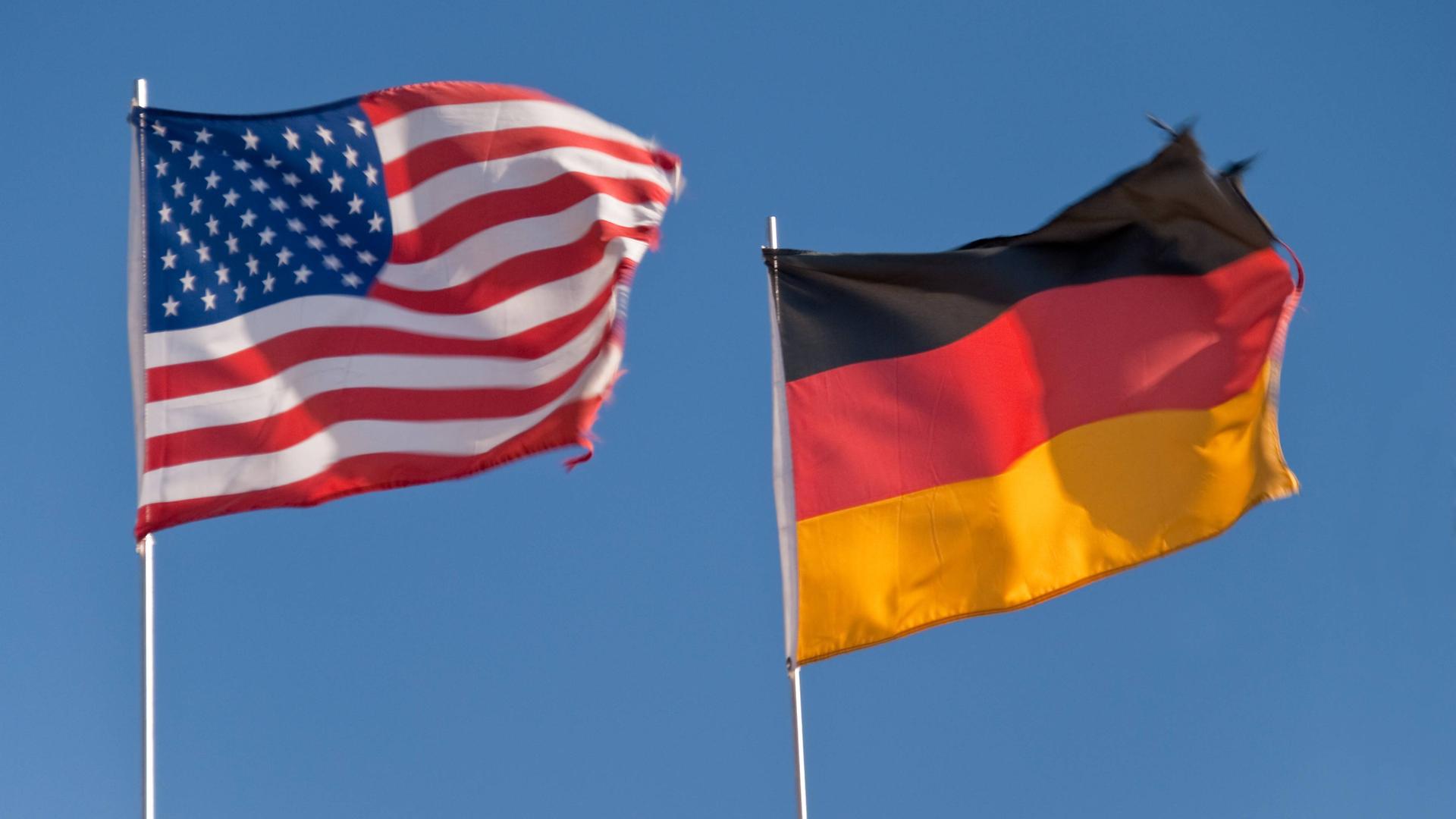
In Germany, China and India, discussion of America in recent days has unexpectedly converged not around the usual rivalry between great powers, but around a more specific question: is Donald Trump’s administration capable of bringing crises it has itself exacerbated to an end without shifting the cost onto allies and trading partners? Three themes dominate the local debate: the possibility of a new escalation in the US war with Iran, Washington’s use of tariffs and secondary sanctions as a foreign-policy weapon, and America’s increasingly evident unreliability—even for those that formally remain its partners.
The broadest concern is Iran. China’s reaction is the most forceful in its wording and, at the same time, the most institutional. Beijing is not merely calling for de-escalation; it is constructing a legal argument that the current crisis resulted from the United States’ withdrawal from the nuclear deal, its “maximum pressure” policy and strikes on Iranian facilities under IAEA safeguards. Fu Cong, China’s permanent representative to the UN, said that military methods and sanctions pressure “do not help solve the problem,” and that the only way forward is equal-footing negotiations. In a statement by China’s Foreign Ministry dated September 17, this argument developed into a direct accusation that the United States had created the roots of the current crisis. China’s position thus turns the war in Iran into evidence of a broader thesis advanced by Beijing: Washington is replacing international law with unilateral coercion.
Yet even in China’s official analysis, the focus is not solely ideological criticism but also a calculated interest in US weaknesses. In a CCTV report circulated on September 18, the central question was framed not as “Will America launch another strike?” but as “How does the United States intend to end the war at all?” It listed factors constraining the White House: dwindling ammunition supplies, rising military spending, threats to the Gulf states’ oil infrastructure, pressure from fuel prices ahead of the midterm elections, and the absence of a clear political objective. This Chinese assessment is particularly revealing: Beijing portrays American power not as an unlimited resource, but as a force that becomes strategically vulnerable when a military campaign has no clear exit.
The tone in Germany is different: there is less satisfaction at America’s difficulties and more concern that the cost of US inconsistency will inevitably reach Europe—through oil, logistics, security and domestic political divisions. German commentators have long feared that the Iranian campaign could become an “endless war,” in which destroyed facilities are rebuilt and the United States launches new strikes. In a Deutsche Welle analysis, this logic is described as a self-perpetuating spiral: the American strategy of preventing Iran from rebuilding its capabilities could turn a permanent military presence in the region from an exception into the norm. For Berlin, this is not an abstract moral dilemma. Germany depends on safe shipping and predictable energy prices, but does not want to be drawn into an operation that Washington could sharply expand or wind down according to its own political calculations.
India views the same crisis through the lens of everyday economic security. For New Delhi, a war in West Asia poses risks to oil supplies, vessel insurance, maritime routes, Indian seafarers and the millions of Indian citizens working in the region. India’s response is particularly interesting, however, because it does not separate the war from US sanctions policy. On September 18, India’s Foreign Ministry said that attacks threatening shipping in the Bab el-Mandeb Strait were unacceptable, while also emphasizing that New Delhi would protect its trade and economic interests amid a US law giving the president the power to impose tariffs of up to 100% on major buyers of Russian oil. As Business Standard reports, Foreign Ministry spokesperson Randhir Jaiswal explicitly linked potential sanctions not only to damage to bilateral trade, but also to the global energy market.
This gives rise to a theme shared by China and India, and perceived in Germany through the experience of Trump’s trade threats: the United States is increasingly using access to its own market and dollar infrastructure not as instruments of economic policy, but as tools for disciplining other countries. For Beijing, this confirms the long-familiar picture of “sanctions hegemonism.” For India, it is a painful test of the concept of strategic autonomy. New Delhi does not want to abandon its partnership with Washington, but it is not prepared to let America determine whom a country of 1.4 billion people may buy energy from. India’s formula is therefore highly practical: diversify supplies, continue negotiations with the United States, but do not compromise on energy security. The threat of US tariffs is being added to an already existing physical shortage of crude: according to Business Standard, Indian refiners are now concerned less about the price of oil than about the availability of shipments from Russia and the Middle East.
Germany’s deepest concern, however, concerns not Iran or tariffs, but the political nature of its relationship with America. Chancellor Friedrich Merz’s statement that the era of “unconditional transatlantic friendship” had probably come to an end for a long time was more than an emotional remark. It came after another cooling in relations, including Trump’s endorsement of the electoral success of the Alternative for Germany in Saxony-Anhalt. A Deutschlandfunk report noted that Berlin had criticized this interference and that a planned conversation between the leaders had been postponed. In the German view, the problem is no longer limited to Trump’s abrasive style: America remains an essential security guarantor while simultaneously behaving like a power prepared to pressure Europe with tariffs, interfere in its political symbolism and make its alliance commitments dependent on personal loyalty.
This is where the reactions of the three countries diverge. China sees the weakening of the Western coalition as an opportunity for a more multipolar order. India sees a warning: vital supply chains cannot be built on the assumption that American rules will remain unchanged. Germany, meanwhile, is experiencing the loss of its old confidence most painfully because, for it, the United States was not merely a market or a situational partner, but the foundation of the postwar security architecture. The paradox of the current debate is that none of the three considers a break with America realistic. Yet all three—for different reasons—regard America as increasingly unpredictable. If China’s formula sounds like a call to limit American pressure, and India’s like a demand for the right to make its own economic choices, Germany’s boils down to a more troubling conclusion: dependence on Washington persists precisely when trust in Washington is running out fastest.