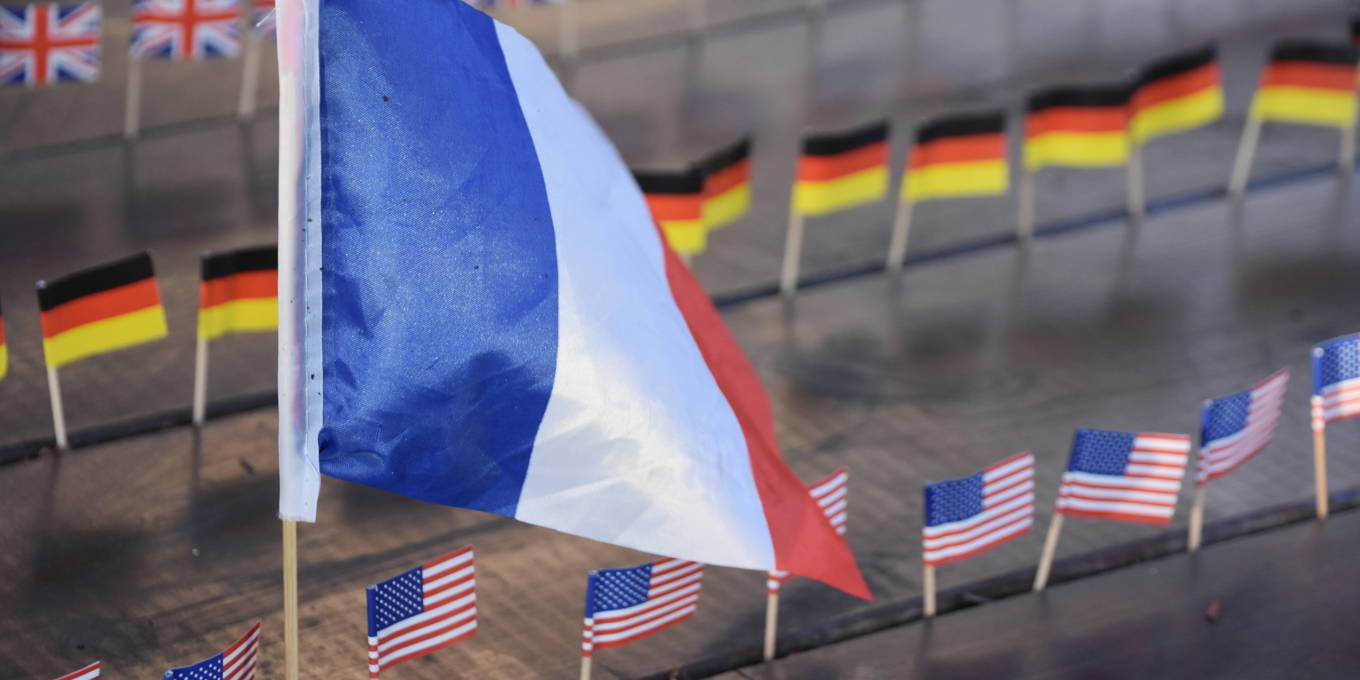
In Germany, France and South Korea, discussion of the United States in early September 2026 no longer centers on the familiar question of “how strong is the American ally?” The main question sounds different: how can countries protect themselves from the consequences of Washington’s decisions while remaining its allies? Three issues stand out in local debates: the protracted US war with Iran and pressure on partners, the trade policy of Donald Trump’s administration, and domestic American instability ahead of the November 3 midterm elections. They share one underlying perception: the United States still possesses enormous capabilities, but is becoming increasingly unable to turn them into a stable and comprehensible strategy.
The war with Iran has become the sharpest symbol of this anxiety. German commentators view it above all as evidence of America’s strategic exhaustion. In a Tagesschau commentary, the war is described as a process in which Trump has “squandered American power”: the issue is not simply a military campaign without a clear endpoint, but the erosion of the US ability to persuade allies, deter adversaries and set the rules. RND columnist Can Merey puts it even more bluntly in his analysis: Washington still has levers of pressure, but no political plan linking military strikes to an achievable outcome. What is notable about the German criticism is not pacifism as such, but fear of American improvisation: Europe remains dependent on US military infrastructure, yet cannot be certain that the White House is capable of calculating the cost of its next escalation. (tagesschau.de)
The French reaction to the same problem is framed in the language of “strategic autonomy,” but that term has now become far less abstract. French public opinion still does not favor breaking with NATO or the United States; on the contrary, it is calling for protection through functioning alliances. Yet trust in the US as the guarantor of that protection has sharply weakened. Hamza Khraoui and Jean-Daniel Lévy note in a Project Syndicate France column that security has become the French public’s top foreign-policy priority, while trust in America has “collapsed.” Their conclusion is important: the French are not choosing isolation; they want Europe, NATO and international law to be judged not by lofty principles, but by their ability to provide real security. This is the French response to the US war with Iran: not anti-Americanism, but a demand that Paris and the EU possess enough political weight of their own not to remain bystanders during American crises. (project-syndicate.fr)
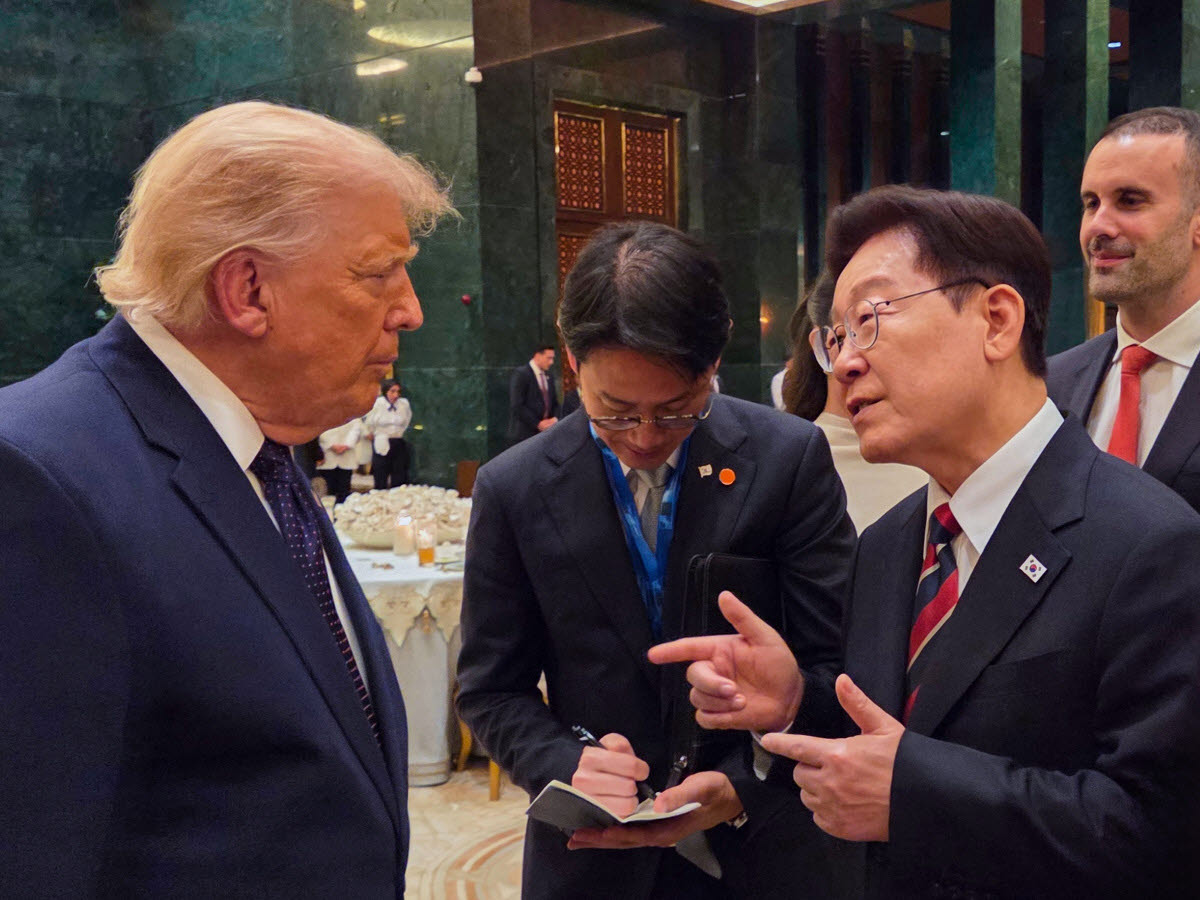
In South Korea, the Iranian issue is perceived even more directly—through the dilemma of potentially sending forces or providing other military assistance to the Strait of Hormuz. In an E-Daily analysis, the local debate is described as being trapped between two threats: the United States points out that Korea depends on Middle Eastern oil and expects a contribution from its ally; Iran, meanwhile, warns that it could regard even noncombat participation by Seoul as direct entry into the war. For Germany and France, the Iranian campaign is primarily a test of Europe’s ability to act independently. For Seoul, it is a question with a harsher practical arithmetic: participation could strengthen relations with the United States, but jeopardize energy security, shipping and South Korea’s own regional diplomacy. (edaily.co.kr)
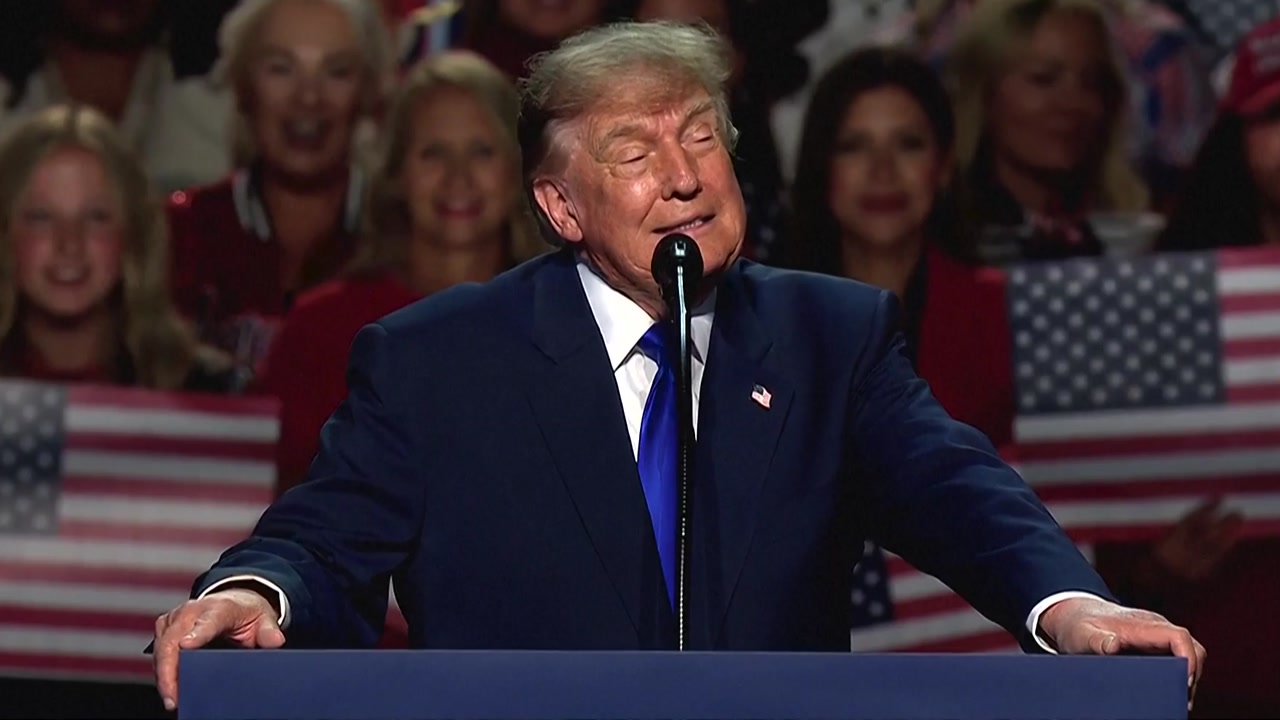
It is especially telling that South Korean analysts link Trump’s foreign policy to his domestic position. Im Sung-nam, a former first vice minister of foreign affairs of South Korea, warns in an E-Daily interview that the president’s electoral difficulties could push him to pursue an even more active foreign-policy “breakthrough”—from Iran to negotiations involving North Korea and Ukraine. This is a view rarely voiced so openly in American debates: Seoul fears not only US power, but also the possibility that Korean security could become raw material for American electoral tactics. When Trump says the war with Iran will end after the November elections, South Korean television channels discuss this not as a diplomatic forecast, but as a possible sign that the military timetable is being tailored to political needs. (ytn.co.kr)
The second common theme is the transformation of US trade policy into a permanent source of uncertainty. In Germany, this is measured not only by the export sector’s irritation, but also by canceled investments. A study by the ifo Institute, based on a survey of around 1,800 industrial companies, shows that 62% of firms see a negative effect from US policy, rising to more than 70% in mechanical engineering and automotive manufacturing; nearly 40% of companies have canceled, postponed or reconsidered projects because of it. The German conclusion is pragmatic: Trump’s tariffs are dangerous not only because of their direct costs, but also because they make long-term planning impossible. (ifo.de)
France views the same tariffs through the lens of a European compromise. An official briefing from the French Treasury records a base rate of 15% for most European goods imported into the United States, with exceptions for certain sectors. Paris is formally betting on keeping the agreement manageable, but the political mood is far darker: American protectionism is seen as proof that economic interdependence no longer automatically protects allies. From the French perspective, this is not a temporary dispute between the two sides of the Atlantic, but a new normal in which Europe must have tools of its own—a deliberate industrial policy, a unified capital market and a readiness to use trade countermeasures. (tresor.economie.gouv.fr)
For South Korea, the tariff problem is connected to a broader fear of dependence on American rules in technology, investment and supply chains. Seoul is linked to the United States by a security alliance, while simultaneously competing for access to the US market in automobiles, batteries, semiconductors and shipbuilding. As a result, South Korean debate is less inclined toward loud calls for autonomy than the French debate, and less focused on old transatlantic disappointment than the German one. Its tone is adaptive: strengthen the alliance, but create alternative supply routes, legal guarantees for investors, and political ties not only with the White House, but also with Congress, the states and American business.
This is where the third common theme emerges: the United States is becoming harder to predict not because the world has stopped understanding one particular president, but because more and more external actors view this unpredictability as structural. The German weekly Die Zeit describes Berlin’s painful dependence: Germany still relies on the United States for both defense and technology, even though Trump personally “cannot be relied upon.” A Forsa poll for the magazine Internationale Politik found that 67% of Germans believe the impact of US policy on Germany is greater than it was several years ago. This is the paradox of modern Europe: the desire to depend less on the United States is growing at the same time as awareness of how difficult it would be to reduce that dependence quickly. (zeit.de)
The overall conclusion from Berlin, Paris and Seoul is not that America is “withdrawing” or losing its status as a key power. Rather, allies are ceasing to regard American leadership as a free public good. Germany sees the risk of strategic dependence; France sees the need to turn autonomy into practice; and South Korea sees the danger of being drawn into other people’s crises under the banner of allied solidarity. The most unexpected common feature of these reactions is the absence of any illusion that a change in the balance of power after the midterm elections will automatically restore the old normal. The outside world is increasingly preparing not for an “America after Trump,” but for an era in which any United States will be both an indispensable partner and a source of political, military and economic risk.