In the first days of September 2026, attention in Japan, Russia and Germany is focused on two American stories at once: the resumption of U.S. strikes on Iranian targets and the Trump administration’s latest attempt to launch negotiations between Moscow and Kyiv. Yet local debates share a broader conclusion: the United States remains an indispensable power, but its actions are increasingly perceived as an unpredictable guarantee of order. In Tokyo, this is measured by oil prices, the yen’s exchange rate and the ability of America, as an ally, to deter China; in Berlin, by the risk of an endless war in the Middle East and fears that Europe’s security is once again being discussed without Europe; in Moscow, by the possibility of turning America’s need for a deal into a diplomatic advantage.
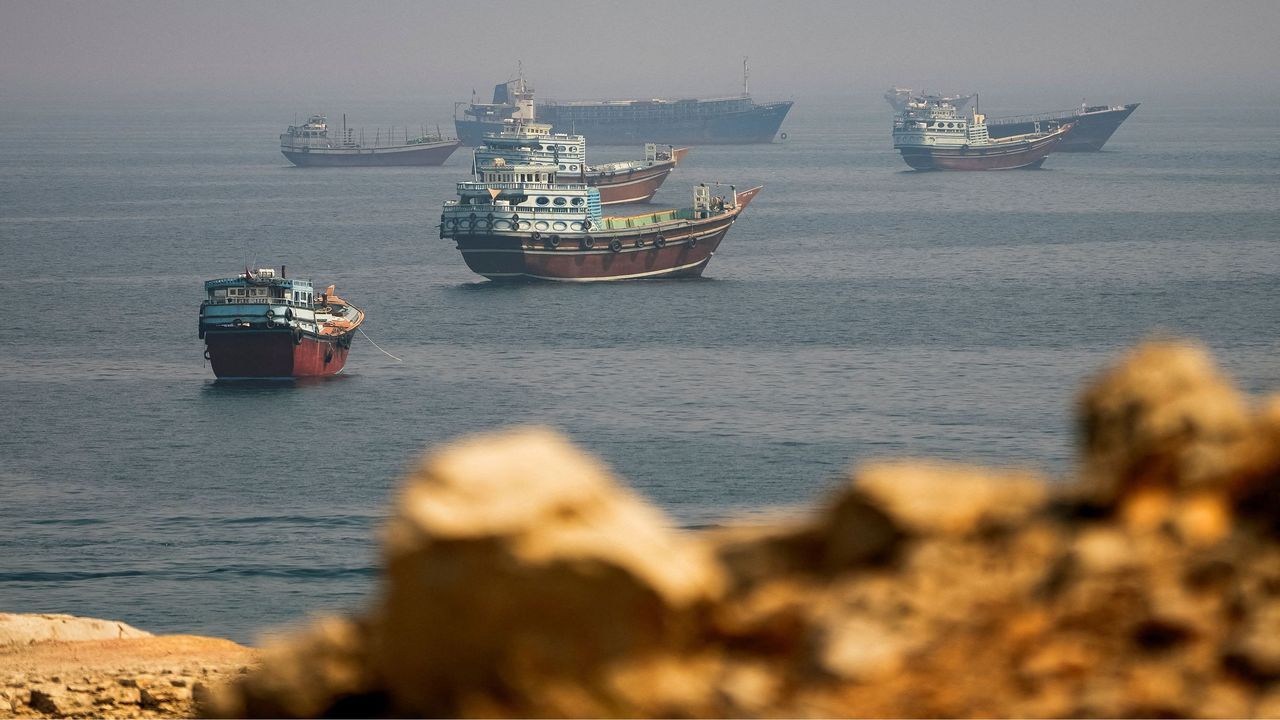
The war with Iran has become the main test of this perception. In an article for nippon.com, Japanese commentator Kazuhiro Maeda writes that six months after the U.S.-Israeli campaign began, the rapid elimination of the nuclear threat initially promised has not materialized: the conflict is bogged down around the Strait of Hormuz, while America, in his assessment, is itself spreading distrust of its actions. For Japan, this is not an abstract dispute over Middle East strategy. Nobuhiko Kiuchi, an economist at the Nomura Research Institute, calculated that a return of oil prices to around $90 per barrel could add approximately 0.3 percentage points to Japanese inflation and increase the average annual burden on a household by about ¥13,000; meanwhile, hopes of replacing Persian Gulf supplies with American crude have limits. From the Japanese perspective, the problem lies not only with Tehran, but also in the fact that Washington’s military solution makes an energy-import-dependent country hostage to someone else’s escalation. (nri.com)
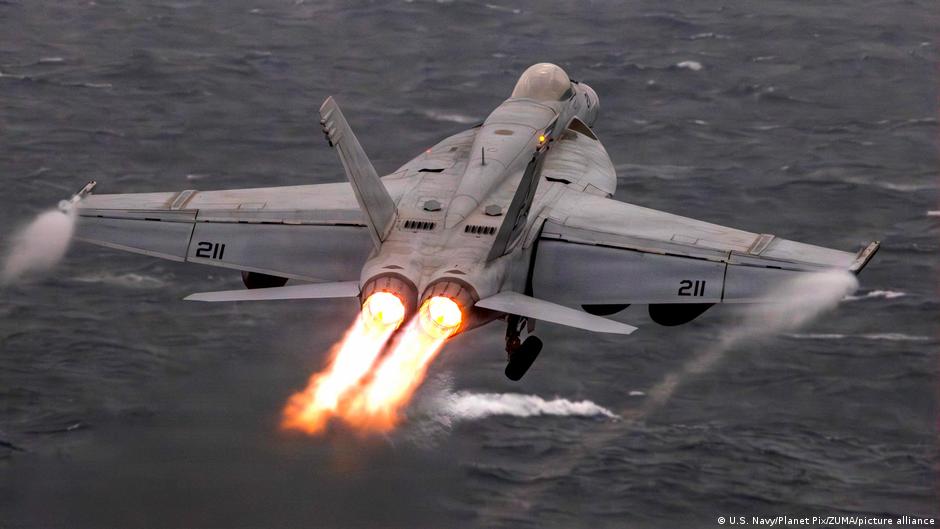
The German reaction is far more politicized, but reaches a similar conclusion. An analysis by Deutsche Welle describes the logic of the American “mowing the lawn” strategy: Iran rebuilds its military capabilities, the United States launches another strike, and the cycle repeats. Author Andreas Noll emphasizes that this model, borrowed from the fight against non-state armed groups, is poorly suited to a large state with an industrial base and the ability to threaten the Strait of Hormuz. In other words, military superiority does not translate into a political outcome. This asymmetry is especially important in Germany’s public debate: Washington can choose the scale of its strike, but not the adversary’s response—while the consequences, in the form of expensive energy, unstable trade and a new security crisis, also fall on Europe. (amp.dw.com)
In Russia’s expert community, the same conflict is interpreted through the prism of the redistribution of power in Asia. A MGIMO expert on the East and a researcher at the Institute of Oriental Studies of the Russian Academy of Sciences, in a commentary for the Russian International Affairs Council, calls the U.S.-Iran war a “slow-moving endless war” and links it to the prospects of a so-called “Asian NATO.” This is an important and far from obvious Russian emphasis: in Moscow, the Middle East campaign is viewed not only as a conflict between the United States and Iran, but also as a test of Washington’s ability to hold the Middle East, support European security and focus on the Indo-Pacific region simultaneously. For Japan, this perspective is particularly troubling: the more American resources and attention are absorbed by the Strait of Hormuz, the less convincing America’s role in deterring threats in East Asia appears. (russiancouncil.ru)
The second story—the visit by Steve Witkoff and Jared Kushner to Moscow on September 5 and then to Kyiv on September 6—prompted nearly mirror-image, though not identical, reactions. Russian political analyst Fyodor Lukyanov, editor-in-chief of the journal Russia in Global Affairs, in an article for the RIAC, urges recognition of the Trump administration’s persistence: in his view, the White House remains the only Western player that is genuinely trying to do something and has leverage over the situation. Yet Lukyanov immediately tempers expectations: too much is at stake for Russia and Ukraine for the war to end with the quick “deal” favored by Trump. This is a characteristic Russian position: American mediation is welcomed not as moral arbitration, but as a useful channel through which the balance of interests can be discussed and Moscow’s isolation eased. (russiancouncil.ru)
In Germany, however, the order of the trip—Moscow first, Kyiv second—became a symbol of anxiety. German commentators do not deny the value of negotiations, but question the very structure of the mediation, in which Russian demands are heard before Ukrainian ones. Tagesschau quoted Witkoff as saying that both sides must make compromises, while Ukrainian President Volodymyr Zelensky assessed the prospects considerably more cautiously. In a commentary in Süddeutsche Zeitung, the question is posed even more sharply: does the American envoy understand who the aggressor is? Behind this lies more than Berlin’s irritation with Trump’s style. Germany fears that the language of equal mutual concessions could blur the fundamental fact of the war—Russia’s invasion of Ukraine—and turn European security into an object of bargaining between Washington and Moscow. (tagesschau.de)
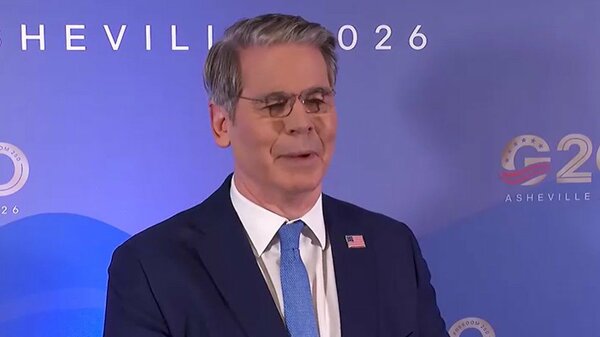
The Japanese perspective is quieter, but no less significant strategically. Tokyo sees American diplomacy as both a necessity and a warning: the alliance with the United States remains the foundation of security, but the ally increasingly acts as a tough negotiator, ready to link security, trade and macroeconomics. Particularly telling was the episode involving U.S. Treasury Secretary Scott Bessent, who, at a meeting with Bank of Japan Governor Kazuo Ueda, voiced support for measures to correct what he considers a substantially undervalued yen. Japanese observers saw this as direct American pressure on the country’s domestic monetary policy. (fnn.jp)
This is precisely how the broader international image of the United States in September 2026 is taking shape. Russia sees America as a power interested in a deal and therefore potentially receptive to Russian arguments. Germany sees a partner whose diplomatic improvisation could leave Europeans facing faits accomplis. Japan sees an indispensable military ally whose wars and financial demands could simultaneously undermine its economic stability and divert attention from Asia. Their interests, language and political sympathies differ, but the main point is shared: America no longer merely sets the rules. Increasingly, it itself is becoming the main source of uncertainty to which other states must adapt.