As of September 16, 2026, the United States evokes not one shared emotion in South Africa, Brazil and Japan, but a similar strategic concern. The triggers are different: US visa restrictions and political demands directed at Pretoria, tariff pressure on Brazil, the protracted US war with Iran and its consequences for Japan. But local debates converge on one point: Washington is increasingly seen not as a predictable center of rules, but as a power that bundles trade, security, domestic politics and geopolitical loyalty into a single package of pressure. (opeb.org)
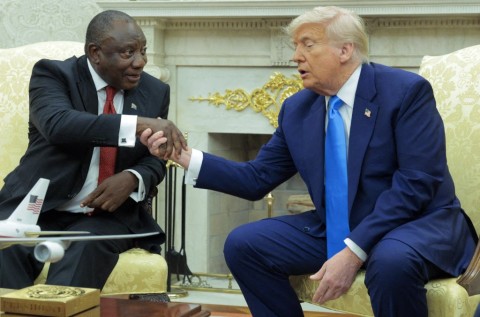
The sharpest example is South Africa, where the current dispute has long gone beyond disagreements over trade. The Trump administration is imposing visa restrictions on South African officials, citing alleged discrimination against white citizens and the Expropriation Act; Pretoria rejects these accusations. South African media interpret this as an attempt to turn sensitive domestic issues—land reform, farmers’ security and Black Economic Empowerment policy—into instruments of external coercion. International relations analyst Kingsley Makhubela told eNCA that the Trump administration was “preparing a much broader attack on the legitimacy of the South African government”; in his assessment, pressure through AGOA trade preferences could follow the visa measures. His less obvious point is also important: the country’s position along the route around the Cape of Good Hope increases its significance amid instability on Middle Eastern sea routes. In other words, US pressure is seen here not only as an ideological conflict over race, but also as a struggle over the geography of trade. (enca.com)
It is particularly revealing that Washington is linking its relationship with Pretoria to five conditions at once: protecting farmers, recognizing the slogan “Kill the Boer” as hate speech, rejecting expropriation without compensation, revising requirements for the participation of Black South Africans in company ownership, and distancing itself from US adversaries, including Iran. As journalist Peter Fabricius notes in a Daily Maverick article, Pretoria is not facing merely a diplomatic response: aid, export access and AGOA status may depend on it. South Africa’s new ambassador to the United States, Rulph Meyer, puts it cautiously: “We will have to… look at how we can maneuver.” The phrase accurately captures the local mood: neither capitulation nor an open rupture, but a search for room to maneuver before a state capable of changing trade and political conditions simultaneously. (dailymaverick.co.za)
In Brazil, US tariffs are discussed even more openly—as a question of sovereignty. The authors of an analysis by Brazil’s Observatório de Política Externa e da Inserção Internacional do Brasil state directly that US measures under Section 301 and the accompanying duties can no longer be explained solely as an attempt to correct trade imbalances. In their interpretation, they constitute a “mechanism of political coercion”: through tariffs, Washington is seeking to influence not only exports, but also the regulation of digital platforms, Brazil’s Pix instant-payment system, environmental rules, market access and Brazil’s strategic rapprochement with China. The authors emphasize the paradox: the pressure is producing the opposite of the effect officially sought by the United States. While Brazilian exports to the United States are declining, ties with China are expanding; consequently, the attempt to slow Chinese influence is merely accelerating Brazil’s diversification. (opeb.org)
The South African and Brazilian reactions are nearly mirror images. Neither country believes the answer should be a symmetrical tariff war with a larger economy. But both increasingly see their previous dependence on the US market as dangerous. In a Business Day column, researcher Lubabalo Cengani describes this as the rational choice of a third path: neither yielding to unilateral demands nor responding with destructive escalation, but diversifying markets and logistics corridors. For South Africa, this means focusing on the African Continental Free Trade Area, Asian markets and the processing of critical minerals; for Brazil, closer trade and technology ties with China and reliance on multilateral mechanisms. The most important feature of these local assessments is the disappearance of the illusion that returning to the old normal with the United States is a realistic strategy. (businessday.co.za)
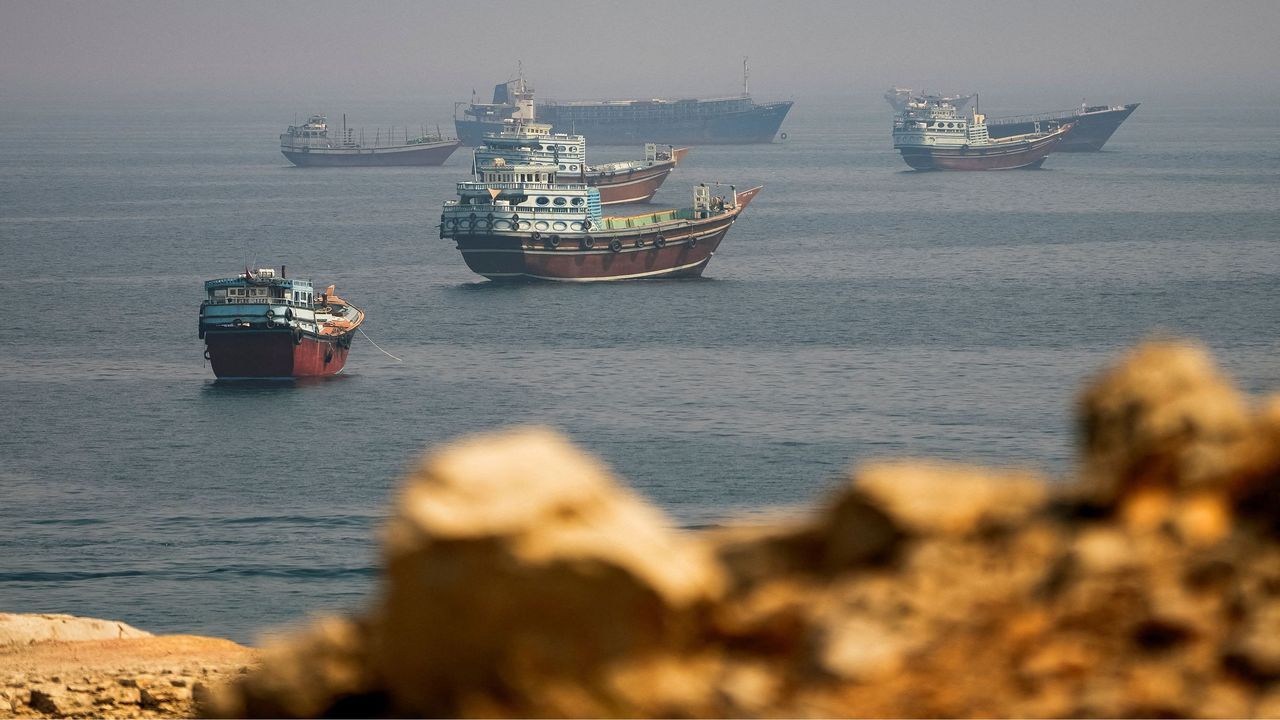
Japan views the same problem from a different angle—not so much as an exporter subjected to pressure, but as an ally concerned about a shortage of American attention and military resources. A Japanese analysis by Nippon.com describes the protracted war with Iran as a source of “distrust in the United States,” which Washington is spreading through its own actions. Tokyo is concerned about the cost of the war, the depletion of US Patriot and THAAD missiles, and above all the risk that the long-term presence of US aircraft carriers in the Middle East will weaken deterrence in the Indo-Pacific, including the Taiwan Strait. For Japanese audiences, this is not an abstract dispute about the Middle East: if America becomes bogged down near the Strait of Hormuz, the price of this war may be paid in East Asia—in the form of diminished credibility of US security guarantees.
The Japanese perspective most clearly shows why the current anxiety is broader than anti-Americanism. Tokyo is not proposing to distance itself from the United States: the US-Japan alliance remains the foundation of Japan’s defense. But Japanese commentators are asking an uncomfortable question: can an ally be reliable if it starts a war without sufficient coordination with its partners, simultaneously clashes with them over tariffs and undermines the institutions on which they rely? The Nippon.com authors also point to US sanctions against International Criminal Court President Tomoko Akane: for Japan, which publicly links its foreign policy to the “rule of law,” such steps place allied loyalty in direct conflict with its own principles. (nippon.com)
This produces an unusual international picture. In South Africa, the United States is seen as a power prepared to use racial issues and trade preferences to discipline an inconvenient partner. In Brazil, it is seen as a power turning tariffs into leverage against an autonomous economic and technological policy. In Japan, it is viewed as an indispensable but increasingly unpredictable ally whose war in the Middle East could weaken Asian security. The stakes, tone and political sympathies differ, but a common conclusion is growing louder: for states dependent on the United States, the main task is no longer choosing between Washington and its rivals, but creating protection against American unpredictability.