On September 5–6, 2026, German, Japanese and South African commentators focused not on a single American story but on an entire chain of events: the United States struck three Iranian oil tankers after a missile attack on its ships; Donald Trump’s administration continued turning sanctions into an instrument of pressure on third countries; and allies and trading partners once again faced the reality that American decisions quickly become their own domestic economic and political problem. In Germany, this is seen primarily as a symptom of Washington’s strategic failure; in Japan, as a risk to fuel supplies, the yen and financial stability; and in South Africa, as a reminder that access to the US market increasingly comes with political conditions.
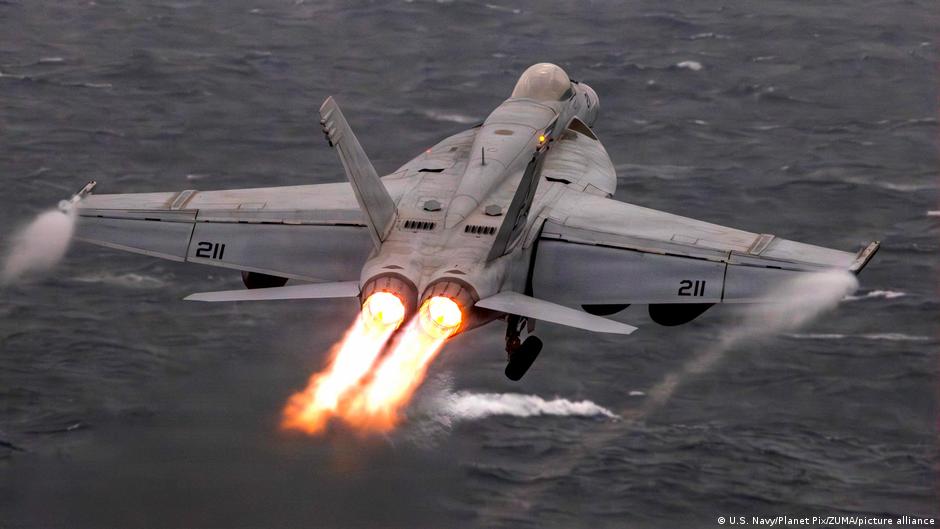
The latest maritime escalation in the Persian Gulf has become the sharpest catalyst for these sentiments. US Central Command said it had disabled two Iranian tankers and destroyed a third after the Islamic Revolutionary Guard Corps launched ballistic missiles at a US aircraft carrier and destroyer. Iran, in turn, reported attacks on tankers and vessels linked to the United States. Germany’s Tagesschau relays these statements cautiously, but the focus of the local debate is clearly broader than the question of who initiated the latest exchange of blows. For Germany, what matters more is that the conflict has entered a stage in which not only military infrastructure but also oil-carrying commercial shipping is becoming a target—that is, the very material foundation of the global economy.
This concern is layered on top of nearly seven months of German disappointment with America’s strategy toward Iran. ARD commentator Carsten Küntopp, in a blunt column for Tagesschau, stated the conclusion without diplomatic reservations: “The US has weakened itself in the war with Iran.” His argument is not simply a criticism of Trump: from the German perspective, the prolonged campaign has exposed the limits of American military power, depleted resources and simultaneously made Europe more vulnerable to an energy shock. In a similar vein, Deutsche Welle describes the American approach as a strategy of continually striking Iran’s newly emerging capabilities—a method that may contain the adversary tactically but offers no political way out.
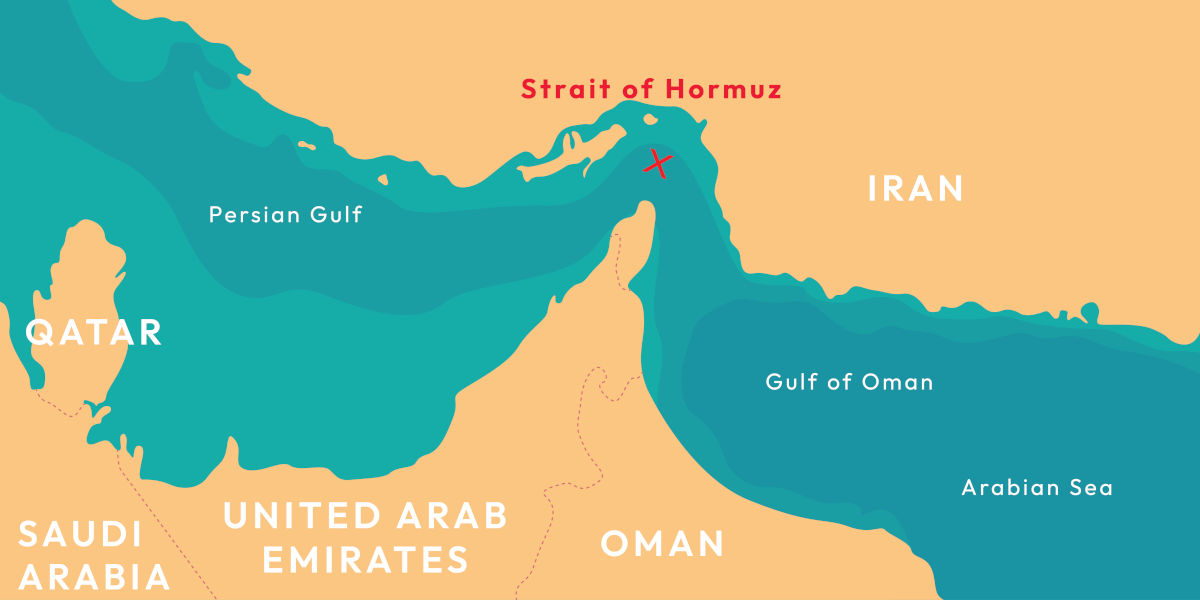
Japan’s reaction is less moralizing and far more practical. In Tokyo, the current crisis is viewed through a narrow but vital passage—the Strait of Hormuz. Japanese media emphasize that Washington’s “tanker for tanker” formula is bringing the war to the level of directly affecting oil supplies. Forbes Japan writes about the first use of this approach and recalls that under normal conditions, roughly one-fifth of the world’s oil passes through Hormuz. For a country dependent on imported energy, this is not a distant Middle Eastern war but a threat to the cost of electricity, transportation and industrial production.
What distinguishes the Japanese debate is its linking of the military escalation to financial dependence on the United States. An analysis by the Japan Research Institute speaks of “dissonance” in the US-Japan political dialogue: Washington demands coordination on currency, fiscal and monetary policy, while Tokyo must respond simultaneously to rising domestic yields and external risks. Economist Nobuhiko Kiuchi, in an NRI column, notes that market expectations of changes in Japan’s economic policy under pressure from the Trump administration are already exerting a lasting influence on the yen’s exchange rate. In other words, the Japanese are concerned not only about tankers: American policy could first drive up the price of oil and then, through the dollar, bonds and investor expectations, limit the Bank of Japan’s room for maneuver.
South Africa sees the same American model of pressure, but in an even more explicit trade-and-political form. In Pretoria, President Trump’s decision to extend the African Growth and Opportunity Act—the program providing duty-free access for African goods to the US market—was met with relief, but not confidence. As South Africa’s Business Day notes, the country had sought a 15-year extension but received only two years; at the same time, its eligibility to remain an AGOA participant after 2027 is still not guaranteed. For exporters, this means that a formally positive decision does not provide the main thing: a planning horizon for investment, production and jobs.
This produces a particularly revealing contrast. Germany and Japan—long-standing US allies—fear that American power is being used without a clear strategy and that the costs are being shifted onto partners. South Africa, which is not part of the US alliance system, fears something else: that trade preferences are becoming a reward for political compliance. In an article for The National, Rasygan Maharaj, a professor of public management at Tshwane University of Technology, urges the country to accelerate industrialization and seek more reliable partners. Noluthando Phungula, an international-relations expert at the University of KwaZulu-Natal, in turn, speaks of the need to diversify both currency and market ties. This is not a call to immediately sever relations with Washington: South Africa’s trade with the United States is incomparably more important than its limited dealings with Iran. But it is a local acknowledgment that dependence on a single market makes foreign policy vulnerable.
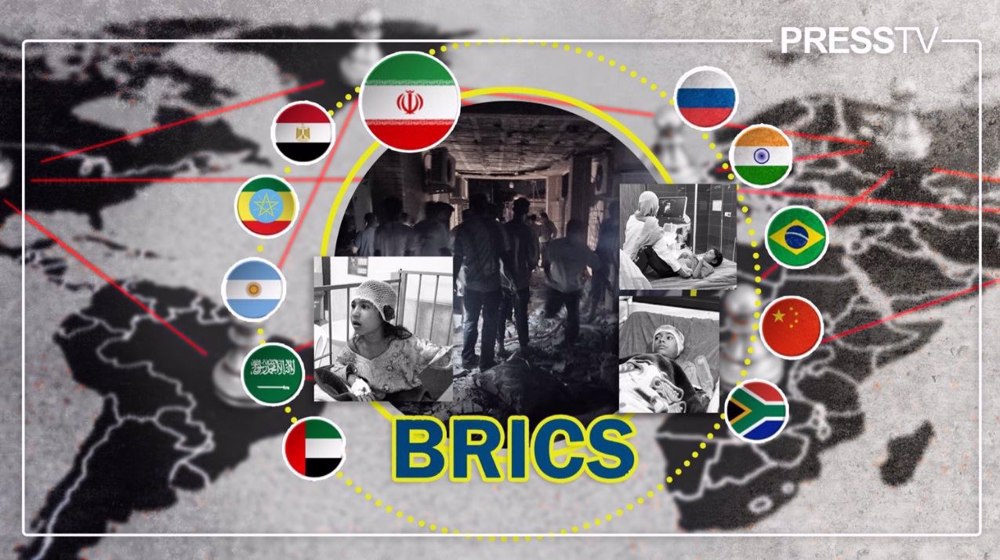
It is precisely the issue of Iran that connects South Africa’s military and economic concerns. The American sanctions campaign targets not only Tehran but also its financial and commercial links around the world. For Pretoria, this creates an unpleasant dilemma: maintain its traditional “Global South” rhetoric and opposition to unilateral US actions, or minimize the risk to exports to America. At the sharper end of the debate, South African columnist Iqbal Jassat, in his column, calls on BRICS to publicly condemn Washington’s “illegal military aggression.” This position does not encompass all South African opinion, but it is significant: for a sizable segment of the local political environment, the American strikes are not merely a dangerous escalation but a test of whether BRICS can be something more than an economic club.
The most unexpected common theme in all three countries is not anti-Americanism as such. Neither Berlin, nor Tokyo, nor Pretoria is proposing to abandon relations with the United States. On the contrary, all three societies recognize that America is too important—for security, sea routes, trade, technology and finance. But that is precisely why another demand is being voiced more and more often: the United States should be a predictable center of power, not a country that simultaneously wages a war for control of shipping, threatens partners with secondary sanctions and keeps trade preferences on a short political leash.
The German formula is that America is losing strategic power because it cannot turn military superiority into a political outcome. The Japanese formula is that American crises instantly become the price of oil, the exchange rate of the yen and a problem for the national budget. The South African formula is that economic partnership with Washington is necessary, but increasingly resembles not a stable rule but a conditional contract. Taken together, these reactions paint a picture of the United States as a country whose influence remains enormous, but whose reliability is increasingly becoming a subject of international dispute.