In mid-September 2026, the United States is discussing the midterm elections, but outside America the main source of concern is a different question: how far Donald Trump is prepared to go in the war with Iran—and what allies will have to give up in return for his protection. In Germany, South Korea and Israel, the issue is framed differently, but the underlying concern is the same: Washington remains an indispensable center of power, yet its policy is increasingly seen as personalized, transactional and subordinate to the domestic electoral calendar.
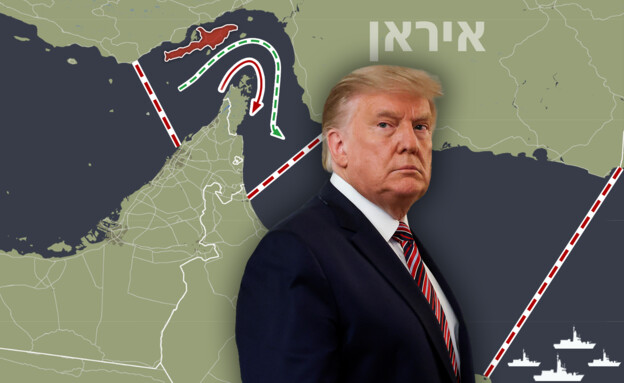
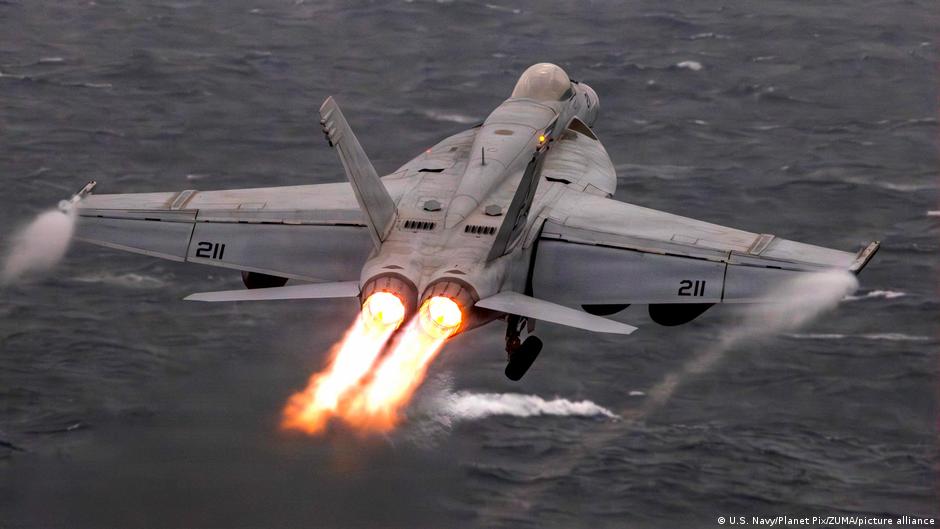
The clearest common theme is the United States’ protracted campaign against Iran. The German debate views it as a risk that another “forever war” could emerge—one that America itself had previously promised to leave behind. An analysis by Deutsche Welle describes a cycle of repeated strikes as Tehran rebuilds its radar systems, air defenses and naval capabilities in the area of the Strait of Hormuz. German observers are particularly skeptical of this model: it may destroy individual targets, but it does not eliminate the adversary’s knowledge or industrial base. The authors effectively see a trap: the United States can choose the scale of the next strike, but cannot control Iran’s response in advance.
In Berlin, this is seen as more than a Middle Eastern problem. Hormuz is an artery of the global energy system, meaning that the war can quickly turn into European inflation, pressure on industry and a new test of transatlantic solidarity. German anxiety is especially evident in comparisons between the current American strategy and Israel’s practice of “mowing the lawn”—regularly weakening an adversary without promising a final victory. For Germany, the metaphor itself sounds like an admission that there is no political endgame: military activity is replacing diplomacy, while temporary control of the crisis is being presented as a strategy.
South Korea views the same war much more pragmatically—through the lens of oil prices, maritime trade and fears that American resources are being diverted from the Korean Peninsula. In an editorial published on September 11, ChosunBiz warned that oil had already risen above $100 a barrel, while rising yields on U.S. bonds and external instability were being transmitted to the South Korean economy through currency and debt markets. From this perspective, Iran is not a distant war but a threat to an export model dependent both on energy imports and uninterrupted maritime logistics.
In Seoul, however, American policy is also causing irritation because Washington is perceived as trying to turn military solidarity into a bargaining chip. A report by Chung Jae-sung, president of the East Asia Institute, and researcher Park Ji-eun for EAI Global states directly that after Trump publicly recalled South Korea’s refusal to support the Iranian campaign, he may demand compensation in negotiations over trade or the allocation of defense costs. The authors suggest that Seoul should prepare limited forms of rear-area assistance—for example, logistics vessels or naval aviation—but postpone a public decision for as long as possible. This is a distinctly Korean formula: do not quarrel with America, but do not allow the country to be drawn into a conflict that could worsen relations with China and leave the peninsula less protected.
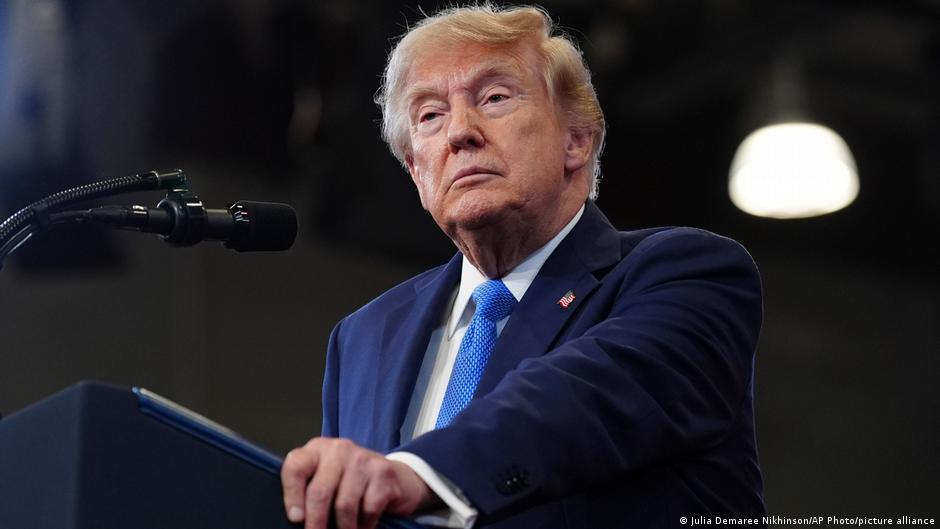
This is where the war with Iran merges with the second major theme—the unexpected softening of Trump’s stance toward Kim Jong Un and the scaling back of U.S.-South Korean exercises. For German commentators, this is another example of the president’s personal diplomacy being placed above the alliance architecture. A DW report notes that Trump justified the reduction in exercises by citing their cost and his “very good” relationship with the North Korean leader. Pyongyang, however, did not reciprocate the concession: its missile programs continue, while Kim now has stronger ties with Moscow and Beijing.
In South Korea, the fear of this approach is described as the danger of “bypassing Seoul.” Yonsei University professor Yang Seung-ham put it bluntly in an analysis for NewsPim: Trump is handling the North Korean issue not as a relationship with an ally, but through his own personal connection with Kim Jong Un; South Korea, he said, must acknowledge that it is already being “bypassed.” Another Korean expert, Kim Yong-yoon, offers the opposite response in a column for Aju Business Daily: rather than wait for the United States and North Korea to reach an agreement over Seoul’s head, South Korea should seek to become the “architect” of a new order on the peninsula. This is an important difference from the European reaction. Germany is primarily looking for ways to limit the consequences of American unpredictability; Seoul is trying to turn that unpredictability into an argument for greater agency of its own.
In Israel, attitudes toward the United States are even more complicated. American military power remains critically important there for deterring Iran, and some analysts view the current pressure on Tehran as a strategic achievement. Eyal Tzir Cohen, former head of the Mossad’s Tevel unit, writes in a commentary for N12 that the United States has at least temporarily weakened one of Tehran’s main levers—the ability to turn the Strait of Hormuz into a threat to the global economy. His conclusion is not triumphalist: the improvement remains “far from ideal,” but in regional strategy, even a partial weakening of Iran is highly significant.
At the same time, however, Israel’s expert community increasingly doubts that American commitments are unconditional. A June poll by the Institute for National Security Studies found that only 12% of Israelis believe Trump is strongly committed to protecting Israel’s interests; 57% think he supports the country only where it serves his own interests. The figures are cited in an INSS publication. Notably, this distrust is not limited to the opposition: among both coalition supporters and its opponents, the prevailing view is that Washington’s support is conditional rather than automatic.
Dr. Shai Har-Zvi of Reichman University calls the widening cracks between Israel and the United States a “red flag” in a September review. He points not only to Iran but also to the Trump administration’s desire to independently promote Gaza’s reconstruction, contacts between Israel and Syria, and deals with Saudi Arabia and Turkey. For the Israeli strategist, the problem is not that America has ceased to be an ally; it is that America, as an ally, is increasingly acting as an independent regional broker whose priorities may not coincide with Israel’s.
This leads to a common conclusion across the three countries. Germany fears that America is creating an endless conflict without a convincing political exit. South Korea worries that the United States is simultaneously demanding assistance in the Persian Gulf and weakening security guarantees where that security is vital—against North Korea. Israel sees American power as a key resource, but increasingly regards Trump’s support as a contract with changing terms. In all three cases, this is no longer about traditional anti-Americanism. On the contrary, local debates begin from the assumption that the United States is too important to allow the luxury of a complete break. That is precisely why calls for independent plans are growing louder—in case decisions in Washington are made primarily for the sake of war, a deal or elections in America itself.

![[Seoul = Newspim] President Lee Jae-myung is delivering remarks of encouragement at a policy dialogue on peaceful coexistence during the Americas regional meeting of the 22nd National Unification Advisory Council, held at the Inspire Resort in Incheon on September 2. [Photo: Blue House] 2026.09.02](https://img.newspim.com/news/2026/09/03/2609031456358790.jpg)
![President Lee Jae-myung is chairing the 38th Cabinet meeting at the main building of the Blue House on September 1 and delivering opening remarks. 2026.09.01 [Photo: Blue House]](https://img.newspim.com/news/2026/09/02/2609021145540341.jpg)
![[Seoul = Newspim] Reporter Park Chan-je — President Lee Jae-myung stressed that he would mediate to build trust and resume dialogue between the United States and North Korea. As South Korea is a party directly concerned with peace on the Korean Peninsula, it has stepped forward as a mediator for the resumption of U.S.-North Korean dialogue. However, U.S. President Donald Trump, in connection with the war with Iran](https://img.newspim.com/news/2026/09/02/2609021619351600_t1.jpg)