In the first days of September 2026, the United States simultaneously found itself at the center of three very different but interconnected conversations—about war, security and the cost of dependence on the world’s largest economy. In Saudi Arabia, the American line in the conflict with Iran is viewed primarily through the threat to the Persian Gulf, shipping and the oil market. In Ukraine, the main focus is on the new American mediation efforts and on whether Donald Trump’s desire for a rapid diplomatic result could turn into pressure on Kyiv. In South Africa, the United States is discussed neither as a military ally nor as a mediator, but as a market capable of wiping out years of industrial policy with a single tariff decision. The common thread running through these reactions is simple: Washington remains an indispensable player, but its partners are increasingly unwilling to accept American decisions as a given.
The most alarming issue in Riyadh is not the abstract rivalry between the United States and Iran, but the danger that an American-Iranian escalation will exact a regional price paid by Iran’s neighbors. In a column published on September 6 in Al Jazirah, Saudi author Subhi Shabana defines the kingdom’s position with precision: Saudi Arabia is not a party to the war, but is “at the very center of its consequences.” This refers to the security of the Strait of Hormuz, energy exports, shipping insurance risks and the possibility that the conflict will spread to new fronts. The author insists that a state’s strength is measured not by the number of weapons at its disposal, but by its ability to prevent war from spreading. This is an important local qualification to American deterrence rhetoric: in the Saudi reading, effective security means not maximum pressure on Tehran, but preserving room for negotiations and preventing an uncontrolled regional chain reaction. (al-jazirah.com)
This view does not mean a break with the United States. On the contrary, the Saudi debate proceeds from the premise that the military and political partnership with Washington is necessary, but must not deprive Riyadh of its freedom of maneuver. When Secretary of State Marco Rubio said on September 8 that the United States was closely monitoring rising tensions between Saudi Arabia and the Houthis, he emphasized the two countries’ “strong defense military relationship.” However, the local logic demands more from this relationship than a promise of protection: it requires American policy that does not increase the kingdom’s own vulnerability. CNN Arabic reports that Washington describes the Houthis as an Iranian tool; in Riyadh, however, the overriding question is how to prevent the conflict in Yemen and around Iran from once again drawing the kingdom into direct confrontation. (arabic.cnn.com)
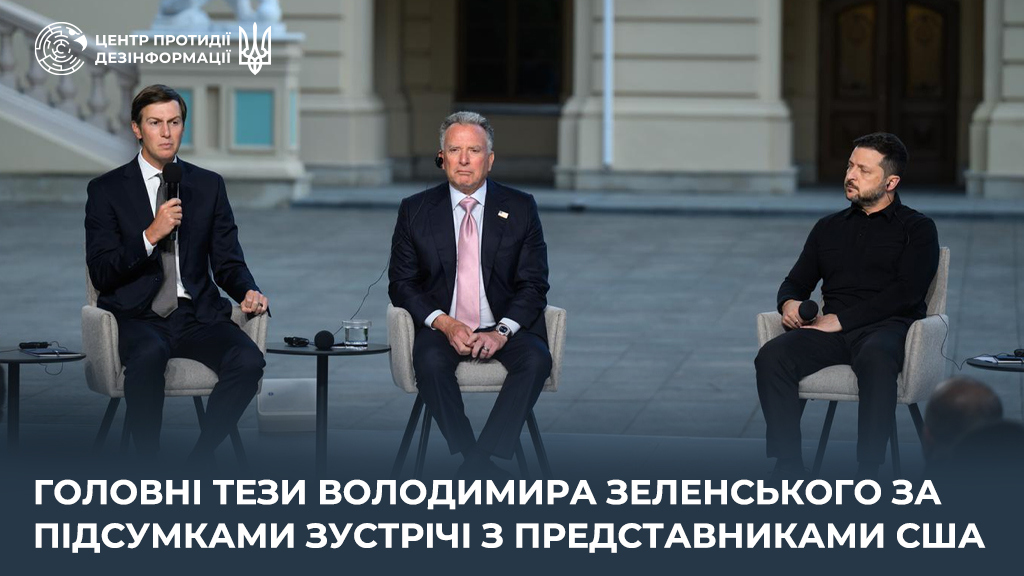
Ukraine’s reaction to America is emotionally closer to that of an ally, but no less wary. Following special envoys Steve Witkoff and Jared Kushner’s visits to Moscow on September 5 and Kyiv on September 6, the Ukrainian agenda focused not on the fact of the contacts themselves, but on who determines their substance. Volodymyr Zelensky thanked the American representatives for restarting the negotiating process, while simultaneously stating the key condition: without a strong Ukrainian position on the battlefield, there will be not negotiations but ultimatums. He also said that the country was counting on a winter package including air defense, energy assistance and American liquefied natural gas. In a publication by the Center for Countering Disinformation, this idea appears as Kyiv’s political formula: diplomacy is desirable, but it can be viable only if American material support is maintained. (cpd.gov.ua)
Ukrainian commentators are particularly sensitive to the risk of returning to a model in which the key parameters of the war are discussed between Washington and Moscow, while Kyiv is left to respond. An editorial analysis by OstroV links Russia’s massive September 8 strike to the talks held by the American envoys: in its assessment, Moscow is demonstrating that the diplomatic track does not constrain its military campaign. Author Serhii Harmash warns that discussions of an “energy truce” might appear advantageous for Ukraine, while simultaneously weakening its ability to inflict damage on Russia’s oil-refining sector—one of the few pressure tools comparable in effect to sanctions. This is no longer simply distrust of the United States, but a demand of American mediation: it must not replace a strategy of forcing Russia to make concessions with a strategy of seeking a quick deal. (ostro.org)
It is telling that this concern coexists with pragmatism in Ukraine. In an article by the Ukrainian Service of Polish Radio, Ihor Chalenko, head of the Center for Analysis and Strategy, discusses the Americans’ visit against the backdrop of continuing Russian attacks. The fact that the mediators came to hear Kyiv’s position after visiting Moscow is seen as a necessary correction to the process, but not as evidence that peace is approaching. (polskieradio.pl)
In South Africa, the same problem of dependence on American decisions is expressed in the language of export industries, jobs and structural inequality. The current dispute was triggered by new American tariffs: after the previous 30% “reciprocal” tariff on South Africa was lifted, a 12.5% rate was imposed under Section 301 of U.S. trade law. For Pretoria, this is not relief but a partial reprieve. Trade Minister Parks Tau said the government would continue negotiations with the U.S. Trade Representative, seeking the abolition or reduction of the tariff, while also preparing rules against imports produced using forced and child labor. This policy was reported by the official SAnews. (sanews.gov.za)
But the most substantive South African criticism concerns not only the size of the tariff, but also which industries it affects. Economists Jing Chien and Lawrence Edwards calculated in a Business Day column that more than 80% of the approximately 2,700 product lines imported by the United States from South Africa in 2024 are affected by the tariff. Their forecast is that exports in the directly affected categories could fall by $1.9 billion, putting around 45,500 jobs at risk. Automobiles, chemicals and base metals are particularly vulnerable; meanwhile, the exemptions mainly cover raw materials—platinum-group metals, gold and citrus. Their conclusion is that American policy reinforces South Africa’s role as a resource supplier and harms the manufacturing industries the country has spent years trying to develop. (businessday.co.za)
This is where an unexpected common theme emerges among the three countries. Saudi Arabia wants American power not to turn its geographic position into a danger; Ukraine wants America’s pursuit of peace not to turn it into the object of someone else’s deal; and South Africa wants American trade policy not to lock it into the periphery of the global economy. In all three cases, the United States is perceived not as a distant superpower, but as a participant in domestic calculations about sovereignty. The difference is that Riyadh is trying to use its diplomatic and energy influence, Kyiv its military resilience and moral authority as the victim of aggression, and Pretoria negotiations, regulatory concessions and the search for new markets. But the conclusion is the same: relations with America can no longer be built on the expectation of automatic guarantees—they must continually be turned into concrete, verifiable commitments.