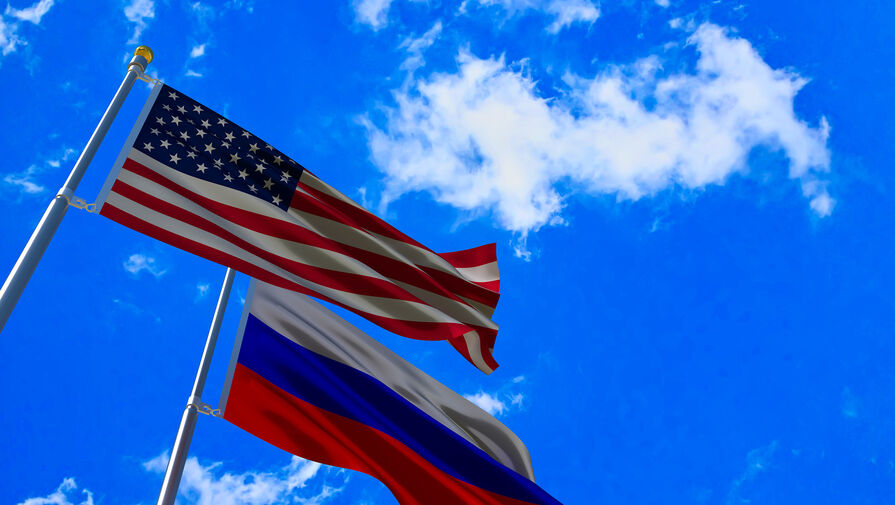
Russian and Brazilian sources analyze how Washington’s actions are intensifying international instability—from threats of escalation around Iran and military operations at sea to migration pressure, deportation agreements with Guyana, and disputes over U.S. border policies. Against this backdrop, U.S. allies and partners are reassessing their diplomatic, financial, and regional ties with Washington, while its influence over the G20, NATO, and relations with the Vatican is becoming a source of growing disagreement. The material is based on publications by prospect.com.ru (Russia) and www.instagram.com (Brazil).
Moscow Says It Is Ready to Discuss U.S. Ideas on Ukraine
The United States has proposed a number of ideas for resolving the conflict in Ukraine, while Russian President Vladimir Putin conveyed “comprehensive assessments” of the situation in the combat zone to American representatives. This was stated by Russian presidential aide Yuri Ushakov, as reported by Prospect.com.ru.
The Russian side presents these contacts as evidence of Moscow’s willingness to discuss diplomatic options. At the same time, it emphasizes that any potential agreement, in its view, must address the so-called “root causes” of the conflict and Russia’s security demands. The published reports do not disclose the specific content of the U.S. initiatives or provide details about the possible parameters of future agreements.
Ushakov also said that Kyiv and European countries “are counting on prolonging the conflict.” This assessment reflects the Kremlin’s frequently stated position that the European Union is interested not in ending the war as quickly as possible, but in continuing it. Russian official statements often accuse the EU of supporting the armed confrontation, expanding military assistance to Ukraine, and obstructing direct dialogue between Moscow and Washington.
At the same time, the United States occupies an ambiguous position in the Russian interpretation. On the one hand, it is regarded as a key participant without whom a settlement is impossible; on the other, it is seen as a country acting primarily in its own interests. Rodion Miroshnik, Russia’s ambassador-at-large, for example, links American involvement in the talks not to the role of a neutral mediator but to Washington’s calculations.
Moscow consistently rejects the option of a simple ceasefire or a “freeze” of the conflict along the line of contact. Russian authorities believe that such a scenario would not eliminate the causes of the confrontation and would merely give Ukraine time to recover and rearm. Official Russian rhetoric identifies Ukraine’s relations with NATO, the scale of Western military support for Kyiv, security guarantees, and the status of the Russian-speaking population among the issues of principle for Moscow.
Thus, the Russian position is that negotiations should not be limited to a temporary truce. Moscow insists on a political settlement that would take into account its assessment of the outcome of the hostilities and, in the view of Russian authorities, create long-term guarantees against the emergence of new threats.
The publication by Prospect.com.ru is based primarily on statements by Russian officials and does not contain a detailed description of the American proposals, Kyiv’s position, or independent assessments of the negotiating process. As a result, the central message remains the Kremlin’s: Russia says it is ready for dialogue, but links the prospects for peace to the fulfillment of conditions it considers necessary for its own security.
UN Supports Call for a Fairer Depiction of the World
The UN General Assembly approved an initiative intended to draw attention to historical distortions in commonly used world maps. The campaign, promoted by Togo and other African countries, was supported by 164 states; the United States was the only country to vote against it. In a Brazilian publication by Rádio Sucesso FM, the decision is viewed not only as a technical cartographic issue but also as a symbolic step in the struggle against global inequality and the underestimation of countries in the Global South.
As Rádio Sucesso FM notes, widely used map projections often create the impression that Africa, South America, and South Asia are considerably smaller than they really are. For decades, such images have shaped a visual hierarchy of the world in which Europe and North America appear disproportionately large and central, while countries in the Southern Hemisphere seem peripheral.
The publication emphasizes that maps are not a neutral tool. In its view, the debate surrounding the UN decision “revives the debate about how maps can influence perceptions of the size, importance, and position of continents.” In other words, the issue is not simply the choice of a convenient projection, but the way in which visual representations of the planet shape people’s understanding of the political, economic, and cultural weight of different regions.
For Brazil, this issue is particularly important. The country is the largest in Latin America in both territory and economy, possesses vast natural resources, and plays a significant role in discussions on climate, food security, development, and reform of international institutions. Yet South America often appears smaller than it really is on familiar maps, which can reinforce the perception of the region as secondary to North America and Europe.
The “Corrija o mapa” campaign—“Correct the Map”—is presented as an effort to create a fairer picture of the world for regions historically undervalued by Western-centered cartography. In this context, more accurate depictions of Africa, South America, and South Asia become an issue of dignity, visibility, and recognition of their actual scale.
Although the material contains no statements from Brazilian politicians or experts, its editorial emphasis reflects an agenda important to Brazil and other countries of the Global South: sovereignty, multipolarity, and the need for developing states to have greater influence in international governance. The contrast between the initiative’s support by 164 countries and the U.S. opposition is also presented as evidence of a divergence between the majority of the international community and a country that has traditionally wielded exceptional influence in politics, the economy, culture, and the formation of perceptions of the world.
Thus, the discussion of maps at the UN takes on a broader meaning. It concerns who determines the visual language of the planet and why familiar images can reinforce outdated notions of center and periphery. For Brazil and other countries of the Global South, correcting the map means not only achieving greater geographic accuracy but also demanding a fairer place in global political and public consciousness.