In early June 2026, America again became the central nerve of global politics — but not in the familiar role of a “unipolar leader,” rather as a source of simultaneous dependence, irritation and anxious interest. In Australia there is a debate about whether the alliance with Washington is turning the country into a hostage of the American agenda. In Germany heated discussions are under way about how to live with Trump’s USA without collapsing under NATO’s umbrella. In China the US is increasingly described as a weakening, yet still dangerous power whose economic and military turbulence requires cool calculation. Against the backdrop of the Iran war, US strikes on Venezuela, trade wars and internal American conflicts, three countries present different, sometimes unexpected lenses on Washington — from a worried ally to a competing civilizational model.
The first major strand of debate is the new “hard” US foreign policy that combines tariff pressure, military coercion and a demonstrative reduction of commitments to allies. In Australia, Washington’s plans to impose a 12.5 percent “anti-slavery” tariff on a range of Australian goods under the pretext of combating forced labor caused a stir. Prime Minister Anthony Albanese characterized this as an “ideological divergence” with the Trump administration, noting that America, contrary to its usual image, runs a trade surplus with Australia — that is, it sells more to Australia than it buys. An ABC News piece emphasizes that for an almost unconditional ally such criticism marks a noticeable shift, reflecting growing irritation at how Washington uses the language of human rights and security to justify protectionism and unilateral pressure on partners. The ABC News article underscores that in Canberra people increasingly speak of “double standards” and argue that the new wave of tariffs contradicts the rhetoric of “free and open trade” the US appealed to just a few years ago. (abc.net.au)
In Germany the issue of American tariff policy and the broader “America First” course is embedded in a darker context of three simultaneous crises: the Iran war, Russian aggression on NATO’s eastern flank, and mounting economic pressure from Washington. A Handelsblatt analytical piece on Berlin’s foreign policy challenges states plainly that an additional blow to German business has been “Donald Trump’s punitive tariffs,” along with a general rise in geopolitical uncertainty. It also recalls that Trump alternately threatens to pull the US out of NATO and calls American security guarantees into question, turning the transatlantic alliance from an “anchor of stability” into something like a nervous partnership where no one is sure about tomorrow. The Handelsblatt article notes that the German economy feels the effects not only of direct tariffs but also of a chain reaction: market reallocations, sanctions, and retaliatory measures by other countries. (handelsblatt.com)
Chinese commentators, by contrast, are much less emotional and interpret US tariff and sanctions policy more as a predictable element of a long game. In a recent macroeconomic review of the US economy by SPDB International written for a Chinese audience, the US is described as an economy recovering largely thanks to “stimulus policy and aggressive protectionism”; the review also parses the waves of tariffs against China and India and their temporary “breathers” after negotiations. The report notes that after talks in London Washington keeps 55 percent tariffs on Chinese goods, while Beijing eases export controls on rare earths and later temporarily freezes some tariffs after the Stockholm talks in 2025. This dynamic is depicted not in moral terms but in strictly pragmatic categories: as a “game of endurance” in which the US needs imported inflation and a political regime of a “besieged fortress,” while China must balance protecting its tech supply chains and maintaining growth. Details are discussed in the study “2026 年美国宏观经济展望:政策刺激引领经济复苏之路” on the SPDB International site. (spdbi.com)
The second recurring storyline is military policy and the reconfiguration of alliances around the US. In Australia this is primarily a fierce debate about AUKUS, American submarines and the real cost of a “deepened partnership.” After the US changed the terms of the offer — instead of two used and one new submarine now promising to transfer three operational Virginia-class submarines — the domestic debate reignited. Green Senator David Shoebridge told ABC that the argument for AUKUS — defending sea trade routes — does not hold up because Australia is physically incapable of controlling such distances and in any case depends on American infrastructure and intelligence. He argues that AUKUS is more likely to turn the country into a potential staging ground and target in a possible US-China conflict than into a genuine maritime security actor. ABC also cites data showing growing Australian distancing from the US amid traumatic experiences of Middle Eastern wars and rising far-right violence in America. (abc.net.au)
In an analytical piece for The Diplomat, popular among Australian and Asian experts, Canberra’s new defense budget of 2 percent of GDP is described as “insufficient” from Washington’s perspective, which insists on 3.5 percent. The author concludes that Australia’s strategic “ambiguity” — an attempt to hold on to the US while not provoking China — “is reaching the limits of what’s possible,” and the country is forced to choose more decisively. The delivery of American submarines and expanded cooperation in undersea technologies, the article argues, deepen asymmetry: the military architecture is increasingly controlled by Washington, while the burden of political and economic risk falls on Canberra. Read the analysis “Australia’s Strategic Ambiguity Is Running Out of Road” in The Diplomat. (thediplomat.com)
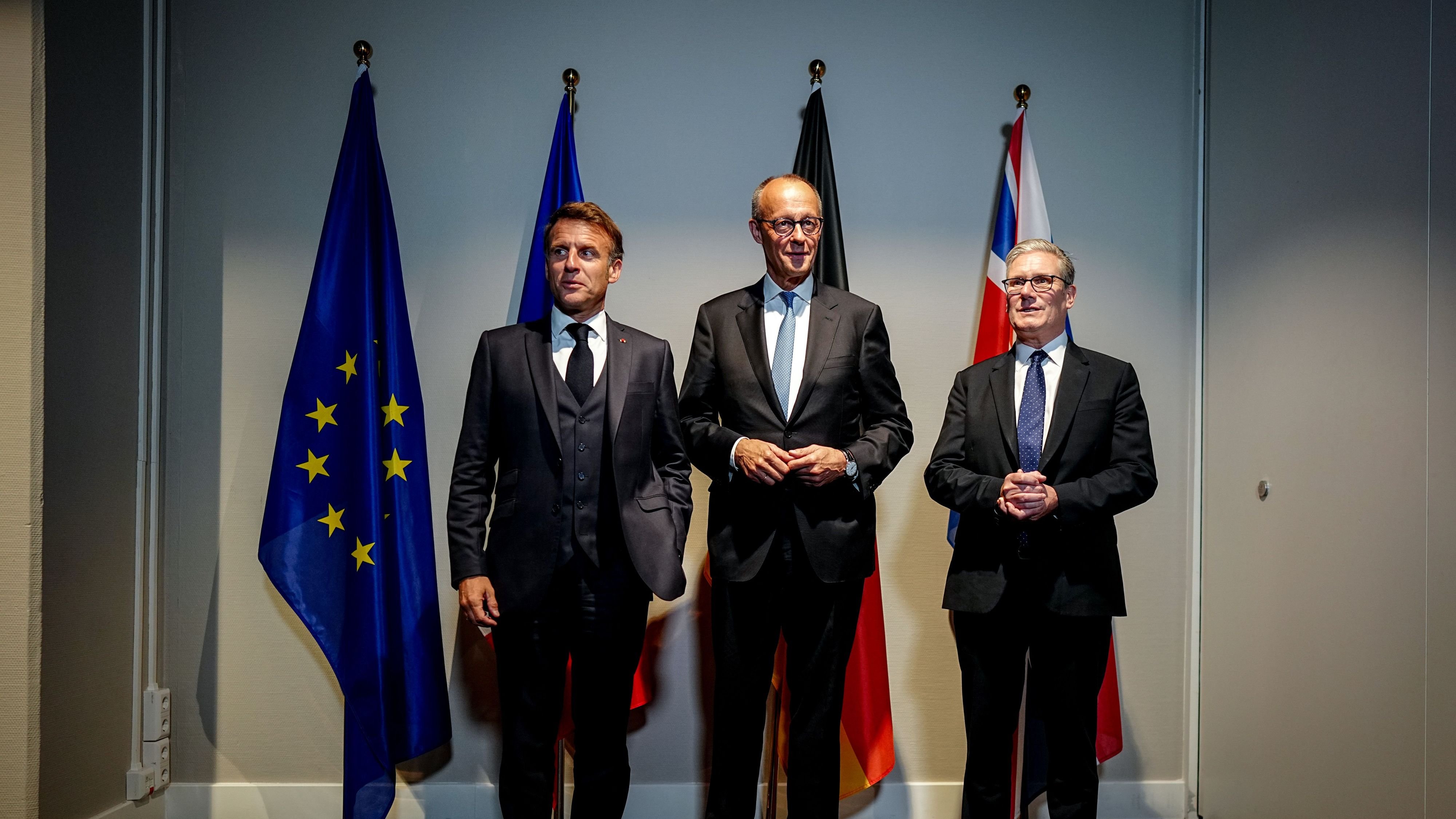
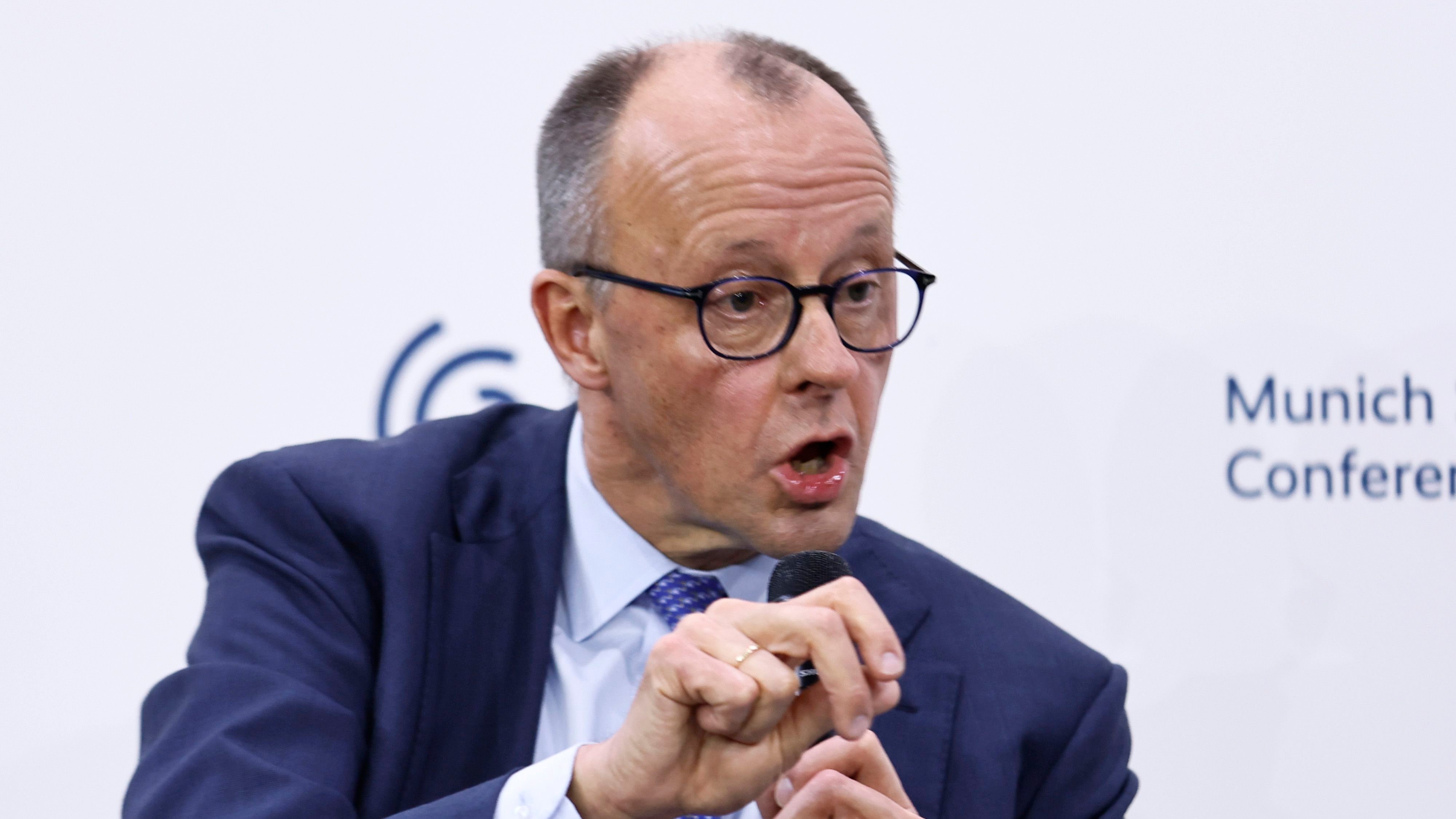
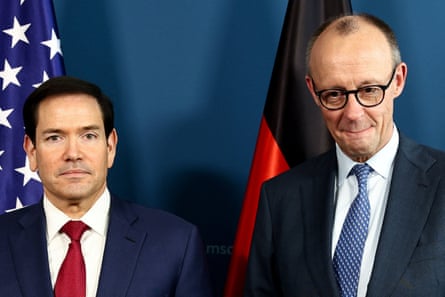
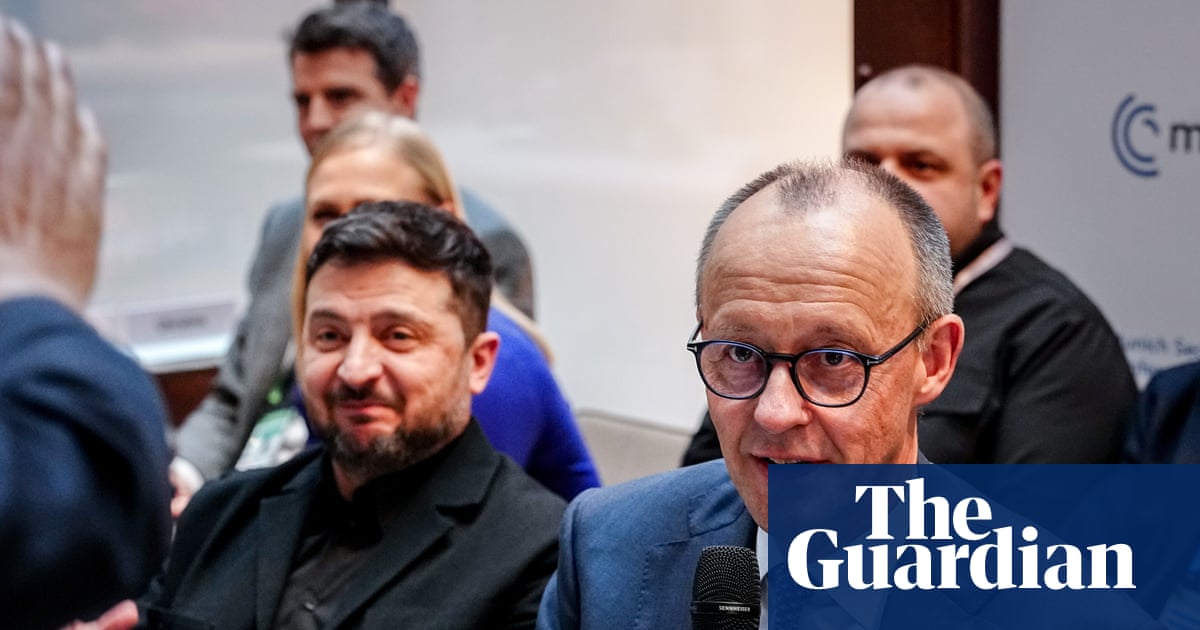
Germany, in military terms, is trying to emancipate itself but is forced to do so under pressure from Washington. Vice-Chancellor and SPD leader Lars Klingbeil told Euronews in January that the “old transatlantic relationship” is effectively falling apart and that Europe must more firmly defend its interests. His remarks were interpreted as an attempt to prepare the public for a world in which the US is no longer perceived as an unconditional “big brother” in security, but rather as an occasionally unreliable, though indispensable, partner. Meanwhile Chancellor Friedrich Merz in Munich, according to Handelsblatt, cast himself as “anti‑Trump”: calling for a “strong Europe” and a “reset of the partnership with the US,” saying America can no longer “go it alone” and needs partners — but German analysts note this tone also sounds like a call for greater European autonomy in defense. See details in Handelsblatt and The Guardian. (handelsblatt.com, theguardian.com)
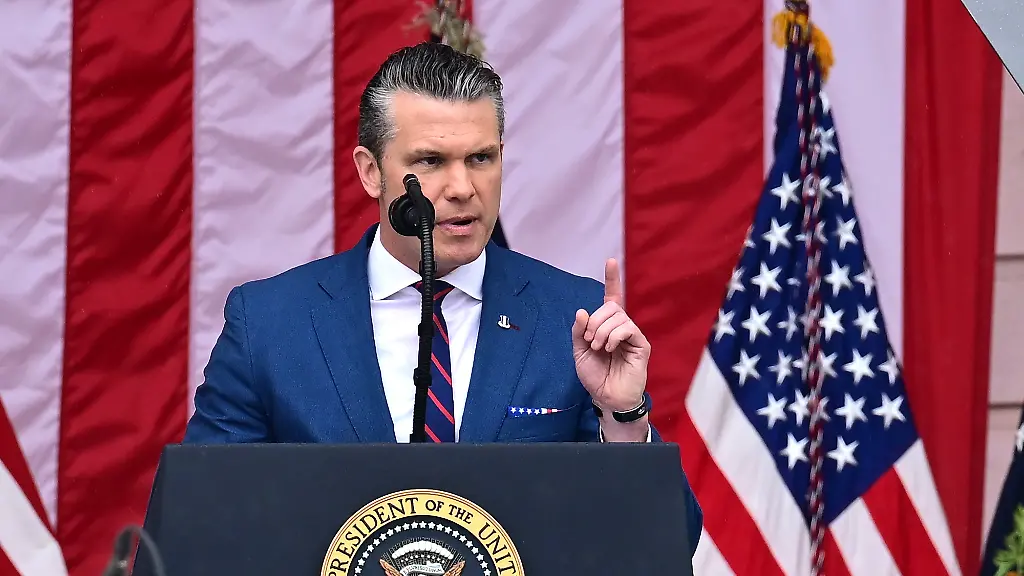
This cautious tone contrasts with much sharper Pentagon rhetoric. The new US Secretary of War, Pete Hegseth, reportedly demanded on German channel n-tv that European NATO states provide “more budget and fewer moral sermons,” while warning that the US intends to restrict or even stop providing certain key military capabilities for Europe’s defense. According to n-tv, allies are set to be officially notified in June which specific elements of military infrastructure and contingents will no longer be guaranteed. The piece emphasizes that for Berlin this sounds like an ultimatum: either sharply increase your own spending and assume the political risks of a hard line toward Iran and Russia, or accept the collapse of American guarantees. See the analysis on n-tv. (n-tv.de)
In China, US military activity is discussed in a noticeably more restrained manner, but two episodes evoke sustained commentary: the US war against Iran and the American strike on Venezuela. On the latter, official Chinese media repeated a formula often used in its diplomacy: “against the use of force bypassing the UN Security Council,” a call for de‑escalation and respect for sovereignty. A special article on Chinese Wikipedia devoted to the “international reaction to the US attack on Venezuela in 2026” cites the Chinese Foreign Ministry’s statement condemning the strike and calling for political dialogue, while avoiding direct threats or sanctions. This restraint is explained by Chinese analysts as less about sympathy for Caracas than about not wanting to create a precedent of tacit approval for unilateral US use of force in Latin America, a region historically sensitive to Washington. The official position is summarized in the article “2026 年美国袭击委内瑞拉的国际反应” on Chinese Wikipedia. (zh.wikipedia.org)
The third common motif is a crisis of confidence in American democracy and the image of the US as a “normative” power. In Australia a major ABC feature describes Donald Trump as a “political kryptonite” figure for local politics: any Australian leader closely associated with him risks severely losing support. Journalists cite Talbot Mills Research data showing the US president’s approval rating in Australia has plummeted, and many respondents express “deep unease” about political violence and radicalization in America. The article argues that for a country that for decades regarded the US as a model of stable democracy, the current picture is a “source of concern and cautious distancing,” even as pragmatic security cooperation continues. Read the ABC column “Trump is political kryptonite in Australia but diplomacy still guides the way.” (abc.net.au)
In Germany disappointment is more institutional: it’s not only about Trump’s personality, but about a structural rupture of values. Vice-Chancellor Klingbeil warned in the aforementioned remarks that “relations are dissolving” — meaning that finding common language on the rule of law, human rights and international law is becoming increasingly difficult. This is reflected in the consumer sphere as well: a Washington Post report from Germany describes how even American companies try not to flaunt the Made in USA label to avoid alienating customers for whom the US increasingly connotes aggressive policy and an unpredictable leader. Former German politicians told the paper that Berlin’s key task for the next “five to ten years” is to “keep the US on its side, however inconvenient,” until Germany and the EU grow into greater military autonomy. See the WP report “After 80-year bond, Germans find breaking up with U.S. is hard to do.” (washingtonpost.com)
Chinese public space views the crisis of American democracy through the prism of broader systemic competition. In compilations of commentary and on popular forums like r/Chinairl in the English-language Reddit segment — widely read in China — the US is often depicted as a country “losing moral superiority” and forced to compensate with technological and military advantages. A characteristic example is debates around an American story on a Chinese solar power plant in Gansu desert: users mock that American critics are ready to see “forced labor” even in… the sun, just to preserve the familiar narrative of China as an exploiter. This commenter humor reflects a more serious point: many Chinese authors believe the US is stuck in a role that cannot properly acknowledge a rival’s technological progress and therefore resorts to moralizing constructs. Discussions under the post “美国ABC新闻对甘肃沙漠太阳能利用的报道” on r/Chinairl illustrate this. (reddit.com)
At the same time Chinese academic and business circles view the US far less ideologically. The aforementioned SPDB International macroeconomic report stresses that despite political turbulence the American economy remains “a key platform for innovation and consumer demand,” to which Chinese companies continue to orient themselves. Similarly, studies by Chinese researchers on American large language models and their cultural representations conclude that “American values and frames of thought” still strongly influence global digital infrastructure even as states try to build national alternatives. This creates an interesting dualism: the US as political rival and simultaneously as a technological and cultural gravitational center. (arxiv.org)
A separate line of debate concerns US interference in allies’ domestic politics and reactions to it. In Australia’s left media People’s World, columnist Paul Gregoire writes about “increasing US interference in Australia’s domestic politics” — from pressure around AUKUS to information campaigns against antiwar and antinuclear movements. He cites leaked diplomatic cables in which the State Department allegedly describes antiwar activists as “tools in the hands of China and Russia” and urges embassies in Australia and other countries to coordinate efforts to blunt their influence. The critique rests on the idea that Washington uses rhetoric about “countering foreign influence” to actually interfere in legitimate domestic debate in allied societies about war and peace. Read “U.S. steps up interference in Australia’s domestic politics” on People’s World. (peoplesworld.org)
A similar, though more covert, irritation appears in the German debate. n-tv’s article on Hegseth’s demand that Europe “preach less” and spend more on defense resonated on German social media largely because of its patronizing tone: commentators point out that it was the US that actively promoted norms of international law and human rights, and now when Europeans try to invoke those norms in the context of the Iran war or the strike on Venezuela, Washington urges “less moralizing.” Many see in this not only a political double standard but an information campaign aimed at discrediting critics of the American line as “naive moralists” who obstruct “realpolitik.” (n-tv.de)
Against this background, China’s response to US sanctions and accusations of Beijing as a “manipulator of public opinion” looks almost mirror‑image. In a January issue of a Wuhan city paper analyzing US sanctions on Venezuela and recent CNN reports about Chinese influence, the author emphasized that the US itself has for years used not only media but a network of NGOs and foundations to promote its narratives, and thus current accusations against Beijing of “information operations” are seen in China as “projection and an attempt to preserve a monopoly on global influence.” The piece also notes that Washington steps up pressure on Chinese tech companies in AI and social networks out of fear of losing control over the global information landscape. Details are discussed in the PDF issue “外交部发言人就美国对委内瑞拉实施…” on Changjiang Daily’s site. (cjrb.cjn.cn)
Finally, an important but less headline-grabbing strand is reflections on how to live in a world after a possible US “withdrawal” from international institutions. Chinese sources refer to the already symbolic “2026 campaign of large-scale US withdrawals” from a range of organizations — from the World Health Organization to climate partnerships. Chinese commentators call this “the dismantling of American globalism” and simultaneously a “window of opportunity” for Beijing and other capitals to propose alternative formats. The Chinese Wikipedia article “美国 2026 年大规模 ‘退群’ 行动” quotes sharp assessments not only from foreign politicians — like California Governor Gavin Newsom, who called leaving WHO “a reckless decision” — but also analysts who link these steps to an internal crisis of the American political system. (zh.wikipedia.org)
For Australia and Germany the prospect of an “American retreat” from institutions and alliances is paradoxical. On one hand it is frightening: Canberra and Berlin have for decades built their security and external economic strategy on the premise of a sustained US presence. On the other hand it opens space for conversations about sovereignization: Germany seriously discusses the idea of a “European nuclear shield” and strengthening military programs, while Australia reconsiders AUKUS and possible diversification of defense partnerships toward more multilateral Asian formats. In both cases Washington is still needed, but no longer as the only pole.
The overall picture emerging from Australian, German and Chinese debates is far from a simplified scheme of “anti‑Americanism” or “ally loyalty.” Rather, it is a painful adaptation to an America that itself no longer wants — or cannot — be the guarantor of order it was in recent decades. In Canberra the US is still seen as an indispensable ally, but no longer as a moral exemplar. In Berlin Washington is viewed as a partner one cannot yet abandon, but to whom it is increasingly difficult to appeal in the language of shared values. In Beijing the US is the main strategic rival whose internal instability and external aggression create both risks and windows of opportunity. In this new world, nuanced analysis of local reactions is not a luxury but a necessary tool: only by understanding how Washington is seen in Sydney, Berlin or Beijing can one truly assess what the next turn of global politics will look like.