Donald Trump’s decisions and foreign-policy course continue to cause concern far beyond the United States. Legal resistance to his restrictions, possible agreements with Russia, pressure on Ukraine, diplomacy toward Iran, and sanctions policy are increasing uncertainty surrounding America’s commitments. Against this backdrop, concerns are growing about new confrontations with China and Russia, as well as the consequences of Washington’s decisions for global security. This material is based on publications by 24tv.ua (Ukraine) and elpais.com (Venezuela).
Ukraine on the War: Technology, Resilience, and the Cost of Resistance
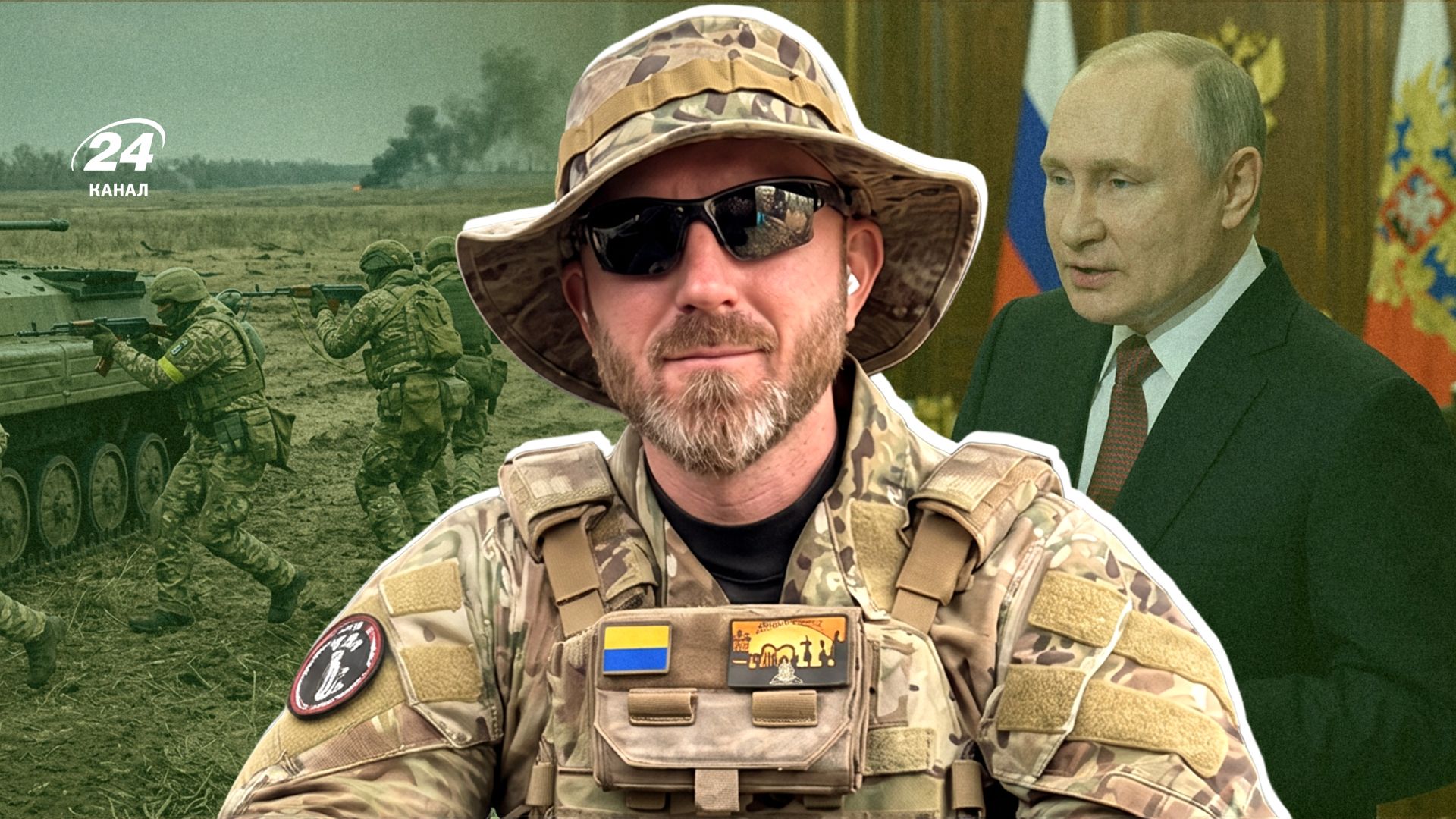
For Ukraine, the war is not an abstract geopolitical dispute but a daily reality in which the front line is increasingly penetrating the lives of cities far from the battlefield. In an interview with 24 Kanal, American intelligence officer and Marine Matthew Sampson, who has served in Ukraine’s Defense Forces since 2022, discusses the technological transformation of warfare, the prospects for negotiations with Moscow, NATO security, and the Ukrainian experience that could become a resource for its allies.
However, questions from the journalist from Zaporizhzhia give the conversation a more personal dimension. She notes that the city has recently become more dangerous than it was in 2024: drones can reach the city center, anti-drone nets cover some districts, and her family continues to live there. Behind the widespread admiration for Ukrainian resilience, the journalist emphasizes, it is impossible to ignore the real price: “These Ukrainians are truly resilient, but they are paying an enormous price for it.”
This is especially acute in Kherson, where FPV-drone attacks on civilians are described as a “human safari.” In the Ukrainian view, such strikes are not an inevitable side effect of hostilities but a deliberate campaign of terror against the civilian population. The constant threat, deaths, and chronic psychological strain have become part of life in cities near the front line.
At the same time, Sampson believes that Ukraine is already significantly changing the very nature of modern warfare. According to him, on the Zaporizhzhia front, ground-based robotic systems deliver ammunition, water, food, and medical supplies to forward positions. In some units, such systems account for up to 90% of supplies. In his assessment, robotic logistics not only increases the military’s effectiveness but also reduces risks to service members, including those evacuating the wounded.
Artificial intelligence is also taking on particular importance. Sampson spoke about using AI to process intercepted communications and identify targets, while stressing that the final decision to use weapons remains with a human. Ukraine, forced to adapt rapidly to Russian military pressure, is turning that adaptation into a technological advantage of its own.
In Sampson’s view, the country can no longer be regarded solely as a recipient of Western aid. In 2022–2023, Ukraine, as he put it, “imported security,” turning to partners for weapons, ammunition, and air-defense systems. It is now gradually beginning to “export security” by sharing combat experience, technological solutions, and approaches to military training with its allies.
From this perspective, investment in Ukrainian drone production, the creation of joint U.S.-Ukrainian funds, and military-cooperation programs should be seen not as charity but as an investment in the security of Europe and the United States. Ukraine is seeking to establish itself not as the West’s peripheral front but as one of its important defense and technology partners.
Sampson is also skeptical of attempts to reach a political agreement with the Kremlin without applying serious pressure. He believes Moscow will agree only to terms involving the transfer of Ukrainian territory. “Russia is losing this war… The only question is when you decide to surrender,” he said, comparing Vladimir Putin’s position with that of Adolf Hitler at the final stage of World War II.
For Ukrainian audiences, this comparison reflects a widespread belief: an aggressor cannot be stopped through concessions because it sees compromise not as a path to peace but as a sign of the opponent’s weakness. That is why negotiations without military, political, and economic pressure on Russia are considered largely ineffective in Kyiv.
The interview also presents the war in Ukraine as part of a broader threat to NATO. Sampson warns that Russian hybrid operations in Germany, the United Kingdom, and other countries could develop into a direct confrontation if the Kremlin concludes that the Alliance is unwilling to respond. In response, the journalist expresses an idea important to Ukraine’s debate about the future: Kyiv may not need to passively wait to join NATO “in 10–15 years,” but should already be strengthening a regional security system with Poland, the Baltic states, Romania, the Scandinavian countries, the United Kingdom, and Germany.
This approach assumes that Ukraine can be not only an object of collective defense but also one of its pillars. Its combat experience, advanced drone industry, and ability to resist the Russian army are viewed as assets capable of strengthening European security.
Sampson also discusses the role of Russian propaganda and, in his view, the Kremlin’s systematic underestimation of Ukraine. He believes that Russia’s leadership and part of its society exist within a fictional narrative in which the invasion is presented as “liberation.” As an example, he cites accounts from Ukrainians who experienced occupation: Russian soldiers sincerely asked local residents whether they were happy that the troops had arrived.
For Ukraine, this confirms that the war is based not only on government decisions and military orders but also on a deeply rooted imperial ideology. References to the Chernobyl disaster, the sinking of the Kursk submarine, and the collapse of the Soviet Union in 1991 are used in the conversation to characterize a political culture associated with secrecy, lies, and an unwillingness to acknowledge its own failures.
At the same time, Sampson does not deny Ukraine’s own problems, particularly corruption. He acknowledges that it makes it harder to explain the need to support Kyiv to an American audience. But, he says, there is a fundamental difference between concealing abuses and fighting them publicly. Ukraine investigates corruption cases, detains suspects, strengthens oversight of Western aid, and expands the digitalization of public services.
For Kyiv, this is not only a matter of its reputation with partners. A state seeking weapons, investment, technological cooperation, and a central role in Europe’s security architecture must demonstrate its ability to ensure transparency, pursue reforms, and govern effectively.
The main conclusion of the interview is that Ukrainian resistance cannot be reduced to a slogan about indomitability. Behind the successes in drone warfare, robotic logistics, and international cooperation lie exhaustion, trauma, civilian deaths, and daily risks for military personnel. Ukraine insists that its survival has become part of the security of the entire West, while also reminding the world that the country’s resilience does not erase the high price people are paying for it.
U.S. Court Temporarily Blocks Trump’s Mail-Voting Restrictions
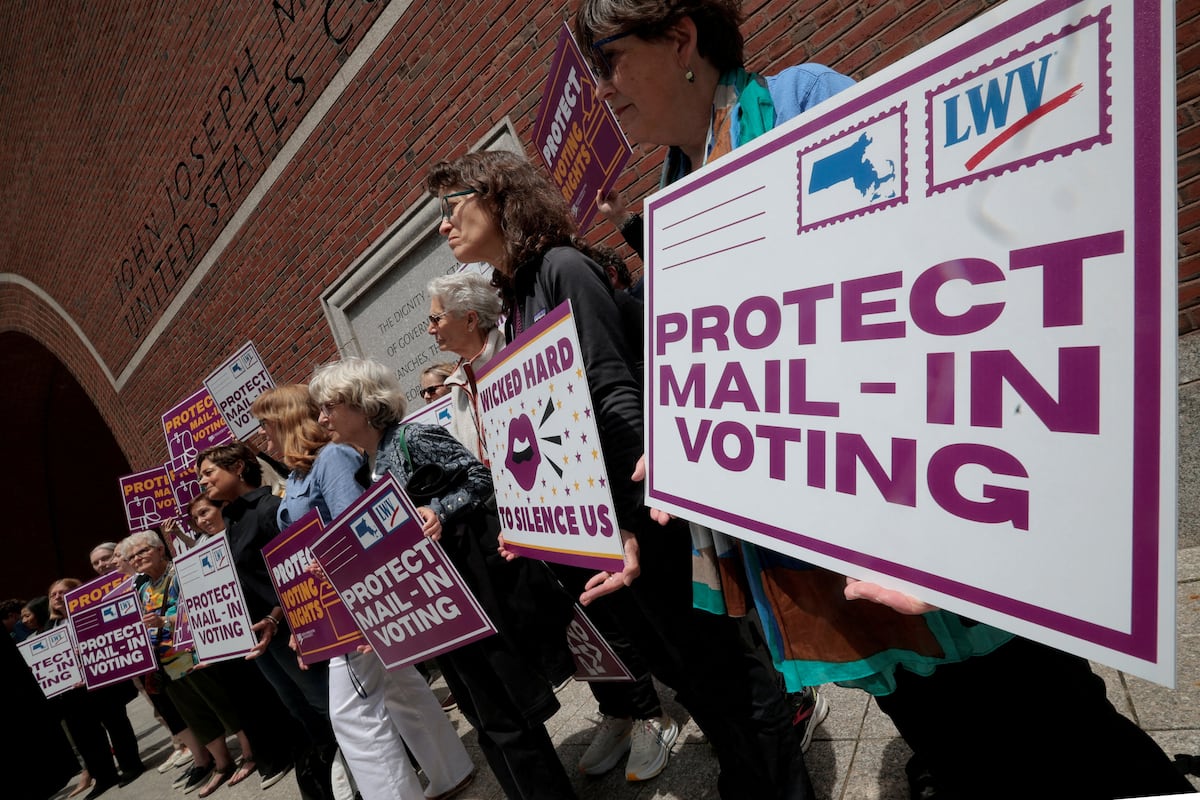
The U.S. Supreme Court temporarily blocked Donald Trump’s initiative to standardize and tighten mail-voting rules ahead of the midterm elections. As EL PAÍS reports, the key argument was that states and local authorities were not prepared to implement the new requirements quickly without risking the disenfranchisement of millions of voters.
Justice Brett Kavanaugh stated that “state and local election officials do not have sufficient time to reasonably implement the rule before the election.” Thus, the court’s decision became a temporary barrier against changing the procedure at a time when any technical error or administrative delay could directly affect voter participation.
Possible disruptions to the work of the U.S. Postal Service caused particular concern. One of its employees warned of the risk of a “catastrophic failure”: errors in barcodes or an inadequately prepared digital system could have resulted in entire batches of ballots not being delivered on time. In an election, such a problem would mean not merely logistical inconvenience but the potential loss of votes belonging to thousands or millions of people.
Trump justified the need for the changes by citing the fight against fraud. However, the publication notes that he continues to make such claims without evidence following his defeat in the 2020 election. Democratic Senator Chuck Schumer called the initiative an attempt to “make voting more difficult” and said it was “clearly unconstitutional.”
The dispute is especially important for Latino communities, including Venezuelans living in the United States following the large-scale migration of recent years. For many workers with long hours, unstable employment, or limited mobility, voting by mail remains one of the few realistic ways to participate in elections. Restricting this mechanism would have affected most severely those who find it difficult to take a day off or reach a polling place in person.
For a Venezuelan audience, the story may appear to be a telling example of the importance of independent institutions. In a society where voter registration, access to voting, ballot counting, and the legitimacy of results have long been sources of mistrust and political controversy, the American legal conflict is not perceived as a technical debate. It serves as a reminder that election rules can change the real balance of political participation.
At the center of the situation is the question of who has the authority to determine electoral procedures and whether it is permissible to change them shortly before voting, when such steps could affect the composition of the electorate and the outcome of a campaign. The Supreme Court’s decision does not resolve the dispute, but it shows that the executive branch may face limits if its actions threaten citizens’ access to the ballot.
This is the main conclusion that can be drawn from the EL PAÍS publication: the resilience of democracy is determined not only by holding elections but also by the ability of judicial, electoral, and administrative institutions to prevent in time measures capable of depriving citizens of their right to vote.