The international reaction to Donald Trump’s policies consists of disparate but interconnected developments. In reports related to Venezuela, attention is focused on U.S. security agreements, military activity in Colombia, threats to exercise veto power, and alleged interference in Brazil’s elections—signs of growing regional concern about American influence. The South Korean agenda adds reports of Trump’s tariff threats against Canada and the EU, tensions surrounding Iran, and discontent within the Republican Party. Ultimately, Washington’s policy appears both as an instrument of external pressure and a source of domestic instability. This material is based on reports by the BBC (South Korea) and the American Chamber of Commerce in Colombia (Venezuela).
Lee Jae-myung Seeks to Restore Trust Amid Crisis
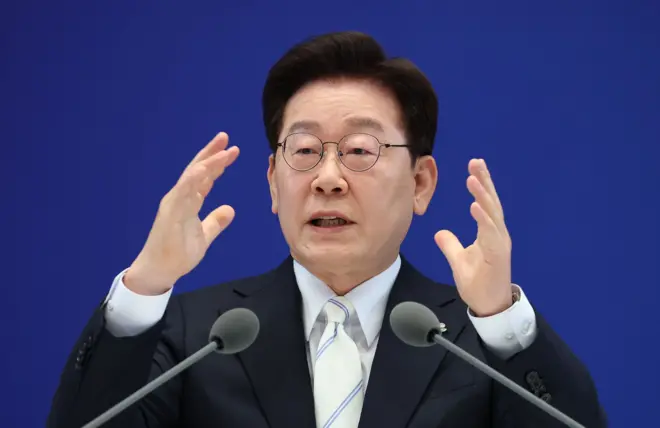
The press conference held by Republic of Korea President Lee Jae-myung was not only a platform for statements on foreign policy and reforms, but also an attempt to restore public trust amid falling approval ratings, personnel scandals, and disputes over proposed changes. As BBC Korea notes, the speech focused on concerns that are particularly sensitive in South Korean society: the security of maritime trade routes, the risk of being excluded from negotiations on North Korea, fears about the concentration of power, and dissatisfaction with socioeconomic policy.
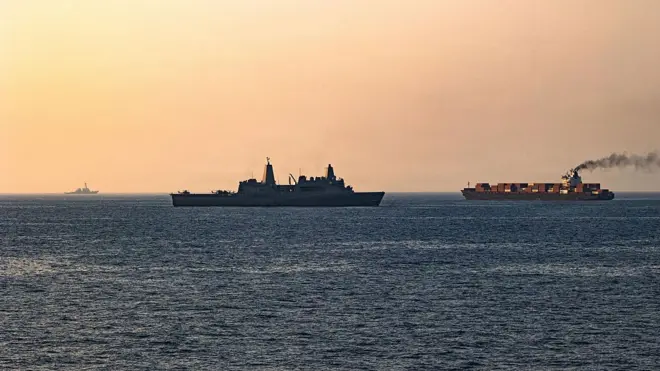
In foreign policy, Lee Jae-myung ruled out sending combat units to the Strait of Hormuz. “There will be no troop deployment connected with participation in or intervention in the war,” he said. At the same time, Seoul does not intend to distance itself completely from protecting shipping. The president allowed for the strengthening of the existing Cheonghae Unit in the region if this is needed to protect Korean commercial vessels, oil routes, and civilians.
This formula reflects South Korea’s complex dilemma. The country is highly dependent on energy imports and export trade, so disruptions along routes through the Red Sea, the Strait of Hormuz, and the Middle East immediately affect fuel prices, industrial supplies, and the domestic economy. Lee recalled that at the start of the conflict, Korean vessels avoided entering the Red Sea, creating problems with oil supplies. In his view, halting transport when the threat level is relatively low could cause excessive damage to the economy. Seoul is therefore attempting to protect its trade interests without turning the mission to ensure freedom of navigation into direct participation in the war.
Another key issue was the possible resumption of contacts between the United States and North Korea. South Korea has traditionally feared a “Korea exclusion” scenario in which Washington and Pyongyang discuss the nuclear issue without Seoul’s full participation. Lee urged citizens “not to worry,” while acknowledging that South Korea could initially find itself somewhat sidelined in the negotiating process.
The president believes that restarting dialogue between the United States and North Korea will be easier than establishing direct inter-Korean contacts. If U.S.–North Korean talks produce results, this could also create conditions for dialogue between Seoul and Pyongyang. Lee said he was continuing preparatory work for a possible meeting between Donald Trump and Kim Jong Un. For South Korea, this is not a matter of diplomatic image: any decisions concerning North Korea’s nuclear and military threats directly affect the security of millions of people in the country.
In domestic policy, the president separately sought to dispel suspicions that constitutional reform could be used to extend his own time in office. “I have absolutely no intention of running for re-election,” Lee said, calling the 1987 Constitution “clothing that no longer fits the Republic of Korea.”
This wording is especially sensitive in the Korean context. The 1987 Constitution was adopted during the country’s democratic transition after authoritarian rule and is viewed as a crucial safeguard against excessive concentrations of power. As a result, any initiative to change the presidential system inevitably triggers concern: society fears that political reform could weaken democratic checks and balances.
Lee also reaffirmed his commitment to “irreversible prosecutorial reform.” The issue remains one of the country’s most polarizing. Supporters of the changes believe it is necessary to limit the prosecution’s enormous powers, including its influence over political investigations. Critics, however, warn that reducing investigative powers could weaken the fight against crime and increase the politicization of law enforcement agencies.
The president acknowledged the risk of gaps emerging after the prosecution service loses the right to conduct additional investigations. He promised to establish oversight mechanisms for the police so that the reform would not result in another powerful institution operating without accountability. Lee is thus attempting to show that the changes do not simply amount to transferring powers from one agency to another.
The most notable part of the speech was his public acknowledgment of his own mistakes. Against the backdrop of falling support, Lee Jae-myung said that he himself bore primary responsibility: “I lacked tact; I lacked communication.” He acknowledged that he may not have sufficiently taken into account the objections of people harmed by certain government decisions, and concluded that he had failed to show citizens enough respect.
In South Korean politics, where presidential approval ratings depend heavily on perceptions of fairness, the quality of personnel appointments, and the response to public dissatisfaction, such words carry particular weight. They represent an attempt to regain the moral initiative and demonstrate a willingness to adjust his governing style without abandoning his reform agenda.
The president also addressed divisions within his own progressive camp. He said that supporters of democratic reform “are all supporters of Moon Jae-in, Roh Moo-hyun, Kim Dae-jung, and comrades of Lee Jae-myung.” The phrase is intended to link the current administration to the legacy of liberal-democratic presidents and ease tensions among various factions, which have intensified over personnel policy and the pace of reforms.
Among his domestic priorities, Lee also named stabilizing housing prices and developing Sejong as the administrative capital. Expensive real estate remains a chronic source of dissatisfaction, particularly among young people and residents of the capital region. The plan to divide functions between Seoul as the “economic capital” and Sejong as the administrative center continues the longstanding strategy of reducing the excessive concentration of population, capital, and government institutions in the capital.
As a result, Lee Jae-myung’s speech offered a portrait of contemporary South Korea’s political anxieties. External security is inseparable from the vulnerability of trade routes and the risk of being excluded from negotiations over the peninsula’s future. Domestic reforms, meanwhile, are assessed through trust in the authorities, fears of increased presidential control, and everyday problems—from housing to fairness in the law-enforcement system. As the BBC Korea analysis indicates, the president is trying simultaneously to convince society of his restraint abroad and prove at home that the government is capable of listening to citizens.
Colombia and the United States Discuss an Agenda of Regional Importance
The American Chamber of Commerce in Colombia announced an event devoted to updating the bilateral agenda between Bogotá and Washington. Although the program contains no statements by Venezuelan authorities, sources from Venezuela, or assessments by local experts, it is of interest to a Venezuelan audience as an indication of strengthening strategic ties between Colombia and the United States in the areas of security, combating drug trafficking, migration, trade, and investment.
The central theme of the discussions will be a reconsideration of Colombian-American relations against the backdrop of trade protectionism, the restructuring of global supply chains, and geopolitical competition. The program lists Colombia’s Defense Minister Pedro Sánchez, Justice Minister Ángela Buitrago, former President Juan Manuel Santos, U.S. Chargé d’Affaires John McNamara, Colombia’s ambassador to the United States Daniel García-Peña, as well as representatives of business and parliamentary circles.
Security will be one of the key areas. The program specifically includes a discussion of the United States’ “strategy to prevent Colombia from being decertified,” as well as cooperation in combating drug trafficking. This agenda is particularly sensitive for Venezuela: the countries share a lengthy border, armed groups operate in border areas, and cross-border crime regularly becomes the subject of mutual accusations. Deeper security cooperation between Bogotá and Washington could cause concern in Caracas, especially given Venezuela’s longstanding political confrontation with the United States.
The migration issue, identified by the organizers as “migration and bilateral cooperation,” is no less important. Colombia remains one of the main host countries for Venezuelan citizens, so decisions that may arise from U.S.–Colombian coordination have direct implications for millions of Venezuelan migrants. They could involve humanitarian assistance, resettlement mechanisms, the regulation of foreigners’ legal status, border controls, and joint aid programs.
The conference’s economic agenda addresses Colombia’s dependence on the U.S. market, tariff policy, nearshoring, reindustrialization, competition from China, and the attraction of investment. The very wording of the question about trade with the United States is telling: “dependence or strategy?” For Bogotá, this is a debate over how to diversify its foreign economic ties while maintaining a partnership with its main market and investor. For Venezuelan observers, the discussion may serve as a reminder of the consequences of foreign-policy isolation and limited access to financial and trade markets.
The topics of coffee, logistics, outsourcing, flower exports, industrial development, and investment show that Colombia seeks to turn its relationship with the United States into more than a mechanism for ensuring security. It also aims to use it as a tool for regional development, job creation, and integration into new production chains. Against the backdrop of Venezuela’s sanctions restrictions and weaker integration into foreign trade, Colombia’s strategy appears to be an attempt to use its geographic proximity to the United States to expand exports and industrial cooperation.
At the same time, the AmCham Colombia program is neither a report on agreements reached nor a reflection of Caracas’s official position. It is an announcement of a business and political conference outlining the issues, participants, and priorities of the Colombian-American elite. The Venezuelan dimension emerges only indirectly—through the shared border, migration flows, regional security, and competition for investment.