Ukrainian commentators assess Donald Trump’s foreign policy as a factor capable of affecting Russia’s wars against Ukraine and the confrontation surrounding Iran. At the center of attention are fears that the U.S. president’s political instincts and decisions could intensify crises, make American support less predictable, and alter Moscow’s and Tehran’s calculations. At the same time, observers are discussing whether pressure from Washington, its policy of deterrence, and Trump’s personal leadership can secure real concessions from the opponents. The material is based on reports by RBC-Ukraine (Ukraine) and RFI (Ukraine).
Zelensky: Concessions to Russia Will Not Bring Ukraine Lasting Peace
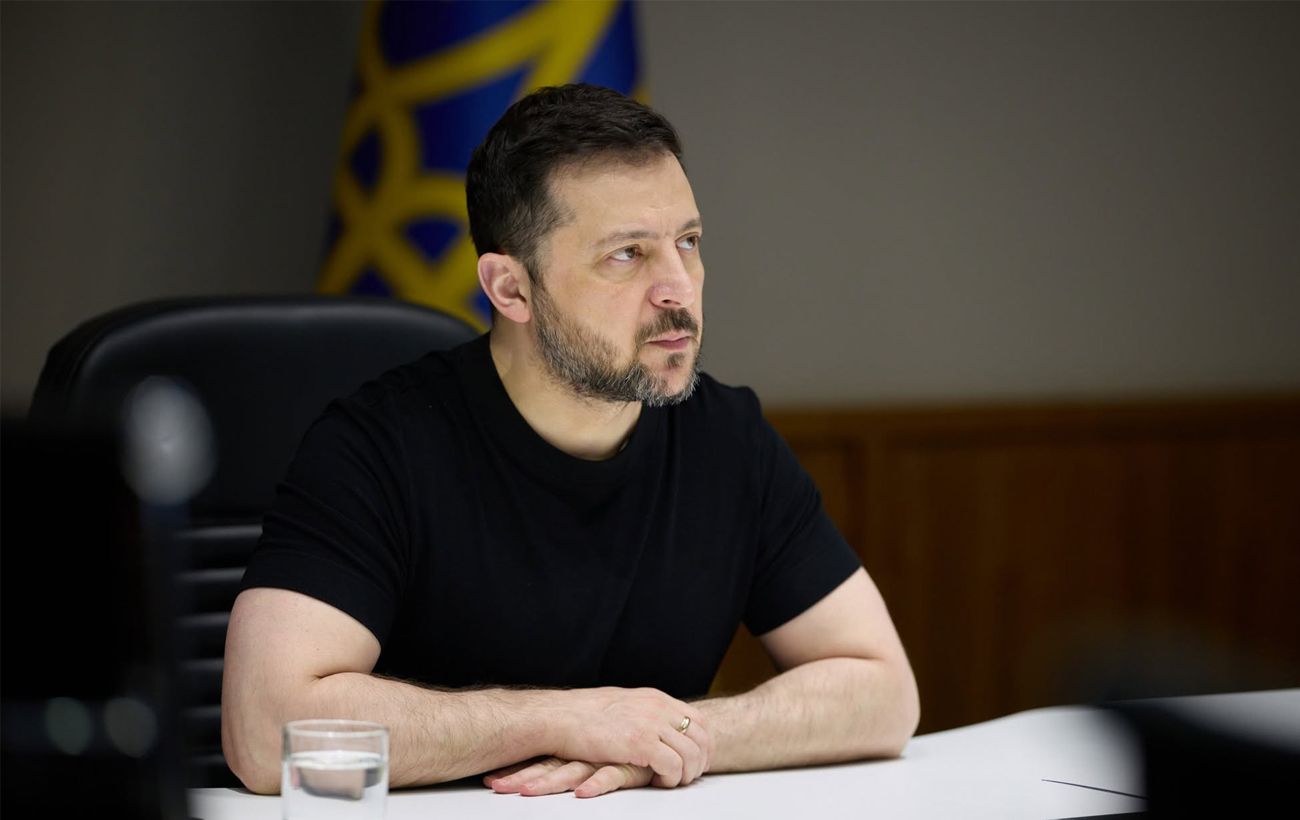
Ukraine does not view its war with Russia as a dispute that can be resolved through limited territorial concessions or a “mutually beneficial” agreement. President Volodymyr Zelensky insists that the Kremlin’s goal goes far beyond control over individual regions and is aimed at depriving the country of its independence. In an RBC-Ukraine report, his position is stated unequivocally: Vladimir Putin seeks to obtain “all of Ukraine as part of Russia.”
Zelensky called the idea that Moscow might be satisfied with the territories it has already seized a “crazy idea.” For Kyiv, such assessments are particularly dangerous given the experience of the annexation of Crimea, the war in Donbas, and the full-scale invasion of 2022. Ukrainian officials believe that the expectation that concessions would stop Russia has repeatedly proved mistaken and merely created conditions for further escalation.
For this reason, the president also rejects the concept of a win-win outcome in relations between Ukraine and Russia. “There can be no win-win in this war. Because of so many human losses, it stopped being about victory for both sides on the very first day,” Zelensky said. In his view, the realistic task should be to stop the killing and save lives, rather than seek a formula that would bring equal benefit to the aggressor and the state under attack.
This logic also determines Kyiv’s position in its dialogue with the United States. Zelensky has spoken of constant contacts with Washington and preparations for a meeting with Donald Trump in New York at the end of September. At the same time, Ukraine expects tougher measures against Russia: in the president’s view, sanctions should not be limited to expressing disapproval but should “completely destroy” Moscow’s ability to continue the war. Kyiv fears that pressure without tangible economic and military-political consequences would allow the Kremlin to buy time, rebuild its forces, and prepare for new attacks.
In an interview with CBS News, as reported by RFI Zelensky also described how Russian attacks affect everyday life in the country. According to him, Russia has changed its tactics: after large-scale nighttime strikes, it sends small groups of drones every 30–60 minutes. The Ukrainian president believes this approach is intended not only to inflict military damage but also to create constant tension—to disrupt the work of schools, transportation systems, and businesses, deprive people of sleep, and undermine society’s psychological resilience.
“Create chaos, exhaust society, and make normal life as difficult as possible”—this is how Zelensky described the presumed aim of the tactic. He links the strikes to an attempt by Moscow to test Europe and demonstrate that aggression can go unpunished. In particular, the president said that Russian drones had twice endangered his aircraft by passing through Moldovan airspace. He also suggested that a strike near a diplomatic train may have been an intentional signal to European and American delegations.
Zelensky separately addressed the idea of an “energy truce.” According to him, Moscow and Kyiv attach different meanings to the term. For Russia, energy primarily means oil and gas exports, while for Ukraine it means electricity, heating, and gas for the population. Kyiv is ready to discuss a pause only if attacks on energy infrastructure cease completely—not an agreement that would primarily protect Russia’s export revenues. “If the Russians are ready for an energy truce, that must mean a complete absence of attacks on energy infrastructure by any means,” the president stressed.
Ukrainian officials also do not regard defensive actions as an obstacle to peace. “Putin does not respect the weak… He will simply eat us. That is why we respond. We never attack first,” Zelensky said. This formula reflects Kyiv’s position that Ukraine’s ability to launch retaliatory strikes and defend its infrastructure is necessary to deter Russia, not to prolong the war.
In assessing the Kremlin’s motives, Zelensky rejected the claim that Putin is genuinely interested in a swift peace agreement. According to him, the Russian leadership benefits from escalation, divisions within Ukrainian society, disagreements within the European Union and Europe, and worsening relations between Kyiv and the Trump administration. The president also links Moscow’s unwillingness to end the war to internal risks for the Russian regime: the return of large numbers of disillusioned soldiers could threaten the authorities in a way comparable to the Wagner mutiny, but on a much larger scale.
Kyiv takes an especially hard line on Donbas. Zelensky warns that Ukraine’s withdrawal from the region would not be a technical concession made in exchange for a ceasefire but would have serious political and military consequences. “If we withdraw from Donbas, we will immediately lose unity within the country, because the military and the army will oppose it,” he said. Ukraine regards Donbas as an important defensive line. In Kyiv’s view, handing it over to Russia would not guarantee peace but would give Moscow additional opportunities for a future offensive.
Zelensky explains his distrust of Russian promises by pointing to the experience of a country subjected to regular attacks and destruction. He compared Ukraine’s condition with the aftermath of the September 11 terrorist attacks in the United States, saying that Ukrainians live “inside such destroyed towers,” only the destruction is not confined to one place but is spread across the country—in homes, schools, and cities. Responding to Jared Kushner’s statement that Putin wants to make peace, Zelensky said: “Putin has been lying for 30 years.”
Kyiv also links the issue of holding elections to security and equal participation by citizens. The president said he was ready to hold a vote after a ceasefire, but noted that millions of Ukrainians are abroad, territories are occupied, Russian troops remain present, and it is impossible to organize a normal campaign while children cannot regularly attend school. In his view, this is not merely about formally following a procedure but about the legitimacy of the elections and the ability of all citizens to vote safely.
In the longer term, Zelensky again called Ukraine’s accession to NATO a key element of European security. He presents the country’s membership in the alliance not only as a request for protection but also as Kyiv’s contribution to the continent’s common defense. “The strongest army in Europe today is the Ukrainian army,” the president said.
Thus, the Ukrainian position is that ending the war cannot be secured through diplomatic wording or territorial compromises alone. Kyiv considers real security guarantees, stronger sanctions, the preservation of its defensive capabilities, and partners’ rejection of the notion that Russian promises can replace deterrence mechanisms to be essential. For Ukraine, concessions without such conditions would mean not a path to peace but the risk of a new attack, further destruction, migration, and a threat to the state’s very existence.