Recent reports of a potential agreement between the United States and Iran have prompted a wave of commentary and political interpretation in Venezuela and Turkey. Venezuelan pieces emphasize statements by Iran’s Supreme Leader about Trump’s role in the negotiations, view the deal as only a first step, and regard simultaneous US strikes on alleged drug ships in the region with distrust, reinforcing suspicions about the inconsistency of American policy. Turkish sources note that a final agreement is still far off, read a possible compromise as a factor that could end the Israel/US–Iran conflict, and portray Trump’s actions as effectively giving Iran a “green light” regarding ballistic capabilities. Taken together, these reactions call Washington’s motives into question, highlight regional security risks, and describe the deal as fragile but geopolitically significant. Sources: BBC (Venezuela), Instagram (Turkey)
Venezuelan view of the US–Iran deal: “a desperate move” and a window of opportunity for sanctioned countries
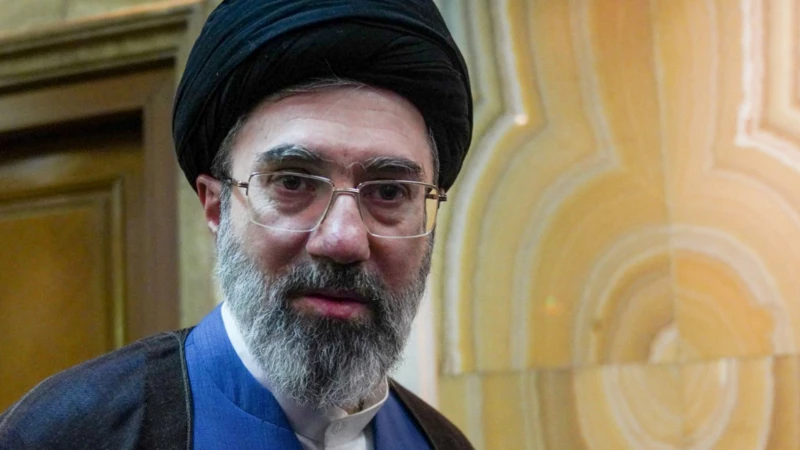
The BBC Mundo article on statements by Iran’s Supreme Leader Mojtaba Khamenei is formally about the Middle East agenda, but for the Venezuelan reader it almost automatically becomes a mirror of their own reality. It concerns a country under US sanctions, a close political ally of Iran, with very similar confrontational rhetoric toward Washington, which amplifies the sense of recognition when reading the piece BBC Mundo.
The article describes how Khamenei claims that Donald Trump signed a memorandum with Iran “out of desperation,” and that Washington, as part of the arrangements, lifts the naval blockade in the Strait of Hormuz, opening a 60‑day window for negotiations. From Caracas this looks not just like another diplomatic episode in the Middle East, but as a precedent: how far are the US willing to go in concessions when the economic and geopolitical cost of confrontation becomes too high?
From a Venezuelan perspective the agreement touches on several sore points. First, sanctions and “siege”: Caracas, like Tehran, describes its situation in terms of a “blockade” and an “economic war” by the United States. The phrase that Trump supposedly conceded “out of desperation” fits organically into the long-standing Venezuelan government narrative that the “empire” eventually has to sit down at the negotiating table when it fails to break resistance.
Second, energy and “oil diplomacy.” Lifting the blockade in the Strait of Hormuz, one of the world’s key oil trade arteries, immediately evokes associations with the Venezuelan case, where partial easing of oil sanctions has been one of the main storylines in recent years. If the memorandum with Iran effectively opens the way for increased Iranian oil exports, in Caracas this is presented as confirmation of the thesis that energy remains a powerful lever of pressure and bargaining with Washington. Venezuelan analysts see a double effect: on the one hand, more Iranian oil means additional competition in Asian markets; on the other, it shows that the US is willing to adjust its sanctions policy when the stability of supplies and prices is at stake.
Third, the axis of sanctioned countries. In Venezuela’s official rhetoric, Iran, Russia, Cuba, Venezuela itself and a number of other states form a kind of “front of resistance” against US pressure. The fact that Washington, according to Khamenei, had to sign the agreement and lift the blockade in Hormuz is interpreted as confirmation of a frequently repeated idea in pro-government Venezuelan media: prolonged resistance ultimately forces the US to move from diktat to dialogue.
Particular attention in Caracas is paid to Khamenei’s style and lexicon. According to BBC Mundo, he emphasizes that he initially opposed the memorandum but agreed after receiving assurances that the documents would “protect the rights of the Iranian nation and the Resistance Front.” To Venezuelan ears this sounds very familiar. Caracas’ authorities traditionally emphasize “defending sovereignty” and loyalty to allies — from Cuba and Palestine to Russia, Syria and Iran itself. When Nicolás Maduro or other key figures such as Diosdado Cabello explain participation in internal political dialogues or contacts with Washington, they use a similar formula: “negotiations without humiliation,” “dialogue without betraying friends and principles.”
Equally significant for Venezuelan perception is Khamenei’s remark about Trump: in his words, the US president “used all kinds of influence out of desperation to achieve this.” Transposed to Latin American terrain, pro-government analysts in Venezuela easily draw parallels with negotiations over licenses for Chevron, episodes of partial sanction relief, or periods when Washington sought channels with Caracas amid energy crises or electoral cycles in the US.
A separate line of perception concerns the American side’s stance. The article notes that Senator J.D. Vance emphasizes: Iran will not receive money or significant sanction relief until it fulfills the obligations set out in the memorandum. In Venezuela this sounds familiar: in much the same way Washington conditions steps to ease sanctions on Caracas — from demands for political reforms and guarantees for elections to the release of political prisoners. For the official discourse in Caracas this is “blackmail” and an attempt to impose an “imperialist agenda,” whereas opposition circles tend to view such conditions as a legitimate tool of pressure to change internal policy.
From an economic perspective Venezuelan observers assess the consequences of opening Hormuz and the possible increase in Iranian oil exports with their own interests in mind. Iran’s access to markets could intensify competition for Venezuelan oil, especially in the Asian direction, where Caracas reoriented after US sanctions tightened and traditional markets were lost. But at the same time this serves as an argument that in times of global energy turbulence, wars and crises, Washington has to be more flexible toward pariah states if they control significant volumes of raw materials. In Caracas this is presented as a signal: during periods of high geopolitical and economic tension one can bargain for better terms by maintaining a line of resistance and not rushing into concessions.
The symbolic aspect is no less important. Khamenei, as BBC Mundo emphasizes, explains separately that negotiations with the US “will not mean accepting the enemy’s position.” This formula practically coincides word for word with the ideological framework of the Bolivarian project: tactical dialogue with “imperialism” is permitted, but strategically it remains the enemy, whose development model, political system and foreign policy are rejected. This approach makes it simpler for Venezuelan authorities to explain any partial deals with the US — on oil, migration, prisoner swaps — not as defeat or capitulation, but as forced yet “dignified” steps within a long confrontation.
Security themes and alliances that Khamenei frames by mentioning the “Resistance Front” (which includes, in particular, Iran‑allied forces in the Middle East) also resonate in Caracas. Venezuela has actively strengthened political and economic ties with Iran in recent years, consistently supports the Palestinian cause and sharply criticizes Israel and the US. The Iranian leader’s assurances that allies will not be sacrificed for economic relief are perceived in Caracas as an important signal: within this informal bloc of sanctioned countries loyalty and refusal of “backroom deals” with comrades are expected. This matters for internal debates in Venezuela about the limits of possible concessions to Washington without harming relations with Havana, Moscow, Tehran and other partners.
Historical parallels with Venezuela’s negotiation experience look quite straightforward. One recalls dialogues in Oslo and Mexico, agreements reached with Norway’s mediation or in a Barbados format. Each time the official rhetoric in Caracas was built around the same principle now voiced by Khamenei: the authorities allegedly “did not want” concessions but entered talks for the people’s sake, without compromising the foundations of the revolution and sovereignty. Like Tehran, Caracas tries to present any negotiation processes not as responses to economic pressure and political isolation but as tactical victories—the result of steadfastness and principle.
Finally, the article’s reception inside Venezuela passes through a filter of deep political polarization. For government supporters, the story that Trump signed the memorandum “out of desperation” and that the US lifts the Hormuz blockade is part of a broader picture of “the decline of American hegemony” and the triumph of a “multipolar world.” For opponents of the current Venezuelan authorities, Iran and Venezuela, the more important aspect is different: behind loud rhetoric about the “enemy” and “dignity” there is pragmatic readiness to negotiate with the very same Washington that is publicly demonized. They see in this an example of how an ideologically uncompromising system ultimately makes deals to survive economically and politically.
The BBC Mundo article in this sense provides the factual canvas — quotes from Khamenei, a general description of the memorandum’s mechanism, mention of sanction regimes and the strait blockade. But when read from Caracas the factual layer is quickly overlaid with interpretations. The phrase about Trump’s “desperation” becomes the key to understanding all American policy; details of nuclear verification or financial arrangements recede before images of “resistance,” “dignity” and “victory of the sanctioned front.” The Iranian case becomes a kind of laboratory closely watched by countries like Venezuela as they build their own strategy: how much more pressure can be endured, what exactly is one willing to give the US in exchange for détente, and how to preserve the image of an unbending enemy of the “empire” before one’s own audience.
As a result, the piece about Mojtaba Khamenei and the agreement with the Trump administration becomes not just another international news item. In the Venezuelan context it turns into a political resource — an example of how pressure can force Washington to negotiate; an argument in favor of the tactic of long resistance to sanctions; and at the same time a reminder of the inevitability of pragmatic deals even for the loudest opponents of the US.
Turkish view of the fragile US–Iran “peace” and the risk of a new Israel–Iran war
An analytical text by Hediye Levent, published on behalf of the Turkish left‑wing newspaper Evrensel and presented as an authorial review of the regional situation, offers Ankara’s characteristic angle on current maneuvers by the US and Iran and the possible escalation between Israel and Iran. The piece was posted as an Instagram analysis by Levent: first post and then reiterated in a second post.
The starting point of the analysis is skepticism about talk of a “deal” between Washington and Tehran. Levent emphasizes that the sides remain “very far” from a real, lasting settlement. This wording reflects a view entrenched in Turkey that no process in the Middle East develops linearly: any diplomatic advances are perceived more as a temporary pause or tactical corridor than as a final outcome.
In this context Levent speaks of a kind of “negotiation calendar” and that at this stage there is only a text in which the parties’ demands are “recorded.” For a Turkish audience, especially one familiar with the diplomatic language of the left‑liberal reader, this means: at present we are dealing with a framework document and a preliminary schedule of contacts, not a solid politico‑legal agreement. Any possible “understanding” between the US and Iran at this stage looks reversible and vulnerable: it can be rolled back both legally and politically.
Levent pays particular attention to US domestic politics and Donald Trump’s role. In her reading, what is happening on the Washington–Tehran axis largely serves the purpose of “giving Trump a breather at a time of growing domestic and pre‑election pressure.” In Turkish expert discourse this sounds familiar: it is long held there that Middle Eastern dossiers are often a derivative of struggles within American politics. Levent thus frames the current diplomatic activity within a framework familiar to Turkish audiences: the US is less focused on resolving the regional conflict than on maneuvering within the logic of the electoral cycle.
From the Iranian side Levent identifies a different but related objective — “buying time.” In her assessment Tehran uses talks and partial agreements as a tool to ease sanctions, gain economic breathing room and strengthen its regional position. This interpretation is also widespread in Turkish media: Iran is presented as an actor that skillfully turns even fragile diplomatic windows into a resource for “buying time,” relieving its economy and recalibrating the balance of power in Syria, Iraq, the Caucasus and the Persian Gulf.
The key strategic emphasis for Turkey is military risk. Levent moves away from the Western media’s binary “will there be a US–Iran war” question and shifts the focus. In her view the likelihood of renewed direct war between Iran and the United States is low. However, the chance of a new war on the Israel–Iran axis looks much more realistic. This reflects a typically Turkish threat perception: a direct US–Iran conflict, however destructive, is seen from Ankara as an indirect risk that can still be managed through alliances, bases, mediation and diplomatic channels.
By contrast, an Israel–Iran escalation is perceived as an immediate, “hot” danger for Turkey’s near neighborhood. Such a conflict would inevitably shake the Syrian and Iraqi theatres, where Turkey already has a military presence and deals with the problem of millions of Syrian refugees, and would also affect the Eastern Mediterranean. By pointing to this possibility, Levent effectively signals that for Ankara any renewed confrontation between Iran and Israel would mean another wave of instability in regions where Turkey lives “inside” the conflict rather than merely watching it from afar.
For the Syrian dossier this implies the risk of new unrest around Iranian proxy structures, Shiite formations and Islamic Revolutionary Guard Corps infrastructure, which Israel already regularly strikes. Escalation on the Tehran–Tel Aviv line could increase the number of Israeli operations in Syria and even in Iraq, directly affecting Turkish interests in northwest Syria and northern Iraq. For Ankara this threatens not only additional military burdens but also an economic one: new population movements, higher military spending, and increased pressure on the lira and the budget.
Another layer of Levent’s analysis is the long‑term effect of the “time factor” that Iran, in her view, seeks to buy with current talks. Any period of relative sanction relief or even slight economic easing creates opportunities for Tehran to restore its economy, increase maneuverability in regional policy and strengthen its influence infrastructure in Syria, Iraq, Lebanon and the Caucasus. For Turkey this means not an abstract geopolitical shift but a concrete recalculation of the balance of competition and cooperation with Iran.
Ankara, the piece emphasizes, occupies a complex dual position: on the one hand it seeks economic opportunities as Iran struggles with sanctions, counting on transit, trade and energy interaction; on the other hand Turkey engages in fierce competition with Tehran for influence in Syria, Iraq and the South Caucasus, where infrastructural and transport projects have become more contested after the Karabakh war. Therefore, each “breather” that Iran obtains through such agreements simultaneously appears in the Turkish optic as both a chance for trade and a strengthening of a potential rival.
A notable feature of Levent’s text is its genre. This is neither a news item nor an analytic report listing points of a possible agreement and the parties’ positions. The author deliberately does not delve into negotiation techniques, legal formulas, or official statements. Instead she works with framing concepts like “electoral pressure,” “buying time,” and “probability of regional war,” and through them constructs a picture of events for the Turkish reader. Her focus is on the logic of the actors and the consequences for the regional balance, not the formal details of a possible deal.
This style is characteristic of Turkish left and critical media. They tend to emphasize electorally centered calculations in American policy, show the continuity and cyclicality of wars in the Middle East and the southeastern Mediterranean, while maintaining distance from Ankara’s official line. Levent does not rely directly on statements by Turkish authorities nor does she tailor her view to the “state interest,” but reasons as an observer familiar with how these conflicts resonate in Turkey — through refugees, economics, security and domestic politics.
That is why her conclusion sounds two‑layered. On the one hand, she does not see the current dynamics between the US and Iran as the start of an “era of peace” nor as an immediate signal of a large war; it is rather a politico‑tactical maneuver: for Trump — a way to win space in US domestic politics; for Iran — a chance to stretch time and resources under sanction pressure. On the other hand, the real, tangible risk for Turkey she identifies is not a hypothetical direct war between Washington and Tehran, but a possible new wave of confrontation on the Israel–Iran line, which could materialize as strikes, retaliatory attacks and escalations in Syria, Iraq and beyond.
Thus a general picture emerges: the Turkish viewpoint registers the fragility of any “reconciliation” tendencies between the US and Iran, reads them as reciprocal exchanges of temporary gains and political pauses, and shifts readers’ attention to the frontline where consequences for Ankara would be most immediate and painful — the Israel–Iran conflict and its potential resurgence, which is essentially the warning in Hediye Levent’s analysis published as an Instagram post.