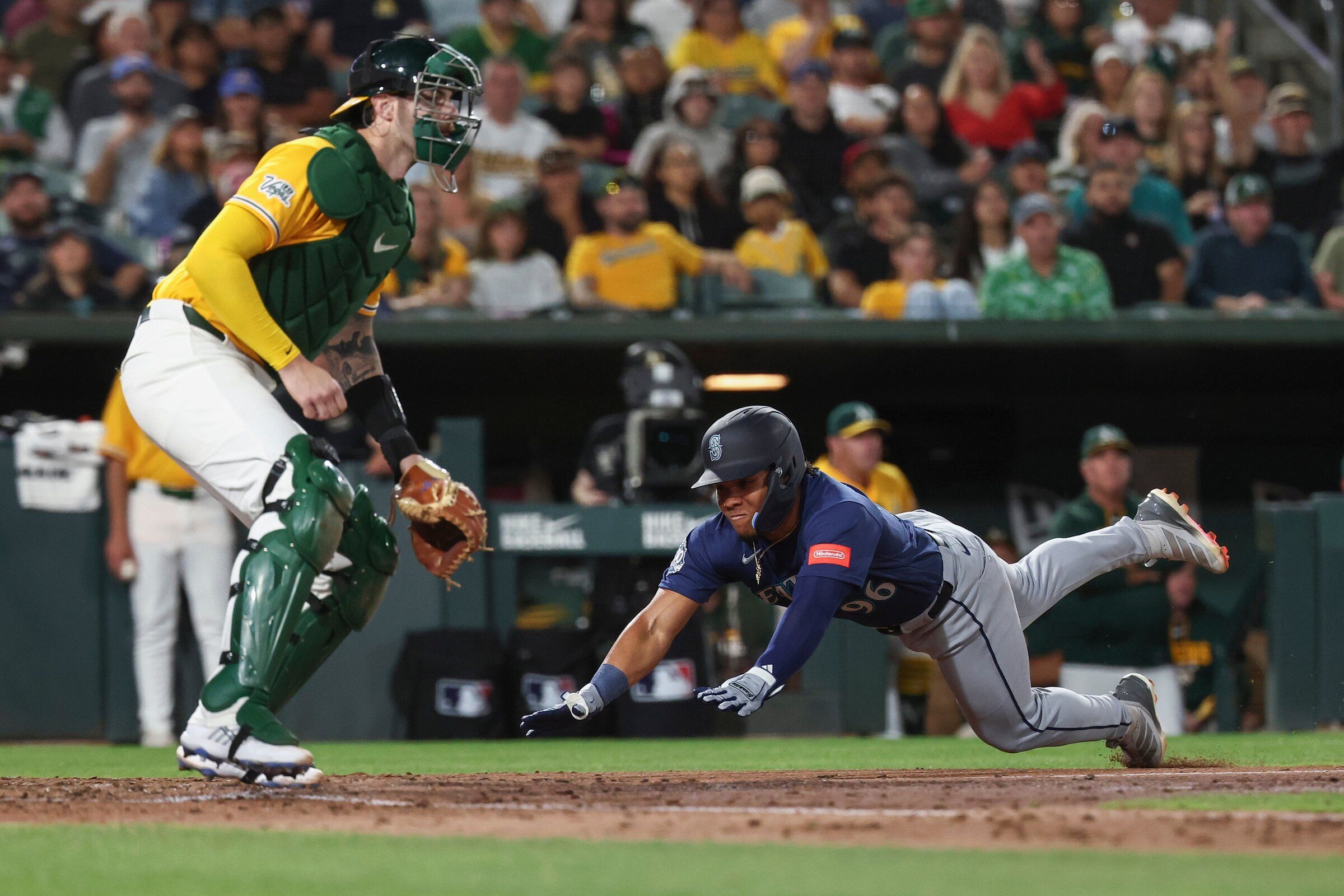
Seattle depends on ten corporations, but city officials are creating yet another task force; the Mariners crushed the Athletics 19–1 thanks to Michael Arroyo’s first home run, but their playoff hopes are fading.
Seattle in a trap: City launches another task force while economy relies on ten corporations
A new independent economic audit of Seattle’s finances, prepared by consulting firm Formation at the request of the city’s economic development department, has exposed an uncomfortable truth: the city budget critically depends on a handful of major technology employers. The response from city officials was predictable—Mayor Katie Wilson signed an executive order creating the “Seattle Sustainable Economy Task Force.” That move immediately drew sarcasm from KIRO Newsradio interim host Mike Lewis, who compared his hometown on The John Curley Show to a spaceport from which an endless succession of committees and initiatives is constantly launching.
The heart of the problem, as Lewis notes in his KIRO Newsradio broadcast, is that Seattle depends on roughly ten companies that generate most of the revenue from the JumpStart payroll tax. The tax applies to companies with payrolls of more than approximately $9 million and is projected to bring in about $500 million this year. Unlike San Francisco, Boston and Minneapolis, where tax revenue is distributed more evenly among midsize businesses, Seattle is “disproportionately dependent on a company that once employed 50,000 people downtown,” the host says, alluding to Amazon. A 5,000-employee reduction at such a corporation, he argues, translates into millions of dollars in lost tax revenue.
Lewis also singled out City Councilmember Dan Strauss, who supported directing JumpStart revenue into the general fund rather than keeping it earmarked for affordable housing. “We’re calling you out specifically,” the host said, emphasizing that decisions like these increase the budget’s vulnerability. The concept of an “earmarked fund” is important here: it means that a particular tax is collected for a specific spending category and cannot freely be shifted to other needs. Moving JumpStart revenue into the general pot means money promised for housing programs can now be used to plug holes anywhere in the budget—making the city even more dependent on volatile revenue from big business.
However, the picture is not entirely straightforward, and Lewis and co-host Spike O’Neil highlighted a paradox that politicians prefer not to discuss. A slowing economy, falling revenue and threats to public-safety funding are the standard warnings. But there is another side: when “first month free” banners begin appearing on rental properties—something Seattle has not seen in a long time—that signals tenants have more options. “You know what makes rent go down? When you have choices. Your landlord knows that you have options now,” Lewis said. No mayor can publicly celebrate an economic downturn, but for middle-income residents it means more affordable housing.
Another paradox concerns small businesses, which the mayor says she wants to promote. Spike O’Neil pointed to vacant retail and office space as an opportunity. Lewis was skeptical: in his view, Seattle’s measures to preserve small businesses are “poorly thought out.” Property costs are so high that only chain operators and well-capitalized restaurants can afford ground-floor spaces. “You’re not replacing them with the same kinds of small businesses. You’re replacing them with Subway, maybe Domino’s Pizza, some trendy restaurant or another Pilates studio,” he said. Even a business-tax reduction implemented by former Mayor Bruce Harrell saved his own company about $300 a year—“I’ll take the $300, that’s great, but it’s not a game changer.”
The conversation concluded by turning to public safety: more than 30 major Seattle employers sent an open letter to Mayor Wilson and the City Council demanding a 100-day action plan. The letter calls for activating surveillance cameras, increasing foot and bicycle patrols, speeding up response times to 911 calls and holding people accountable for public drug use. “Part of what makes Seattle financially and economically viable is creating a city where not only businesses can thrive, but citizens can live, thrive and feel safe,” Spike O’Neil emphasized. Lewis added that the intersection of a fragile economy and a deteriorating public-safety infrastructure is the city government’s greatest challenge—and ideally, it should be addressed without another task force. After all, as he put it, “Seattle is a city of task forces,” and launching another initiative with virtually no public demand only confirms that reputation.
Mariners deliver historic rout of Athletics: Michael Arroyo’s first home run and a record 19 runs
On a night when clouds gathered over Seattle, the Mariners reminded everyone that baseball is unpredictable and that sometimes one game can change the way an entire season is perceived. In West Sacramento, at Sutter Health Park—packed by local standards—Seattle routed the Athletics 19–1. It was the largest victory in franchise history, and the evening became a showcase for youth, patience and one last desperate attempt to preserve the team’s mathematical playoff chances. As The Seattle Times writes, the Mariners entered the game ranked last in MLB in scoring average, at just 3.96 runs per game. But everything changed Saturday: five home runs, 23 hits and 19 runs—numbers that demand a reassessment of this team.
The star of the evening was 21-year-old Michael Arroyo, playing just his second major-league game. In the fourth inning, he hit a double—his first MLB hit—and in the seventh he launched a monumental 418-foot shot, sending the ball onto the roof of a club building beyond left field. According to analysts, the home run would have been out in any of the league’s 30 parks. “It’s not 100 percent. It’s like 500,” Arroyo tried to explain through translator Freddy Llanos. Later, in the clubhouse, his teammates gave him the traditional “beer shower,” generously adding every sauce and seasoning they could find in the kitchen. “I felt a kind of identity,” the rookie admitted. “As soon as that first hit happened, I told myself, ‘Okay, now I’m a major-league player.’”
The evening stood in contrast to Friday’s loss, when former Mariners player Donovan Walton hit a walk-off home run in the 10th inning, burying Seattle’s hopes of a comeback. Many saw that moment as the death knell for the team’s playoff ambitions. Mathematically, however, the Mariners (70–79) were still alive. What is more, Houston (75–74) lost to Tampa Bay that same night, cutting Seattle’s deficit in the American League West to five games. “We’re continuing to push,” manager Dan Wilson said before the game. “The goal is to cut into that deficit as much as possible before we get home and face Houston. Yesterday was tough, no question. But we had to respond today.”
The response was crushing. Dominic Canzone and Randy Arozarena hit home runs in the second inning, making it 5–0. Cole Young, Arroyo and J.P. Crawford then added more. Weston Wilson went five-for-six, while Julio Rodríguez, Arroyo, Young and Josh Naylor each recorded three hits. “Incredible effort offensively,” Dan Wilson said admiringly. “The guys just came out and started hitting.” The result was partly helped by an injury to Athletics rookie Gage Jump, who left after two innings with shoulder discomfort, as well as Sutter Health Park’s reputation as the most hitter-friendly stadium in the league. “It can definitely be tough to pitch in Seattle sometimes,” starting pitcher Bryan Woo observed. “But it’s good for the confidence of the guys in the lineup.”
Woo, a Bay Area native, continued his dominance over the Athletics, allowing just one unearned run over six innings on three hits, two walks and five strikeouts. In his three September starts, he has allowed just one earned run over 20 innings, lowering his ERA to 3.88. In 12 career starts against the Athletics, his ERA is 1.78. “We’re just trying to fight and hang on,” Woo said. “We’re doing everything we can to win today’s game. We’ll worry about tomorrow tomorrow. Then we’ll see what happens at the end.”
By the end of the game, the Athletics had been forced to send position player Carlos Cortes to the mound to record the final four outs. It was a situation familiar to the Mariners: over the past month, they had been blown out twice—22–0 in Milwaukee and 19–2 at home by the Cubs. They were due for a game like this. And they got it. The victory was not merely a statistical anomaly, but a symbol that even in a seemingly hopeless season there can be a reason for pride—especially when a 21-year-old rookie sends the ball onto a club building’s roof for the first time in his life, and his teammates douse him with beer and ketchup. The Mariners have lost 79 games, but on this Saturday they looked like a team that still had something to say.
Mariners’ playoff hopes fade, but the math leaves room for hope
The Seattle Mariners’ season is approaching its conclusion, and the situation is not developing favorably for the team. Not long ago, it seemed that the final 22-game stretch of the regular season—against opponents who were mostly unimpressive—would provide the M’s with a springboard into the postseason. Reality proved harsher: Scott Servais’ team stumbled out of the gate, losing three of four games to the lowly Athletics, and then managed to win two of three against the Texas Rangers. The result was just five wins in the last 14 games and an overall record of 69–78 before a nine-game road trip. Technically, the chances of October baseball are still alive, but, frankly, they are barely breathing. Much of this is not due to the team’s own performance, but to the dismal state of the American League as a whole, where even a team with a losing record can theoretically remain in the wild-card race.
The Mariners’ main storyline is unfolding on two fronts: the race for the AL West title and the battle for the third wild-card berth. In the division, the Houston Astros (75–72) lead the Texas Rangers by three games and Seattle by six. Even if the M’s win all 15 of their remaining games and finish 84–78, the Astros would need only ten wins, combined with Seattle losses, to reach the elimination number for securing the division title. If Houston maintains its current .510 winning percentage, it will finish with 83 wins, meaning the Mariners would need an extraordinary 14–1 run to catch them and win the tiebreaker. This detail is worth noting: Seattle holds the head-to-head advantage over the Astros, 9–2 this season, and has dominated the matchup since 2023. If the records are tied, that could work in Seattle’s favor.
The third wild-card race is no less complicated. Four teams sit between Seattle and the Cleveland Guardians (74–73), who currently occupy the coveted spot. Cleveland could mathematically eliminate the M’s from contention by reaching 84 wins, which would require a 10–5 finish. Given that the Guardians still have games against Minnesota (69–77, just half a game behind Seattle), Central Division leaders the Chicago White Sox, the surging Athletics, the Boston Red Sox and the Kansas City Royals, that will be extremely difficult. If Cleveland maintains its current .503 winning percentage, it will finish 82–80, and the Mariners would again need a 14–1 run to pass them.
What genuinely gives Seattle at least some hope is the schedule. The Mariners have the easiest remaining schedule in MLB: their opponents’ combined winning percentage is just .403. First comes a series against the Athletics, who, despite their recent success in Seattle, have played terribly at their temporary home in Sacramento, going 27–45. Then comes a road trip to face the Los Angeles Angels (59–90), whom the M’s have already beaten four times in six meetings, and the Colorado Rockies (55–91), the only MLB team with a worse record than the Angels. The only remaining opponent with a winning record is Houston, which will visit T-Mobile Park for two games on September 22–23. If the Astros begin to falter by then, that series could suddenly become the decisive point of the season.
Next weekend, Seattle will open a road series against the Athletics in Sacramento. George Kirby (9–11, 4.18 ERA) will take the mound Friday, Bryan Woo (11–9, 4.03 ERA) on Saturday, and Bryce Miller (4–9, 4.22 ERA) on Sunday. As always, all broadcasts will be available on Seattle Sports 710 AM and through the Seattle Sports app. Even the easiest schedule, however, will not help if the team does not start winning right now. According to Seattle Sports, the Mariners are in a situation where every game is effectively an elimination game, and any slip could prove fatal.