
The new school year has begun in Seattle Public Schools with the introduction of universal free meals: every student is entitled to one breakfast and one lunch each day, without any verification of family income. Previously, students at more than half of the district’s 106 schools already received free meals. Now, however, the program extends to all children at schools that meet the requirements of the federal Community Eligibility Provision.
School meals in Washington state are typically funded through the federal National School Lunch Program, state funding and family payments. Federal benefits depend largely on income, and parents often have to apply and document their financial circumstances. In Seattle, eligibility for free meals is based on the economic need of the entire school rather than the income of each individual family. As a result, children do not have to prove that they qualify for assistance or pay for lunch, even if their families do not receive federal aid.
Seattle Mayor Katie Wilson said the program would help ensure that students do not go hungry and would reduce the financial burden on parents. Eliminating meal charges should also lessen the social stigma associated with free lunches.
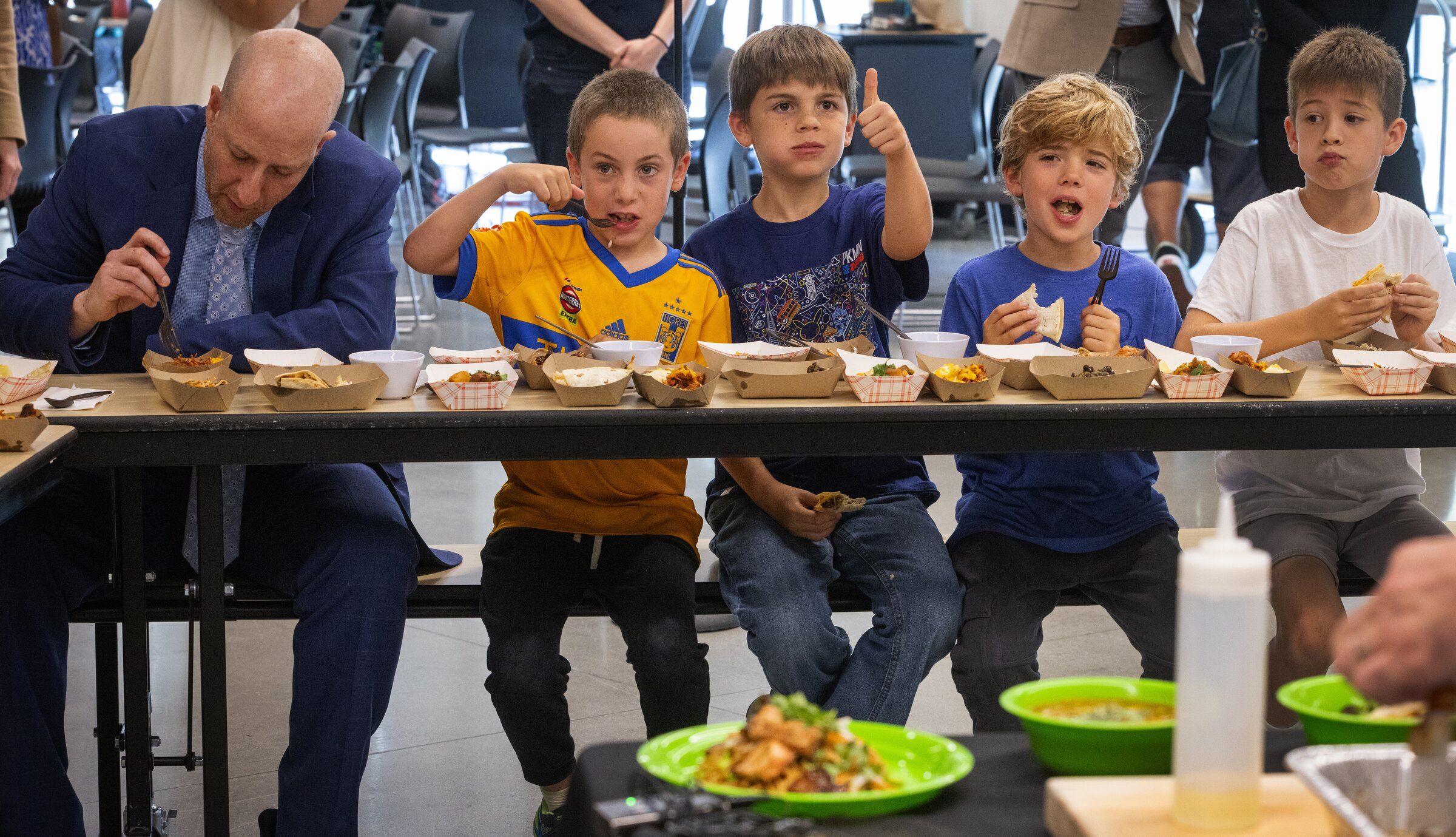
At the same time, the school district is holding tastings of new dishes to take students’ opinions into account. At Montlake Elementary School, children sampled teriyaki with salmon, chicken and beef; vegetable yakisoba; plant-based “al pastor” soup; pickled blueberries; Hawaiian-style beef stew; quesadillas and other dishes. Nine-year-old Neil Meyer liked the stew best, while the pickled berries seemed merely “fine” to him. Another student chose a quesadilla but did not even dare try the blueberries, which looked suspicious to him.
District Superintendent Ben Shuldiner said the unified system would simplify cafeteria operations: staff would no longer have to collect money or determine who qualified for subsidized meals. However, the district expects demand to increase, so it will likely need to purchase more food and hire additional workers.
The City Council allocated about $8.3 million to launch the program, using revenue from a voter-approved education levy and a surplus from the affordable-housing budget. The funding is expected to last through 2029, after which the program is planned to be financed through the city’s capital-gains tax. Seattle imposes a 2.25% tax on certain gains from the sale of long-term investments, such as stocks, when annual capital gains exceed $250,000. Revenue from the tax is intended for education, transportation and other city programs.
However, the tax is being challenged in court. The plaintiffs argue that it is effectively an income tax and therefore must comply with the Washington State Constitution, which has traditionally required such a tax to be uniform and to remain within established rate limits. The city maintains that it is an excise tax on a specific financial transaction, not an income tax. In addition, voters may repeal the tax in the November election.
Wilson said that, even if the measure fails, the city would still try to preserve free meals, although she hopes the program will eventually become a statewide benefit.
Based on: Pickled blueberries and yakisoba: Free school meals launch in Seattle