
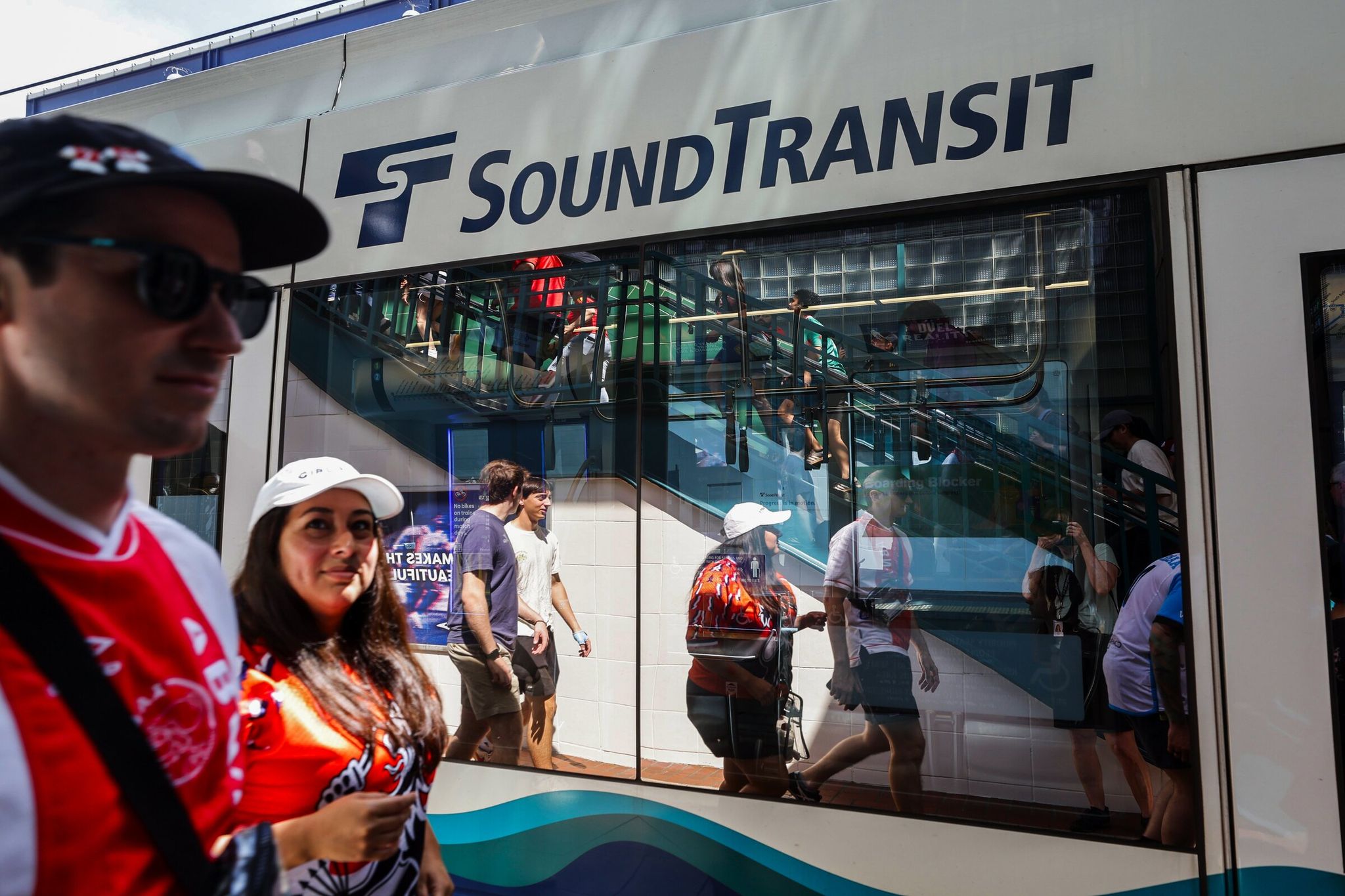
Seattle’s light rail system experienced one of its busiest days ever during the World Cup match between Belgium and Egypt, which ended 1-1. Sound Transit estimates that about 210,000 riders used the system on Monday, the third-largest day in the agency’s history. Although some fans waited in hour-long lines to board trains after the game, the transit agency considers its strategy a success.
A larger surge is expected on Friday: the U.S. team plays Australia at noon, and at 7:10 p.m. the Seattle Mariners host the Boston Red Sox. A key factor that should help handle the load was the March 28 opening of Line 2 across Lake Washington (the East Link project). This is a major milestone for the region’s transit system: for the first time, high-capacity rail connects Seattle with the Eastside suburbs — Bellevue and Redmond. Previously, Lake Washington was a natural barrier, and trips from Bellevue to downtown required crossing a bridge by car or bus, often in heavy traffic. The new line shortens travel time, eases pressure on road bridges and integrates major tech hubs like Microsoft’s Redmond campus with downtown Seattle. This largest public-transit expansion in the region in decades nearly doubled system capacity on peak days.
The main crowd-management strategy is simple: riders are asked to disperse across three stations to avoid dangerous crowding. Residents of North Seattle and Lynnwood are advised to exit at Pioneer Square; Eastside passengers and riders with disabilities at International District/Chinatown; and those coming from Rainier Valley, Sea-Tac and Federal Way at Stadium Station. After events, people are not allowed onto platforms all at once; access is funneled gradually through entrances from the plazas to prevent overcrowding.
Clearing a stadium that holds more than 66,000 people, plus fans from nearby fan zones, is no easy task—especially since Lumen Field (a 68,000-seat football stadium) and T-Mobile Park (a 47,000-seat baseball stadium) sit just minutes apart in the SoDo neighborhood. On days when both stadiums host events at the same time, simultaneous crowds of more than 100,000 overload surrounding streets, parking and light-rail stations. One transit hub—Stadium Station—serves both venues, creating a peak load, particularly after games end. Sound Transit spokesperson Henry Bendon notes that even Seattle Seahawks fans typically need about an hour to board a train. After Taylor Swift concerts in August 2023, riders had to wait through multiple trains to squeeze into cars when only Line 1 was operating.
Trains on Monday often departed not fully packed — a deliberate decision by Sound Transit so people could board farther along the route. That tactic, along with limiting the number of people on platforms, helps load trains faster and prevents delays. Organizers are also urging fans to use special King County Metro shuttles between downtown, the viaducts and the stadiums.
On Friday, the World Cup pedestrian zone in the Pioneer Square area will be open starting at 8 a.m. This oldest neighborhood, founded in the 1850s and known for its cobblestone streets and historic brick buildings, was chosen as a key transit hub for good reason. Numerous light rail stations, bus routes and a ferry terminal are nearby, and Lumen Field and T-Mobile Park are a 5–10 minute walk away. Staff will direct people from Lumen Field toward Pioneer Square Station to avoid crowding at International District/Chinatown. Even though one escalator at that station is broken and won’t be repaired by Friday, Sound Transit hopes to beat the 244,000-rider record set on the opening day of Line 2.
Based on: Seattle light rail carried third-biggest crowds ever for World Cup