
On September 15, the Richland City Council approved a contract with Liberty Tire Recycling to clear the state of Washington’s largest accumulation of old tires from an unpermitted site. By June 30, 2027, the contractor must remove roughly 1.5 million tires—both loose and compressed into bales—from 2990 Twin Bridges Road. The agreement will cost no more than $3.112 million. The state Legislature provided funding for the project, and the Washington Department of Ecology will reimburse the city for its expenses.
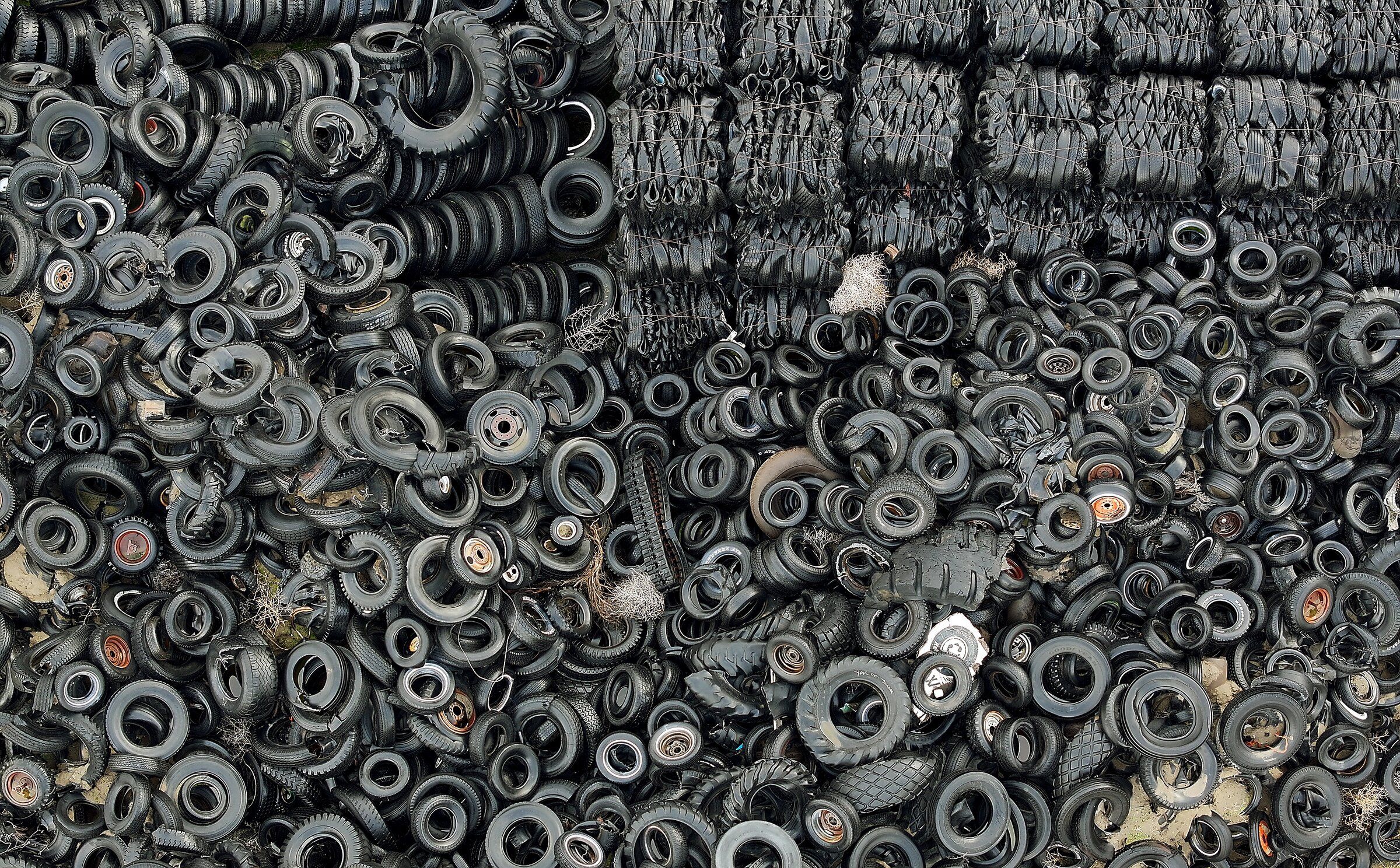
For those entering northern Richland on Highway 240, the mountain has long been part of the landscape—a bizarre and unsettling wall of black rubber near the turnoff to the city landfill. About 280,000 cubic feet of tires cover the roughly five-acre site. As is often the case with abandoned waste, their exact number remains an estimate: the city counted as many as 1.471 million, while Liberty Tire Recycling estimated about 1.5 million, with a combined weight of roughly 15,600 tons.
The pile poses a very practical danger. Tire stockpiles can become the site of extremely difficult fires, while water collecting inside the tires creates a breeding ground for mosquitoes. The city classifies the dump as a threat to public health, safety and the environment. Under the new agreement, Liberty Tire Recycling must provide the equipment, loading, transportation and oversight, then document exactly where the tires were taken and whether they were recycled or disposed of at permitted facilities.
The city did not immediately gain the right to enter the private property. In 2023, Richland sued the site’s owner, Beneficial Reuse Solutions LLC, previously registered in Alaska. In 2024, a court authorized the municipality to correct the violation itself. But the ruling did not resolve the central question: where would the money come from? In 2023, the initial cleanup estimate ranged from $1.1 million to $1.6 million. After further planning and an expansion in the scope of work, the cost rose substantially. In spring 2026, state lawmakers reserved $3.2 million for Twin Bridges Road.
The dump’s story began as a tale of entrepreneurial optimism, at a time when Washington was searching for ways to dispose of millions of discarded tires. On October 31, 2000, Jim Pinor, who managed the Richland landfill, his wife, Sherry Hankins, and her sister, Shelley Hankins, leased land from the Port of Benton for Northwest Tire Recycling Products. The idea was simple and appealing on the surface: charge a fee to accept old tires, cut and compress them into heavy cubes called EcoBlocks, and sell them to builders.
The rubber blocks were intended for use in road construction, shooting ranges, dairy farms and retaining walls. But the market for the product proved far narrower than the idea suggested. The company began operating on Stevens Drive and moved around 2005 to a site near the landfill, at the current Twin Bridges Road location. Compressed bales were stacked around the perimeter like fortress walls; inside, new loads of tires accumulated without buyers. The business faced questions about licenses and permits, clashed with the city and health authorities, and closed in 2007.
The business failure soon became a political scandal as well. Sherry and Shelley’s mother, Republican Shirley Hankins, was a powerful Richland representative in the state House. An investigation by the Legislative Ethics Board found that she had used her position to promote the family company’s interests with state and local officials and had attempted to steer tire-cleanup work to the company. In November 2007, Hankins agreed to settle the case and pay $4,174.62—the largest fine the board had imposed on a lawmaker at the time. She disagreed with the commission’s findings.
Now the city that did not create the dump is taking responsibility for its final chapter. The site remains privately owned, but Richland intends to seek reimbursement from those responsible to the extent possible. First, however, comes the less symbolic and far more arduous task: dismantling bales that have sat for decades, loading millions of tires onto trucks, and removing from the city’s entrance a monument to a recycling idea that never became a business.
Based on: WA’s largest tire pile could soon disappear