Seattle’s mayor has unveiled a plan to combat gun violence, while the NBA is once again discussing the return of the Sonics.
Seattle Mayor Katie Wilson Unveils Gun Violence Plan: More Patrols, New Laws and Community Partnerships
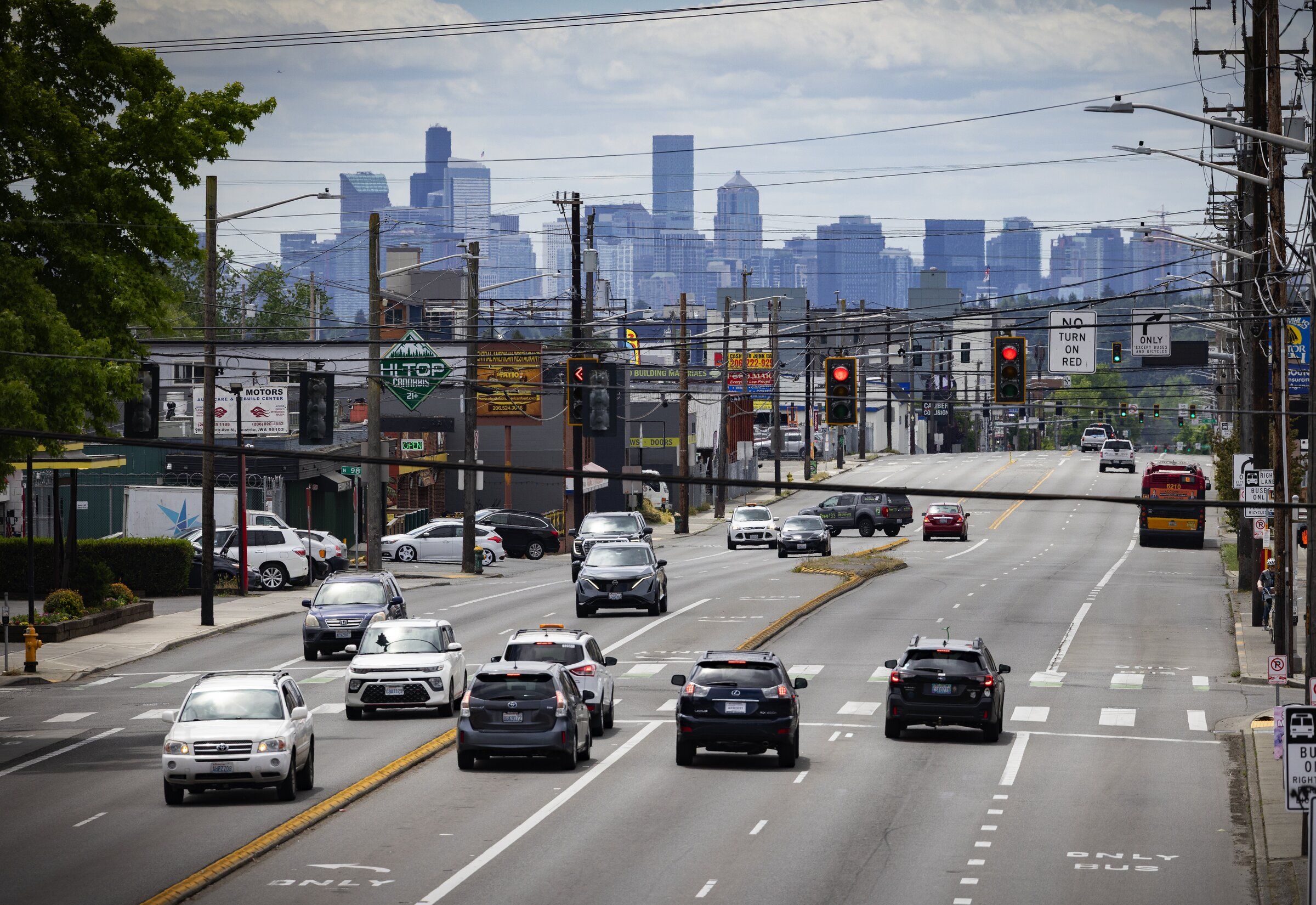
Seattle Mayor Katie Wilson unveiled her plan to combat gun violence in the city Tuesday morning, following a series of deadly shootings in Belltown, the mass shooting at the Bite of Seattle festival that has been linked to gang disputes, and the long-standing crime problems along Aurora Avenue. The document, distributed by the mayor’s office, emphasizes increased police presence in the hardest-hit neighborhoods, expanded crisis services, new state-level legislative initiatives, additional youth programs, and partnerships with the University of Washington and Johns Hopkins University to assess the effectiveness of prevention measures.
“Seattle will not accept gun violence as inevitable, and neither will I,” Wilson said. “We have a responsibility to ensure that the people of this city feel safe, and today I am acting on that responsibility: This coordinated, data-driven plan will use every tool available to us to address this problem. We are acting together and acting now to respond to gun violence and prevent it before it happens.”
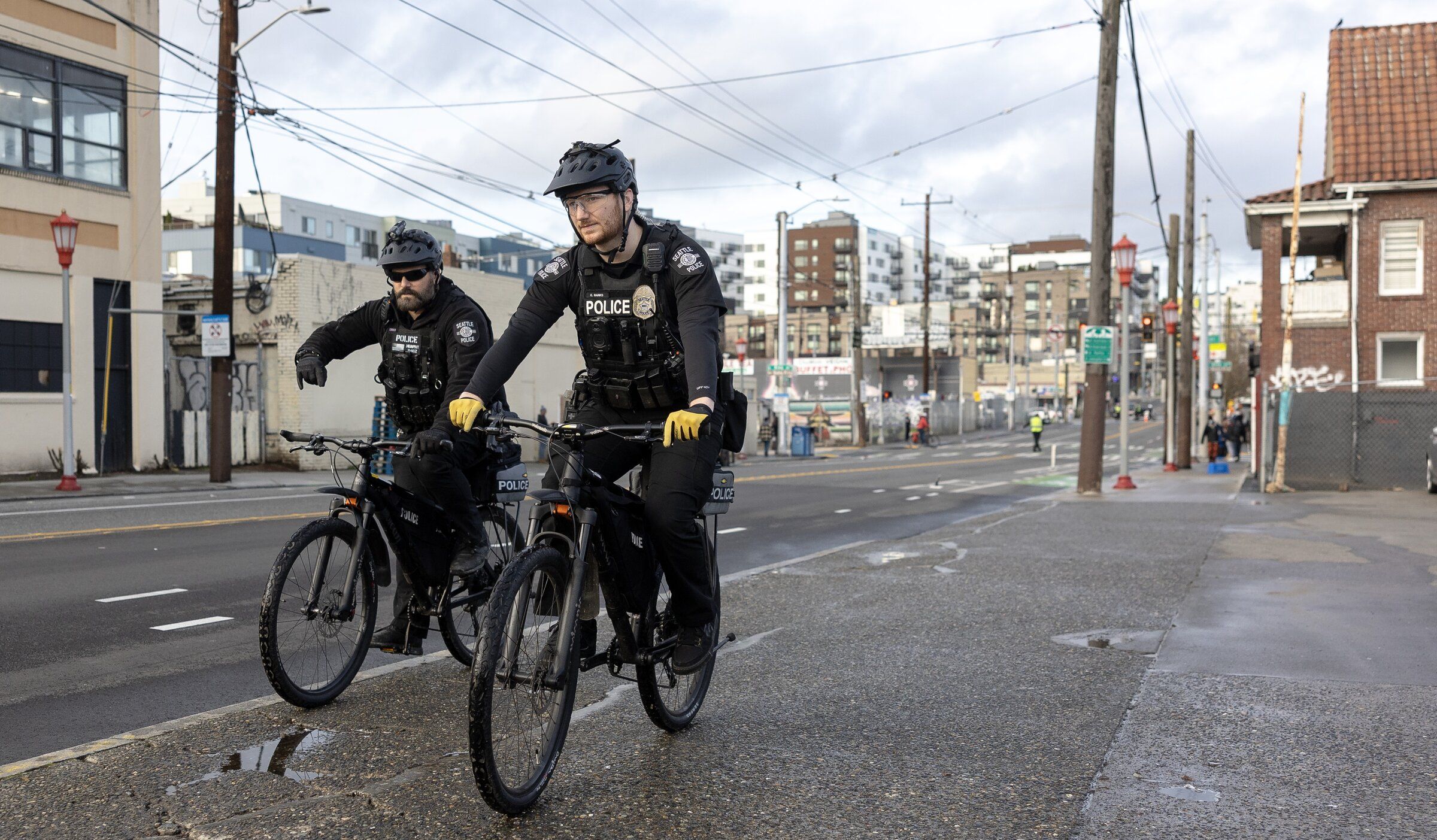
The policing component of the plan calls for increased law-enforcement presence in the neighborhoods most affected by gun violence. This includes expanded bicycle patrols along North Aurora Avenue, in Belltown, Rainier Beach and Little Saigon. The plan also calls for coordination among the Seattle Police Department’s (SPD) narcotics unit, its gun violence reduction unit and the Community Service Officers team. Their joint work will focus on identifying illegal gun and drug dealers. The city will also continue funding a dedicated prosecutor in the City Attorney’s Office to handle petitions for Extreme Risk Protection Orders. Such orders can restrict a person’s access to firearms when substantial evidence shows that they pose a significant danger.
“The City Attorney’s Office will have a dedicated prosecutor focused on removing weapons from dangerous people through Extreme Risk Protection Orders,” Seattle City Attorney Erika Evans said. “That is just one piece of a much larger mosaic — from providing young people with meaningful opportunities to strict accountability measures.”
The mayor’s office noted that in 2024, SPD began reversing a trend in which departures outnumbered new hires. In 2026, SPD is expected to hire more than 140 officers. “In 2027, there will be more police officers on Seattle’s streets than there were in 2026,” the mayor’s office said in a statement.
Five million dollars is slated for community violence intervention contracts involving nine organizations, including the Department of Human Services and the Community Assisted Response and Engagement Department (CARE). Wilson’s 2027 budget proposal would more closely connect each organization with 911 dispatchers, SPD and the fire department. CARE would also become the command center for the city’s gun violence reduction strategy. Under the proposed budget, community crisis response operations would increase by 85 percent — from 10 hours a day to more than 18 hours. The expanded schedule would provide services from 6:30 p.m. to 1 a.m.
To investigate homicides, Wilson’s plan calls for creating Seattle’s first Violence Reduction Council, which would closely examine every homicide committed in the city. The council would establish the Johns Hopkins Center for Gun Violence Solutions. Its members would include public health specialists, social-service providers and criminal justice partners, who would identify areas where gun violence prevention needs improvement. Seattle also plans to create shared data and performance indicators to analyze the effectiveness of the city’s gun violence programs.
Wilson also intends to expand youth programs aimed at preventing violence. Her proposed 2027–28 budget includes more than $600,000 for a new extended-day program at Rainier Beach High School and additional peer-mentoring opportunities at the Rainier Beach Community Center. Seattle also plans to launch a Teen Late Night program at the High Point Community Center, which would become the ninth location offering the program in the city. The city will also expand free mental-health services for young people ages 13 to 24, in an effort to prevent them from “reaching a crisis point.” The plan calls for expanding the Community Safety Network, which connects community organizations, schools and emergency-response services with people at elevated risk of gun violence. Two representatives from the Department of Human Services will oversee the work.
Mayor Wilson is urging state lawmakers to reconsider gun legislation. Seattle plans to support laws that would strengthen community gun-violence prevention programs and tighten firearm regulations — for example, by restricting the carrying of weapons in certain parks, public spaces and large public events where children are likely to be present. The Wilson administration intends to work with lawmakers on laws governing firearm possession by minors and sentencing, as well as with state Rep. Liz Berry on possible rules governing firearms at Seattle Center. The plan also includes a broader public-safety strategy for North Aurora Avenue, combining gun violence prevention with efforts to combat human trafficking, support victims, improve transportation infrastructure and work with the community.
Seattle plans to coordinate its efforts with the University of Washington’s Center for Firearm Injury Prevention to map existing gun violence prevention programs, study their success and establish a baseline for measuring effectiveness. The plan will also help identify the people most affected by gun violence and gaps in available services. The partnership with Johns Hopkins University will focus on the work of the Violence Reduction Council and the review of homicide cases.
However, Seattle City Councilmember Maritza Rivera, who represents District 4, said she was “disappointed” by the mayor’s new gun violence plan, calling it short on new ideas and lacking the focused-deterrence strategy she has promoted for nearly a year. “I don’t see anything new here. And I certainly don’t see a focused-deterrence plan. Let’s be honest: The mayor is facing pushback from activists who oppose any involvement by police, but we know that making real progress on public safety requires working with law enforcement,” Rivera said. “For nearly a year, I have been working to bring Seattle a proven, evidence-based and successful strategy for reducing gun violence. The National Network for Safe Communities (NNSC) has significantly reduced gun violence in other cities using a focused-deterrence model that concentrates on the small number of people responsible for more than half of all gun violence.”
However, Rivera said, the NNSC warns that without proper training and oversight, “a poorly designed effort could cause harm and deepen distrust in public institutions.” “We need real action in this city, and Seattle cannot afford to wait any longer,” Rivera said.
Among the more difficult concepts in the article is an “Extreme Risk Protection Order,” a court order that can temporarily remove firearms from someone deemed dangerous to themselves or others, even if they have not committed a crime. “Focused deterrence” is a strategy in which law enforcement and community organizations work directly with a small group of people most likely to commit violence, offering assistance while warning them of serious consequences. “Community violence intervention” is an approach in which trained people from affected communities, rather than police, work on the streets to prevent conflicts and stop violence from escalating. “CARE” (Community Assisted Response and Engagement) is Seattle’s civilian response service, which
Seattle Tries a New Approach: Mayor Katie Wilson Brings Police and Violence Interrupters Together to Fight Shootings
After a series of high-profile tragedies shook the city, Seattle Mayor Katie Wilson unveiled a long-awaited plan to reduce gun violence. The document did not emerge in a vacuum: It followed a shooting at the Bite of Seattle food festival in July that killed three people and wounded at least four others, followed by a series of shootings in Belltown over Labor Day weekend that killed three more people and wounded three. Against this backdrop, the mayor’s proposals look less like routine administration and more like an attempt to hold together a fragmented system for responding to gun-related emergencies.
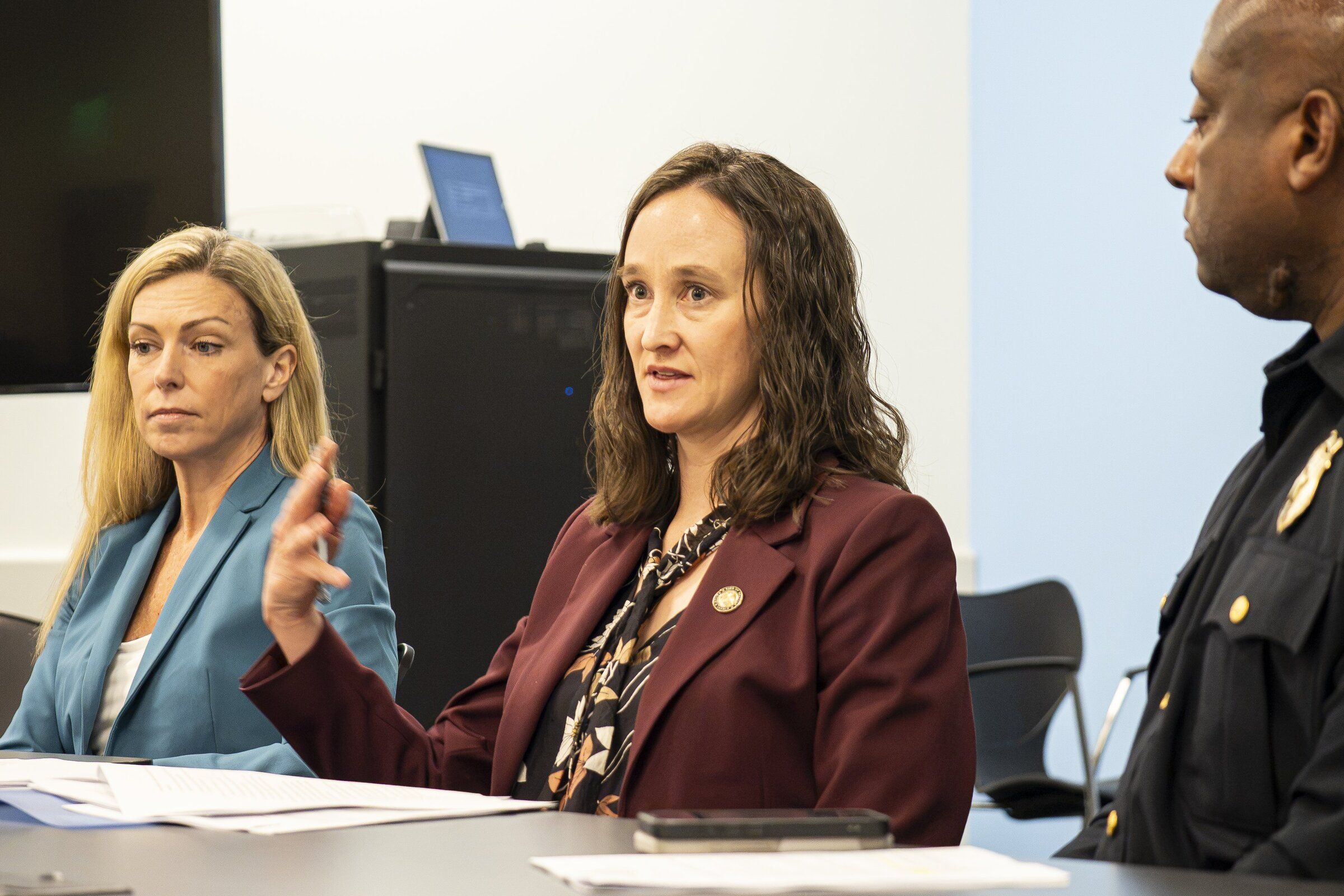
In an interview Monday, Wilson, joined by interim Police Chief André Sails and Amy Barden, head of the Community Assisted Response and Engagement Department (CARE), emphasized that the plan is intended to unite the disparate services that currently respond to shootings and strengthen prevention efforts focused primarily on young people. “We are seeing a real, measurable decline in deaths and shootings,” the mayor said. “But at the same time, there is no acceptable level of gun violence in Seattle. Any violence is too much violence.”
A central element of the plan is increasing the number of police bicycle patrols in so-called hot spots: Belltown, Little Saigon, Rainier Beach and along Aurora Avenue North. Sails said those measures are already being implemented. At the same time, CARE, which serves as an alternative to police and responds to 911 calls that do not require armed officers, will become the new “command center” for the violence-reduction strategy. Nine community violence-intervention programs — staffed by “violence interrupters,” people who intervene in conflicts before they turn into shootings — will be located directly within the CARE dispatch center. A director and a gun violence reduction coordinator will be hired to coordinate the work.
Sails said the foundation for staffing the plan “is already in place”: Patrol officers are increasing their presence at public events, and in the future, response teams and neighborhood officers will serve targeted areas, providing a more visible police presence. Amid a chronic shortage of officers, the department is focusing on hiring new employees, directing resources to high-crime areas, and combining the operations of the narcotics unit with the violence-reduction unit and community responders.
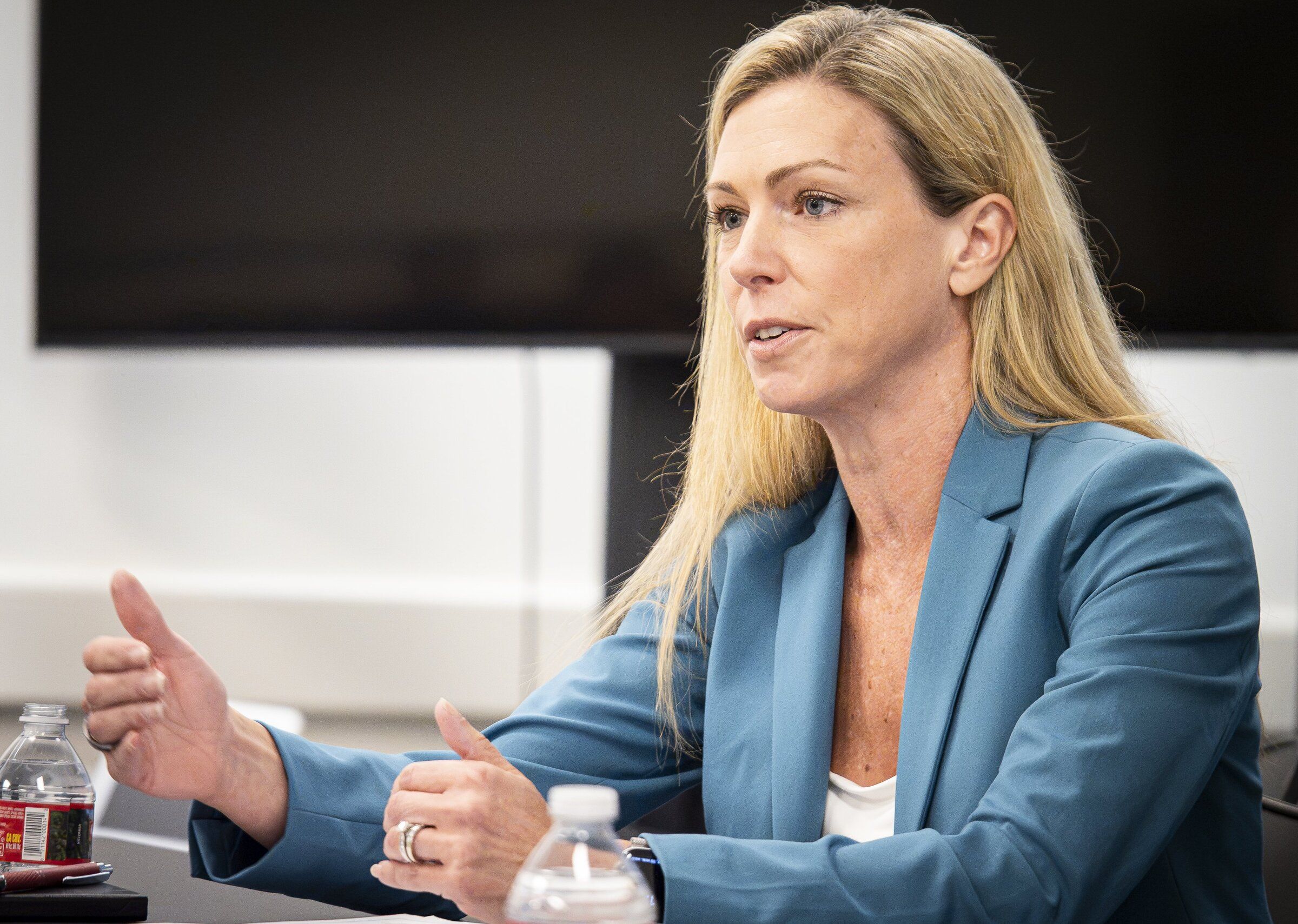
Amy Barden, who leads CARE, explained that the strategy focuses on “high utilizers” of the system — a small group of people responsible for a disproportionate number of crimes and who continually cycle between jail and the courts. 911 dispatchers will be able to notify community violence interrupters about incidents. She said the approach resembles the Law Enforcement Assisted Diversion (LEAD) program, in which staff can become involved with a client if CARE responds to a related call. The interrupter would create a “circle of support around a young person,” building a coordinated support environment. “When it comes to neighborhood gun violence, we know who was affected, we know where the calls came from, but right now there is very little we can do with that knowledge in the dispatch center,” Barden said.
Interestingly, Barden said, the violence-interrupter initiative will not directly affect the work of CARE responders themselves, apart from referring cases. This is significant in light of a report issued last month by Seattle’s Office of the Inspector General, which said that the collective bargaining agreement with the Seattle Police Officers Guild limits CARE’s options, meaning that most 911 calls are still redirected to police. Barden, however, remains optimistic: “The contract limitations don’t matter much as long as we work closely with police and the fire department.”
Meanwhile, another violence-prevention initiative is moving through the City Council. Councilmember Maritza Rivera has proposed allocating $418,000 in the next budget for a two-year pilot program with a consultant from the National Network for Safe Communities, a research center at the John Jay College of Criminal Justice in New York City. The pilot would deploy “focused deterrence,” an evidence-based approach aimed at the small group of people responsible for most shootings and homicides in the city. Rivera said Wilson had indicated that she might not sign the resolution. The mayor confirmed Monday that focused deterrence remains part of her plan, but added: “I still have concerns about a very large contract with one organization. We don’t need to wait and spend half a million dollars to develop a plan.”
Citing concerns about youth crime, Wilson intends to expand programs for teenagers through the Seattle Parks and Recreation Department and create a new after-school program at Rainier Beach High School. The city will also assess the effectiveness of the road closures introduced this spring along Aurora Avenue North.
The plan’s scientific component also deserves attention. It includes a partnership with the Johns Hopkins Center for Gun Violence Solutions to create a council that will review every homicide in the city and identify what can be improved. In addition, the city will work with the University of Washington’s Center for Firearm Injury Prevention to map prevention efforts and data on what actually works.
“Tightly integrating the work we are all doing will be the key to success,” Wilson said in summary. Sails added: “We all share the same goal — the guiding star the mayor talked about: a city free of crime, built on trust and unity, and moving toward zero homicides within a year.”
In this report, published by The Seattle Times, several terms are important to understand. “Violence interrupters” are generally people with criminal backgrounds or deep knowledge of the streets who are trusted in their communities and try to prevent conflicts before shots are fired. CARE is a civilian department that serves as an alternative to police, sending mental-health and social-work specialists to calls that do not require an armed response. “Focused deterrence” is a strategy in which law enforcement and community organizations openly tell a small group of the most dangerous individuals that they will receive help if they stop using violence, but face maximum sanctions if they continue. Finally, “high utilizers” are people who come to the attention of police, emergency medical services and the courts more often than others, placing a significant burden on the system. The key insight of Wilson’s plan is that it attempts to combine enforcement with prevention and scientific evaluation, without relying on a single large contract or waiting for the council to approve Rivera’s alternative program. It remains unclear whether the city will have enough officers and money to make all these elements work at the same time, but the effort to embed community mediators directly in the 911 dispatch center looks like an unusual step for an American city.
The NBA Is Looking at Seattle Again: Climate Pledge Is Ready, but Expansion Decision Still Ahead
Talk of bringing the Seattle SuperSonics back to the NBA has been going on for nearly two decades, and over that time it has become a kind of ritual: Every year, Seattle fans receive a dose of cautious optimism, only to return to waiting mode. This time, however, the situation looks different. After a two-day meeting of team owners in New York, league Commissioner Adam Silver spoke an unusual amount about Seattle and Las Vegas, rather than focusing solely on the controversy surrounding Clippers owner Steve Ballmer. That alone is a signal: Expansion is no longer theoretical and has entered the operational-preparation stage.
Silver’s key statement, reported by KOMO News, concerned the arena. He said the league had already sent operational teams to Seattle to inspect Climate Pledge Arena. “You clearly have a world-class arena there,” Silver said. “There may need to be some modifications for NBA basketball, but if we were opening the season in five weeks, we could be ready in Seattle.” This is not formal approval, but it is the clearest assessment yet of the city’s readiness during discussions about bringing back the Sonics. The reference to “five weeks” sounds almost like a promise, although the commissioner immediately qualified it by saying the league cannot decide everything at once, which is why much of the meeting’s discussion focused on Las Vegas.
That contrast is where the main intrigue lies. Las Vegas has traditionally been considered the favorite in the expansion race: It hosts the NBA Summer League, preseason games and early rounds of the NBA Cup, and the market has a huge pool of potential owners. Yet Silver made it unexpectedly clear that Las Vegas is behind Seattle when it comes to an arena. “In Las Vegas, it’s not even clear where the site will be, much less the arena,” he said. “So the timeline there is much longer than in Seattle before we can tip off NBA basketball.” This is an important shift. Analysts had previously assumed that the league would first establish the highest possible franchise price in Las Vegas and then turn to Seattle. Now the commissioner himself is effectively placing Seattle ahead in terms of operational readiness. Las Vegas, he said, can offer either a renovated T-Mobile Arena, which still requires “significant improvements,” or plans for a “modern entertainment palace” that exist only in presentations for now.
For Seattle, this movement is part of a process that gained momentum this year. In March, the NBA Board of Governors approved a formal study of potential teams in Seattle and Las Vegas and hired the investment bank PJT Partners to assess the markets, ownership groups, arena infrastructure and the overall economics of expansion. It was the league’s clearest move toward bringing back the Sonics since 2008, when the franchise moved to Oklahoma City and became the Thunder. In July, Silver said the league office had begun detailed work on both markets and that a decision would be made by the end of the year, one way or another. The process is being overseen by the Audit, Compensation and Strategy Committee and the Advisory and Finance Committee, rather than a separate expansion committee.
The questions facing the NBA are not only athletic but financial. Silver has repeatedly emphasized that the league could add zero, one or two teams, and that current owners must decide whether potential expansion fees justify diluting their share of league revenue. That calculation became even more expensive after the Los Angeles Lakers were sold at a record valuation of $12.5 billion. Sports business analysts say an expansion franchise could cost several billion dollars, and Las Vegas would likely set the market’s upper limit because of its deeper pool of potential buyers.
Against this backdrop, the picture in Seattle looks quieter but no less serious. The leading candidate for ownership appears to remain Samantha Holloway, majority owner of the Seattle Kraken. She controls Climate Pledge Arena through One Roof Sports and Entertainment and has already hired JPMorgan Chase and Moelis & Co. to advise on a potential NBA bid. Billionaire philanthropist Melinda French Gates recently announced her investment in One Roof, prompting speculation that her financial participation could become part of a group seeking the franchise. Meanwhile, a second initiative emerged publicly in August: Black Sun Private Equity and Native World Sports. The group said it had submitted a proposal to bring back the SuperSonics and was working with a local tribe on a possible arena and entertainment district outside Seattle. Details of the proposal, including the exact location and the NBA’s view of it, have not been publicly confirmed.
Seattle officials enthusiastically welcomed the prospect after the March vote. Gov. Bob Ferguson called bringing back the Sonics a state priority, while Seattle Mayor Katie Wilson said the city, its fans and the arena were ready for the franchise’s return. The Sonics played in Seattle from 1967 to 2008, winning the NBA championship in 1979 and giving the league an era of stars that included Gary Payton, Shawn Kemp, Ray Allen and a young Kevin Durant. Howard Schultz, the former Starbucks CEO, sold the team to Clay Bennett’s group for $350 million in 2006. Two years later, the franchise moved to Oklahoma City and became the Thunder, which has flourished and won a championship in recent years. Seattle’s loss remains one of the most painful relocation stories in league history, and Silver has acknowledged that the NBA did not handle the situation as well as it could have. The SuperSonics name, colors and legacy, which are preserved in Seattle, would become part of any future franchise.
If the NBA ultimately approves teams in both Seattle and Las Vegas, the league will have to address competitive balance. Both cities are geographically part of the Western Conference, forcing the NBA to consider moving an existing Western team to the East. Minnesota, Memphis and New Orleans have been mentioned as logical candidates. Another variable is the future of the Portland Trail Blazers. Silver expressed hope that the team could remain in Portland and that owner Tom Dundon would reach an agreement with city and state officials on conditions that would make operating in Portland viable over the long term. “We have an excellent track record in Portland,” he said. “And I have no doubt that it would be a failure if we couldn’t achieve an outcome that made NBA and WNBA basketball viable in Portland for the long term.”
As the process continues, it remains an open question whether most owners are ready to move forward. For Seattle fans, that leaves the familiar mixture of optimism and caution. But after nearly 18 years without the Sonics, the question is no longer whether the NBA is studying a return. The question is whether this latest study will end with a team and a date for the opening tip.
What to understand in this article. Climate Pledge Arena is home to the NHL’s Seattle Kraken and opened in 2021 after a major renovation. It is one of the most modern arenas in the United States, but it was built primarily for hockey, so changes may be required for NBA basketball — such as adjustments to the seating and locker-room configurations. An “expansion fee” is the payment new owners make to the league when joining it; the money is distributed among existing teams, but it also dilutes their share of future league revenue. “Dilution” means that when new teams are added, the overall revenue pie is divided among more participants.