
Katie Wilson’s promise to ensure that every homeless Seattle resident could spend the night indoors has given way to a more modest and specific plan: By the end of 2027, the city intends to add 960 shelter beds. The new program, announced Sept. 14, envisions more than just beds—a network of small, specialized shelters offering medical, psychiatric and social support. Its cost is estimated at roughly $37 million. But the shift also shows how quickly campaign arithmetic collides at City Hall with budget shortfalls, permitting, site searches and the cost of operating shelters over the long term.
During her 2025 campaign, Wilson made expanding shelters a central part of her platform. She spoke of adding 4,000 beds during a single four-year term—an average of 1,000 per year. In March, after taking office as mayor, she gave the promise an especially compressed timeline: 1,000 new beds in 2026, including 500 by June 1, ahead of the FIFA World Cup matches. At the time, her administration proposed treating the emergency as an emergency: speeding up site leases, lifting some restrictions on shelter size and directing unused city funds toward the first projects.
The current document is written in a different tone. It describes 960 beds as a “substantial and realistic” expansion for 2026–27, rather than the beginning of an annual pace of 1,000. Of that total, 540 beds are already in development: 344 made possible through city funding and another 196 resulting from the acceleration of projects paid for by regional partners or other sources. The remaining 420 beds are currently an additional component of the plan. The administration expects the new shelters to open by the end of 2027 and to serve about 1,750 people annually, provided residents move into permanent housing quickly enough.
The change matters for more than just its numbers. For someone living in a tent, the word “bed” can mean very different things: an overnight shelter, a tiny home, a safe parking space, a room with round-the-clock staff or a facility where the key to the door comes with medication, laundry, showers, a case manager and help finding housing. Wilson is betting on that last, more expensive form of assistance. About 60% of the new beds are expected to use enhanced or intensive-support models for people with the most serious needs.
That choice reflects data from the King County Regional Homelessness Authority. In January 2026, 18,365 homeless people were counted in the county on a single night, including 11,829 who were unsheltered. The survey also found that 27% of homeless adults reported a serious mental illness and 33% reported a substance-use disorder; those shares were even higher among people living outdoors. The region’s shelters were more than 93% full on the night of the count, while the number of emergency and transitional shelter beds fell by 689 over the previous year, largely because of the loss of family programs.
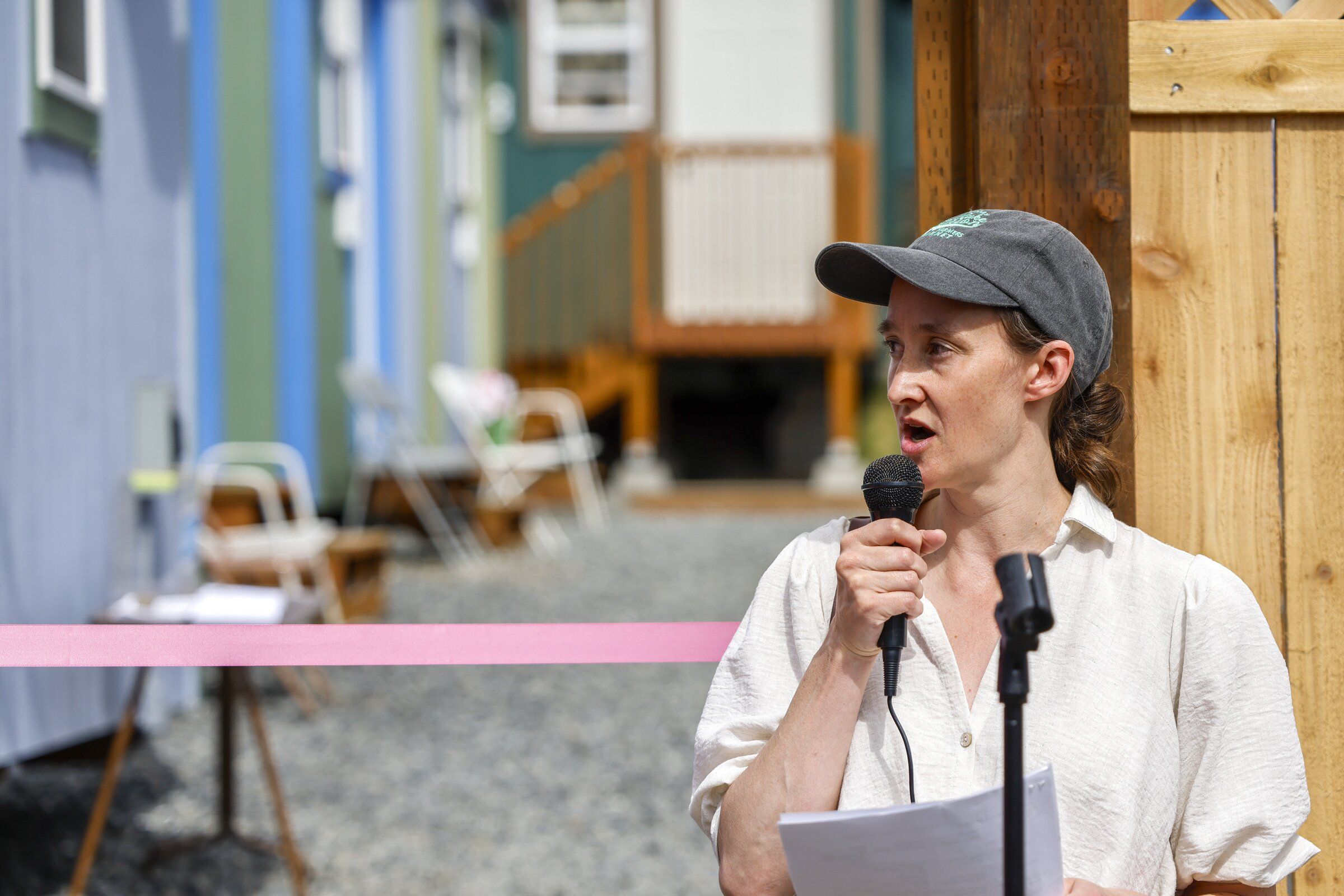
Over the past year, the city has already opened or advanced several facilities: Bayside Enhanced Shelter in Interbay, the Brighton and Belmont villages, and projects in South Park, where a village of 90 tiny homes is planned. In the spring, the City Council allowed successful temporary shelters to serve up to 150 people instead of the previous limit of 100. It also allowed each council district, under certain conditions, to host one facility with capacity for up to 250 people. But it is faster to pass legislation than to prepare land, install utilities, find an operator and negotiate with neighbors. That slow, often invisible side of city government became the limit of the original rhetoric.
Money remains a second limit. City officials say they previously created a $17.8 million shelter fund jointly with the council. Of the program’s roughly $37 million total cost, about $18 million is expected to come from new funding for the Department of Human Services, while another $19 million is expected from existing and reallocated funds. At the same time, the city is preparing its 2027–28 budget against an inherited $175 million shortfall. Wilson promised to present financing details Sept. 22, when she submits her budget proposal to the City Council.
By early 2027, the crisis’s administrative map will also change. Seattle and King County plan to move administration of many homeless-services contracts from the regional authority back to city and county departments. Supporters say the change will bring clearer accountability and a faster response; the risk is that the transition could disrupt service providers just as the system is expanding. Wilson’s new plan does not close the gap between the number of people living outdoors and the number of available beds. But it at least acknowledges what Seattle has avoided saying aloud for too long: A shelter is more than a roof, and promising a roof is far easier than paying for everything that turns it into a path off the street.
Based on: Seattle mayor walks back shelter promise, details smaller plan