
In June, the U.S. Supreme Court upheld states’ right to count ballots postmarked by Election Day even if they arrive later. On September 14, it also left in place a court injunction blocking new federal restrictions on mail-in ballots. For Washington, where voting has long been organized around mail and designated drop boxes, this preserved the familiar system for the November 3 election. But the victory proved to be more of a reprieve: the Donald Trump administration continues to pursue broader federal intervention in election procedures, while the greatest danger in the current campaign may emerge after the polls close—in prolonged and politicized disputes over the vote count.
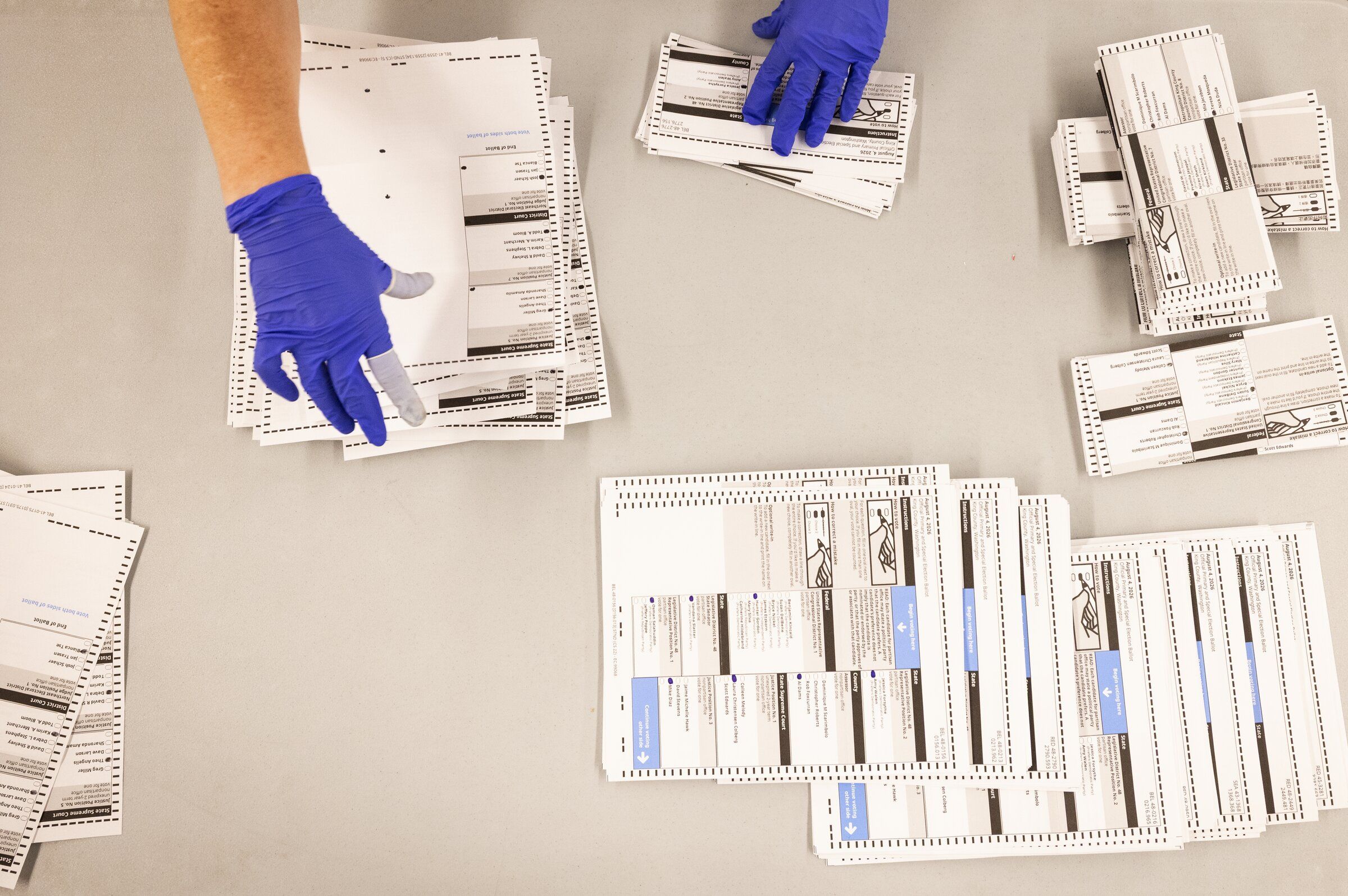
Inside King County Elections in Renton, ballot counting looks almost deliberately mundane. Envelopes are opened, signatures are checked against registration records, ballots are scanned, and results are updated gradually—not during the single television night the country has grown accustomed to, but as election officials receive and verify votes. In Washington, this is not an emergency measure adopted during the pandemic years, but a long-established civic routine: the state has conducted all elections by mail in every county since 2011.
That very deliberateness became the subject of a federal dispute. In Watson v. Republican National Committee, the Supreme Court ruled by a five-to-four vote on June 29 that federal law does not prohibit states from accepting ballots mailed on Election Day and received later. For Washington, the ruling preserved the existing rule: what matters is a postmark no later than Election Day, not the moment the envelope physically reaches the county elections office.
The stakes were tangible. According to the secretary of state’s office, about 120,000 Washington ballots in the 2024 presidential election—approximately 3 percent of all ballots cast in the state—arrived after Election Day but had been mailed on time. A ruling against the state would have meant that a system designed around mail delivery and subsequent verification would have had to reorganize around a stricter deadline within a matter of weeks.
The next round followed Trump’s March 31 executive order and subsequent Postal Service rules. They established uniform envelope requirements, special barcodes and the transfer to a federal system of lists of recipients of mail ballots; the service could refuse to forward mailings that did not meet those conditions. Election officials objected that envelopes and logistics are ordered months before voting, and that a rushed redesign could leave people without ballots or confuse local election offices.
On September 14, the Supreme Court declined to lift the existing injunction blocking those rules before the current midterm elections. In Washington, that means ballots will be sent and returned under the previous system. Secretary of State Steve Hobbs said his office would be able to continue preparing “without having to break election processes” to comply with requirements that could not be implemented in such a short time.
The ruling, however, did not eliminate an older problem—the vulnerability of public trust. Even when the system functions properly, results in a vote-by-mail state can change over several days, especially in close races. This is not evidence of misconduct, but a consequence of verifying signatures, mailing deadlines and the ballots themselves. After every election, Washington counties conduct risk-limiting audits: randomly selected paper ballots are compared with the digital count, and the narrower the candidates’ margin, the broader the audit.
The paradox of this election season is that the most likely attack on the system may be rhetorical rather than technical. The slow count typical of mail voting can easily be portrayed as suspicious; a lawsuit, even one weak on the merits, can prolong the sense of uncertainty. In 2020, the country already saw how unsubstantiated claims of fraud could turn the counting process into a political crisis.
After the election, the dispute will return to the courts: the injunction against the Postal Service rules applies to the 2026 election, but litigation on the merits is continuing. In addition, the SAVE America Act remains pending in Congress. If enacted, it would require documentary proof of citizenship when registering and a copy of identification when voting by mail. So far, it has not passed the Senate and is not law. But Washington has already learned the lesson: the right to mail a ballot and the right to see it counted are only the beginning of the struggle; just as important is the public’s ability to trust the result once the count is complete.
Based on: WA wins one for democracy, but more threats are on tap