
Sound Transit plans to install fare gates at 14 light-rail stations, but passengers will not be able to use them until at least late 2029 — and more likely in 2030. The agency’s board has already allocated $6 million for design and preparation, while the total cost of the work is estimated at $87 million. Before the system launches, fare evaders could avoid paying an additional $120 million, according to estimates, even as local residents continue funding transit through taxes.
The four-year timeline is explained by the large number of sequential steps involved. Sound Transit must prepare bidding documents, select a contractor, order and manufacture the equipment, deliver it and install it. In addition, software must be developed and tested for paper tickets and the regional ORCA system.
ORCA allows passengers to pay for trips by card or phone, verifies eligibility to ride and calculates fares, taking transfers and discounts into account. The fare gates must exchange data with the central system, monitor entries and exits, operate during temporary communication outages and work properly with different fare structures. As a result, the project involves not only installing equipment but also developing, testing and certifying software. The agency must also ensure accessibility for people with disabilities and determine what will happen to employees who currently assist passengers and check fares.
For decades, the agency has relied on an honor system without fare gates. After the first line opened in 2009, inspectors periodically checked passengers, but inspections were largely suspended in 2020 and 2021 because of social tensions. Enforcement is now gradually returning, but fines are rarely issued. As a result, the share of passengers who pay their fares has fallen from roughly 90% in the early 2010s to 63% today.
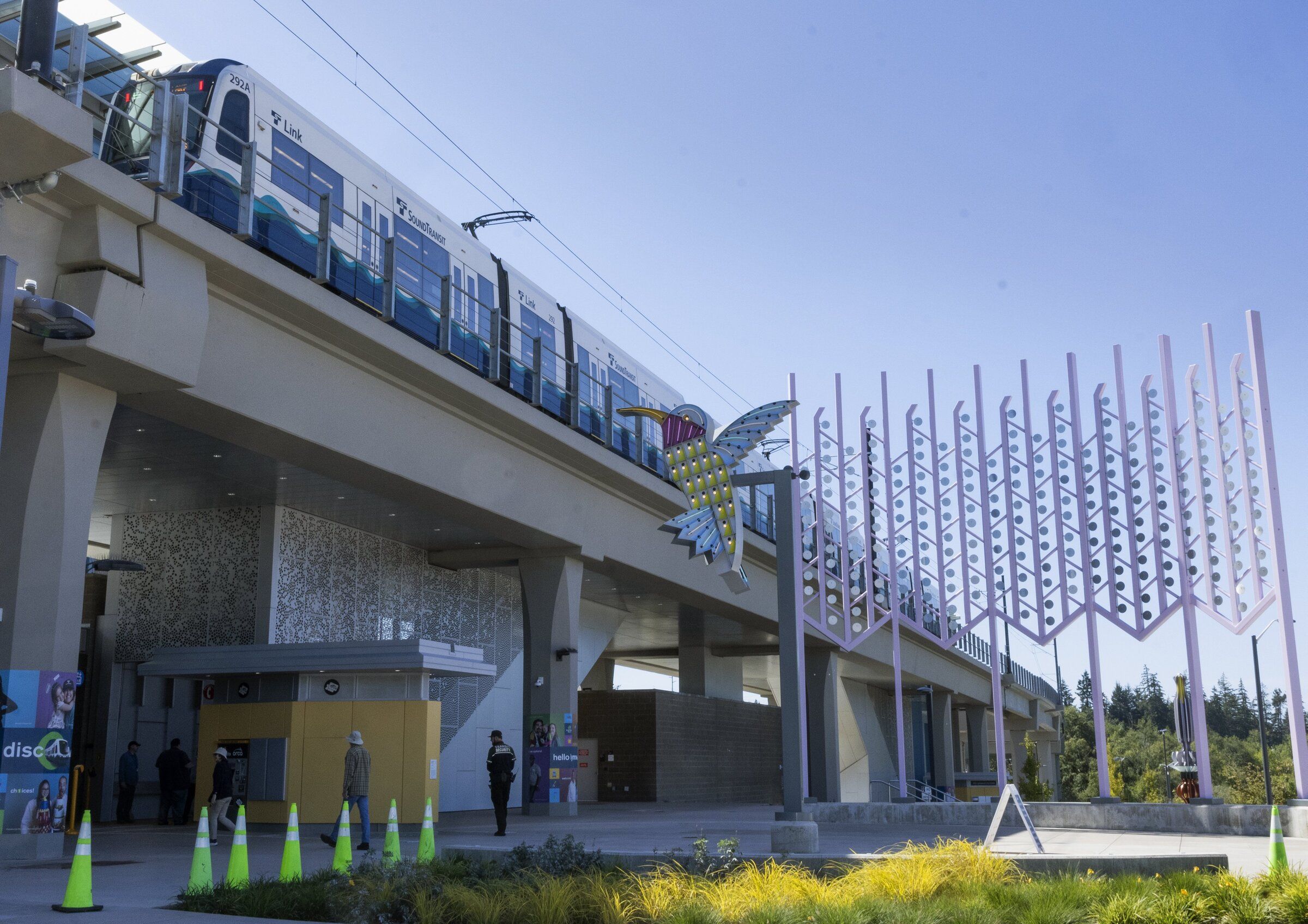
Fare gates are planned for the busiest stations — from Northgate to International District/Chinatown, as well as in Lynnwood, at SeaTac Airport, in Federal Way, Bellevue and Redmond. These 14 stations handle about 85% of all trips. Seven surface stations, including stops in Rainier Valley, SoDo and some Bellevue stations, will remain ungated for now.
Their exclusion is related to the stations’ physical layouts. These stations may have limited space, multiple entrances, open platforms and complicated pedestrian flows. In Rainier Valley and SoDo, fare gates could interfere with the movement of pedestrians, buses, cars and emergency vehicles. In Bellevue, the agency must account for bus transfers and the stations’ connections to private and municipal facilities. These factors complicate design and approvals and increase costs, but they do not mean the stations have been permanently excluded from the program.
The most difficult and expensive reconstruction will involve Lynnwood City Center Station. Its narrow concourses will have to be adapted for fare gates, ticket machines will be moved outside, and canopies, fencing and overnight security grilles will be added.
Experience in other cities shows that similar projects can indeed take years. Vancouver TransLink took five years to equip 53 stations, while BART in the San Francisco Bay Area spent six years replacing fare gates at 50 stations. The installation of 715 new devices across the BART system itself took only 11 months. Much of the time was spent securing funding, developing the design and conducting testing. BART ultimately chose seven-foot gates with transparent panels and initially activated them at just two stations to test how the system worked.
The impact of fare gates is mixed. BART reported a decline in crime and less time spent on minor repairs and vandalism cleanup. Los Angeles also considers fare gates useful for protecting low-income passengers from disorder. However, studies have found no convincing evidence that stricter enforcement consistently reduces crime in cities such as Boston, Vancouver and Toronto. The outcome depends on local conditions and the quality of enforcement.
For Sound Transit, the financial incentive is weaker than it is for BART: fare revenue accounts for less than 3% of the overall budget, while tax revenue remains substantial. Political disputes could therefore slow the project. Sound Transit is responsible for the Link system, its stations, equipment and access control, while bus operators, including King County Metro and Community Transit, manage their own routes and receive revenue from the corresponding trips. Local governments are responsible for city streets, permits and some transportation infrastructure.
ORCA revenue is distributed under regional rules based on trips and transfers, while capital projects are funded through the budgets and programs of individual agencies. Disagreements over expenses, technical standards, revenue distribution and required approvals could affect both the budget and the installation schedule.
Passengers who pay an average of about $700 per person each year in transportation taxes are becoming increasingly frustrated with fare evaders. Sound Transit leaders believe the system has grown large enough that fare gates are now necessary, while experts note that Seattle is better suited to installing them than some other cities because of its large number of underground stations.
Based on: Why does Sound Transit need 4 years to install light rail fare gates?