The reports point to a common theme: the conflict between the United States and Iran is caught between efforts to reach an agreement and the risk of further military escalation. Reports of a strike on Qeshm Island have heightened Tehran’s threats and unsettled oil markets, even as Qatar continues its mediation efforts. Against this backdrop, a separate article discussing a possible nuclear strike on an Iranian facility illustrates how dangerous speculation about extreme scenarios can become, even when they are unlikely and unconfirmed.
The key question is not only whether the current clashes will grow into a full-scale war, but also whether the parties can keep the conflict within defined limits. Military incidents, statements about readiness to “respond without geographical limits,” the vulnerability of shipping in the Strait of Hormuz, and talk of nuclear weapons combine to create a crisis in which misreading signals could prove no less dangerous than a deliberate decision to escalate.
According to Euronews, residents of Qeshm Island, nearby Hengam Island, and Bandar Abbas reported explosions and tremors. U.S. media reported that a U.S. Air Force aircraft struck an Islamic Revolutionary Guard Corps (IRGC) air-defense system on Qeshm after a missile was launched toward a U.S. aircraft in the Strait of Hormuz area. The operation was described as limited and aimed at protecting commercial shipping. However, U.S. Central Command neither confirmed nor denied the reports, and Iranian authorities did not officially acknowledge a direct strike on the island. It is therefore important to distinguish confirmed statements from media and eyewitness accounts: the strike itself remains officially unconfirmed in the material presented.
For its part, Iran said it had used electronic warfare to bring down two American MQM-170 reconnaissance drones and had destroyed an MQ-9 drone. Parliament Speaker Mohammad-Bagher Ghalibaf warned that “any strategic mistake by the United States will open a new theater of war,” adding that “the ball is in America’s court,” and that Washington must prevent a war. These statements serve both as a warning to Washington and as an attempt to portray any further expansion of the conflict as a consequence of U.S. actions.
Reports that Tehran is discussing a “response without geographical limits” are particularly significant. According to Ghalibaf, military commanders and new Supreme Leader Mojtaba Khamenei have allegedly agreed on this approach, leaving Iran to decide when the conflict will end. Former Foreign Minister Manouchehr Mottaki interpreted this as potentially involving U.S. bases in European countries. The newspaper Hamshahri reported that Iran had updated its list of potential targets, considering a scenario involving strikes on U.S. infrastructure and bases in Europe. This does not mean that such strikes have been decided on or are inevitable: the reports concern interpretations of statements and contingency planning. But the threat to widen the conflict geographically increases the risk of drawing in countries that are not direct participants in the current clashes.
At the same time, the diplomatic channel remains open. Iranian Foreign Minister Abbas Araghchi said Tehran was ready for dialogue with Saudi Arabia and acknowledged the positive role of Qatar and Oman. According to CNBC, Qatar is continuing its mediation: its delegation held talks in Tehran in an effort to prevent further escalation and end the conflict. U.S. President Donald Trump said Iran wanted to “make a deal,” while Vice President JD Vance expressed optimism about the prospects for an agreement. Secretary of State Marco Rubio also said Trump would prefer a diplomatic solution to the use of force.
However, there is a considerable gap between being willing to discuss an agreement and accepting Washington’s terms. Iranian Foreign Ministry spokesman Esmail Baghaei stressed that Tehran would not accept diplomacy based on coercion. This is an important constraint for mediators: talks may help ease tensions, but they do not guarantee a compromise, especially if each side sees concessions as a sign of weakness. Carrying out limited strikes while publicly promoting negotiations may be an attempt to maintain pressure without triggering a major war. But this approach is especially vulnerable to miscalculation: even a limited strike can prompt a response that one side deems necessary to restore deterrence.
The oil market reflects the same duality. According to CNBC, oil prices fell for a second consecutive day on Tuesday amid hopes for an agreement: U.S. West Texas Intermediate fell to $95.83 a barrel, while Brent dropped to $103.18. The previous day, oil had fallen by more than 7% after signs that the United States and Iran were ready to negotiate. But prices rose by more than 10% in October amid fears of new strikes, and at least four attacks on vessels in the Persian Gulf, the Strait of Hormuz, and the Gulf of Oman had been recorded since the start of the month, according to the UK’s United Kingdom Maritime Trade Operations.
The decline in prices should therefore not be taken as a sign of lasting calm. Rather, it shows that markets respond quickly to diplomatic signals but remain sensitive to disruptions to shipping and military developments. The Strait of Hormuz—a narrow sea route through which a significant share of the world’s oil supplies passes—turns local incidents into a risk for the global economy. If attacks on vessels become more frequent or shipping is restricted, the effects could be felt not only in fuel prices but also in overall inflation. CNBC notes that high oil and gasoline prices are already a concern for the Trump administration ahead of the midterm elections, and some Federal Reserve officials have warned that interest rates may need to rise to contain inflation. This means that foreign-policy escalation could intensify domestic economic pressure on the United States.
The most extreme scenario is examined by The War Zone: the article analyzes commentator Tucker Carlson’s claim that the United States might launch a nuclear strike on a deeply fortified Iranian facility in the Pickaxe Mountain area. The claim itself is unconfirmed; the White House rejected it, and Trump publicly said he saw no need to use nuclear weapons against Iran. “Why would I need to do that?” he asked, describing nuclear weapons as something that “should never be used.” The experts cited in the article generally assess the likelihood of such a strike as extremely low, although some note that absolute guarantees are impossible when so much authority is concentrated in the president’s hands.
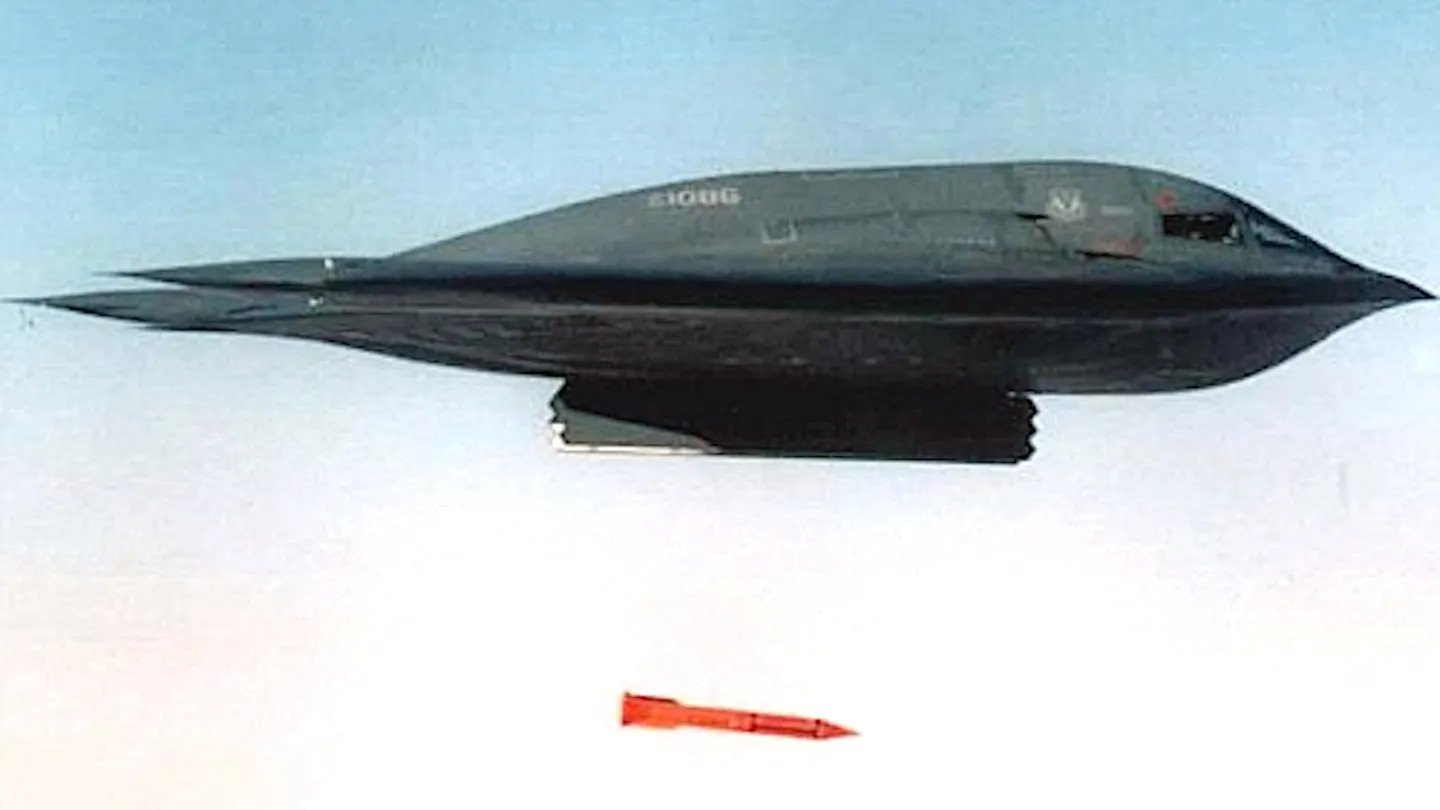
The article’s significance lies not in proving that a nuclear attack is being planned, but in explaining the consequences of such a step and the technical limitations of conventional weapons. Pickaxe Mountain is a deeply buried facility whose purpose and contents have not been fully established publicly. Even powerful conventional munitions, including the GBU-57 Massive Ordnance Penetrator, might not be enough to destroy the most heavily protected parts of the complex. That, however, does not make a nuclear strike inevitable or the only option. The article also discusses other possibilities: striking entrances and external infrastructure, cyber operations, restricting access to the facility, and a risky ground operation. The military challenge is that destroying a facility and reliably halting the activity inside it are not the same thing, while the choice of weapons determines the scale of the humanitarian and political consequences.
Nuclear weapons do not become “clean” or safe tools simply because they are intended to destroy underground facilities. The B61-11 bomb discussed in the article is designed to penetrate soil and rock, but a nuclear explosion could send radioactive material into the atmosphere. The scale and direction of contamination would depend on the conditions of the explosion and the wind; experts cite countries across the Middle East and neighboring states among the areas potentially affected. There is also uncertainty about what would happen to any materials stored inside the facility. Thus, even an attempt to neutralize a single complex by military means could trigger a transboundary environmental and humanitarian catastrophe.
The political consequences would be no less serious. Experts cited by The War Zone warn that using nuclear weapons against Iran would undermine the taboo that has held since 1945 and could weaken international norms against nuclear proliferation. If the first nuclear attack in decades occurred in a conflict that did not involve an imminent nuclear strike against the United States, other countries might conclude that nuclear status had become a more acceptable tool of coercion. This would heighten allies’ concerns, complicate U.S. relations with other countries, and potentially push states to develop their own deterrent programs. Predictions in the article of an inevitable world war are warnings, not established facts; nevertheless, the very possibility of eroding norms and trust makes this scenario extraordinarily dangerous.
Taken together, the sources point to three interconnected trends. First, military action may remain limited in scale, but its political significance is growing rapidly: even an officially unconfirmed strike on Qeshm has become grounds for threats to widen the conflict. Second, diplomacy is proceeding alongside military pressure, not in place of it. Qatar’s mediation and contacts with Oman and Saudi Arabia preserve the possibility of negotiations, but Tehran’s firm stance against coercion makes them more difficult. Third, economic consequences depend not only on actual supply disruptions but also on expectations: the market may lower prices on hopes of a deal, then reverse course just as quickly if shipping is attacked again.
The main conclusion is that the crisis is dangerous not because a nuclear strike seems likely, but because the combination of military incidents, public threats, uncertainty over negotiations, and a strategically important sea route leaves little room for error. Preventing the situation from expanding will require reliable channels of communication and a clear distinction between deterrence and preparation for further strikes. For now, statements about a “geographically unrestricted” response and reports of covert military operations are increasing the risk that either side will mistake a show of resolve for preparations for a much larger war.