The materials presented describe events that differ in nature—military escalation involving Iran, catastrophic flooding in Nepal and along the border with China, and extreme rainfall in Pittsburgh, United States. What unites them is not a common region or immediate cause, but one central theme: the vulnerability of critical infrastructure and the limited ability of authorities to quickly protect people, economies, and communications during a sudden crisis.
In all three cases, an emergency becomes a test of governance. Military action threatens oil routes and energy revenues, floods destroy roads, bridges, and hospitals, while local storms cause widespread power outages and disrupt city services. The sources show that the consequences of crises are determined not only by the scale of the initial impact—missiles, water, or wind—but also by how prepared the infrastructure, warning systems, emergency services, and international assistance are.
An article in NBC News describes a dangerous spiral of reciprocal strikes between the United States and Iran. According to the U.S. Central Command, Iran launched ballistic missiles at two American warships, but U.S. forces evaded the attacks. In response, the United States struck three Iranian oil tankers. CENTCOM Commander Admiral Brad Cooper expressed the logic of the operation in stark terms: “If you shoot at two of our ships, we’re going to impose an even higher economic cost on you—we’re going to take out three of yours.”
This statement is important not only as a description of a specific exchange of strikes. It shows that the military response was aimed at both operational and economic objectives. The United States said that two vessels—M/T Downy near Kharg Island and M/T Stark 1 near Jask—were disabled, while a third tanker, M/T Kylo, was destroyed in the Gulf of Oman. According to the U.S. account, Kylo was not carrying oil, and its crew had been ordered to leave the vessel before the attack began. Iranian media also reported that a tanker near Kharg had been hit and its crew evacuated, without indicating any casualties.
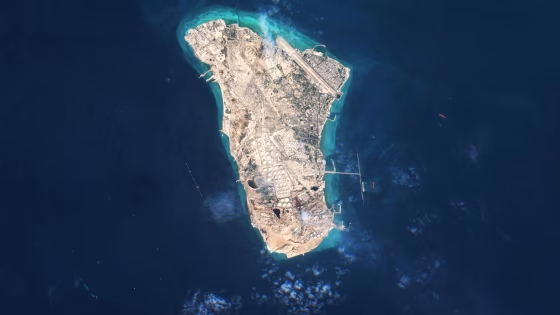
Kharg Island is particularly significant. It is a small island about 15 miles off Iran’s coast, but a substantial share of the country’s oil exports passes through it. Petras Katinas, a researcher at the Royal United Services Institute, previously called Kharg the “backbone” of Iran’s oil-trading infrastructure and the main outlet for its oil reserves. As a result, even limited strikes on vessels in the area could have broader effects: they may raise shipping-insurance costs, slow exports, increase pressure on Iran’s budget, and heighten the risk of further disruption to shipping in the Strait of Hormuz.
At the same time, U.S. forces had previously struck military facilities on the island while deliberately avoiding its oil infrastructure. This detail points to the existence of a certain escalation threshold: energy facilities are viewed as more sensitive targets because hitting them could have systemic effects on the economy and global markets. President Donald Trump’s threat to attack energy infrastructure if Iran continued obstructing shipping through the Strait of Hormuz turns oil infrastructure into an instrument of mutual deterrence.
However, such a strategy also increases the risk of a large-scale conflict. A strike on warships can be presented as an act of self-defense, while the destruction of tankers can be portrayed as punishment and economic pressure. But for the other side, such a response becomes grounds for new attacks. A cycle emerges in which each side seeks to restore deterrence by demonstrating even greater force. It is particularly dangerous that the targets are vessels and maritime routes linking military security with global energy trade.
A completely different, but structurally similar, crisis is described in CNN’s report on flooding in Nepal and China. Here, the destruction was caused not by military decisions but by sudden floods in a border region. According to authorities in both countries, at least 1,375 people were killed, while more than 5,000 remain missing. More than 84,000 people were affected, and approximately 35,000 need temporary housing. Another 43,000 or so face an immediate risk of food shortages.
These figures show that a humanitarian catastrophe is measured by more than the number of deaths. People have lost their homes, sources of income, and access to food and medical care. As Lila Peters Yahya, the U.N. coordinator in Nepal, said, “Families have lost everything: loved ones, homes, livelihoods—everything was swept away in a matter of minutes.” The United Nations and humanitarian partners have requested $49.6 million to provide shelter, food, medical assistance, clean water, and protection for the most vulnerable communities.
Destroyed roads and bridges became critical factors. Many areas cannot be reached by land, forcing rescuers to use helicopters. But air assistance requires coordination with authorities and the establishment of safe airspace, which slows operations. This illustrates how the destruction of transportation infrastructure turns a natural disaster into an access crisis: help may be available but unable to reach those who need it.
The medical system was also affected. The destruction of hospitals disrupted the provision of services, while pre-existing shortages of staff and equipment worsened the situation. As a result, a natural disaster not only creates new injuries and illnesses but also deprives people of opportunities to receive treatment for ordinary medical conditions. This is why humanitarian assessments regard healthcare infrastructure as one of the central elements of societal resilience.
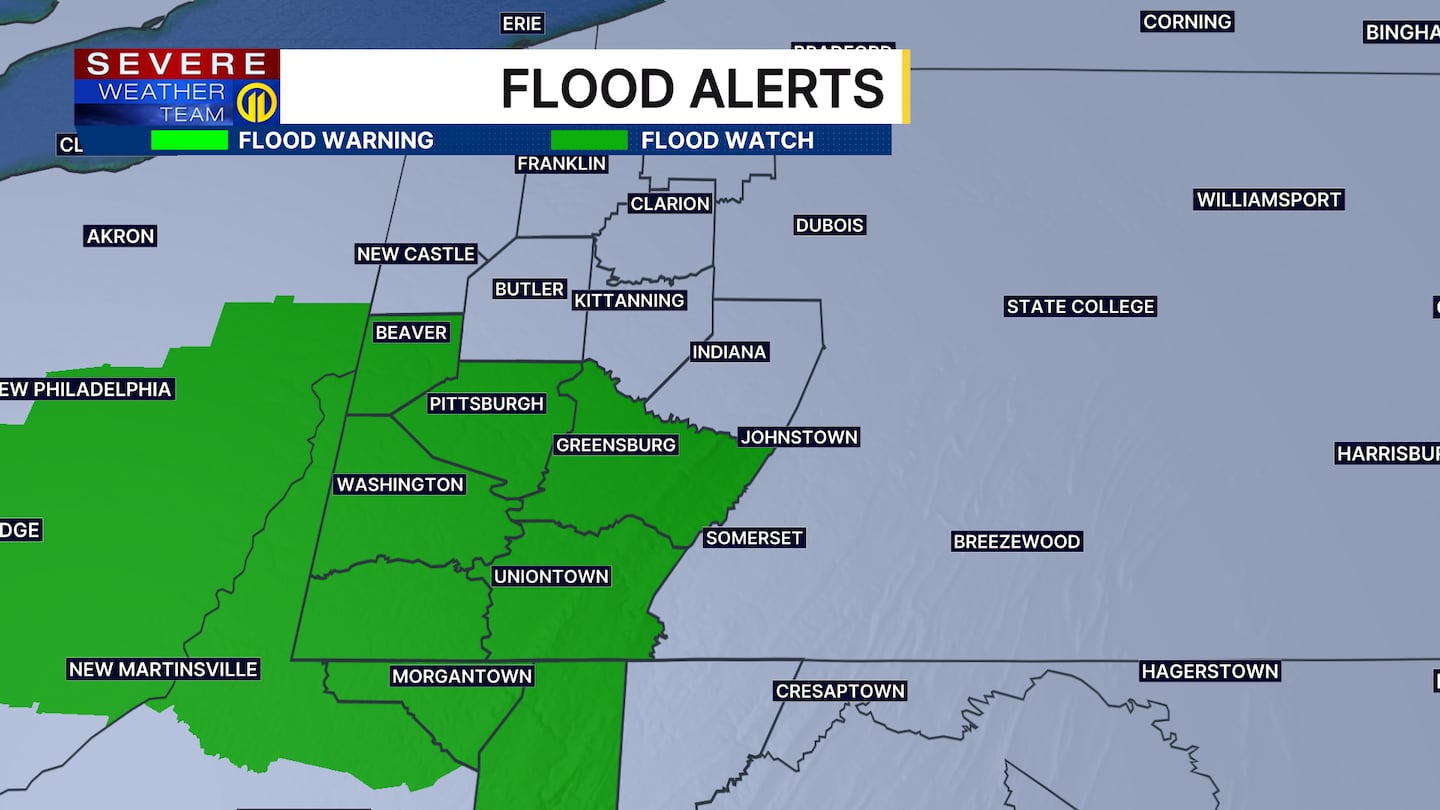
A report by WPXI on flooding and storms in the Pittsburgh area demonstrates the same mechanism on a smaller scale. More than two inches of rain fell in Pittsburgh in a single day, setting a record for that date. Authorities warned of additional thunderstorms, strong winds, and possible flash flooding. Firefighters and EMS rescuers evacuated dozens of drivers trapped in flooded vehicles.
The effects on urban infrastructure were significant: more than 80,000 power outages were reported, some schools switched to remote learning, the Westmoreland County courthouse closed early because of a power failure, and the Oakmont Carnegie Library was closed after sustaining damage. North Huntingdon Township declared a state of emergency, while utility companies brought in about 240 workers from New York, Florida, Alabama, and Quebec, Canada, to restore the networks.
Unlike Nepal, Pittsburgh has more developed infrastructure, resources, and emergency services. The consequences were therefore more localized, and recovery will likely be faster. But the pattern of disruption is similar: damage to transportation routes, power outages, the closure of public institutions, the need for evacuation, and interregional coordination. Even a brief episode of extreme rainfall can disrupt a city’s normal operations if its infrastructure was designed for less intense precipitation.
The term “flash flood” refers to a rapid rise in water levels that can occur soon after heavy rain and poses a particular danger to vehicles, underground passageways, and low-lying areas. A “flood threat” in a forecast does not necessarily mean flooding has already occurred; it is a warning about the possibility of dangerous water-level rises. A “cascading effect” is a situation in which an initial event triggers a chain of secondary problems: a storm causes a power outage, the outage paralyzes schools and hospitals, and damaged roads make repairs and evacuation more difficult.
This cascading nature is the main common thread among all three sources. In Iran’s case, attacks on ships affect not only the military but also oil exports, maritime insurance, energy prices, and international security. In Nepal, the water destroys not only buildings but also logistics, healthcare, food supply chains, and access to affected areas. In Pittsburgh, rain causes power disruptions, transportation restrictions, and the closure of public institutions.
Another common feature is the dependence of crisis response on coordination. The United States justifies its actions through the military chain of command and seeks to link the strike to the principle of protecting personnel. The United Nations operates by appealing for funding and working with the Nepalese government. In Pittsburgh, utility services bring in specialists from other states and Canada. In every case, no single organization can cope on its own: the response requires information-sharing, access to affected areas, resource distribution, and clear authority.
The sources also emphasize the difference between immediate damage and long-term consequences. In a military conflict, a tanker can be disabled within minutes, but the economic impact will unfold over time. In a flood zone, people may survive the initial disaster but then face a lack of housing, work, food, and medical care. In Pittsburgh, restoring power may solve one problem, but damaged roads, buildings, and drainage systems continue to pose a risk of new accidents.
The key conclusion is that societal resilience depends not only on the ability to prevent a crisis but also on the capacity to quickly restore essential functions. For governments, this means protecting critical infrastructure, maintaining backup supply routes, strengthening early-warning systems, and planning interagency cooperation in advance. As extreme precipitation becomes more frequent and destructive due to climate change, and as maritime trade routes remain vulnerable to attacks and blockades amid geopolitical tensions, these priorities become increasingly important.
The information dimension is also important. All three reports are based on breaking news accounts that may be revised as new data emerges. The NBC News article primarily presents statements from the U.S. military command and reports from Iranian media; CNN relies on information from authorities and U.N. agencies; and WPXI provides a running account in which information about outages, closures, and rescue operations is updated throughout the day. Assessments of the scale and causes of events should therefore be viewed with the possible incompleteness of early information in mind.
Taken together, these publications show that a modern crisis rarely remains isolated. An armed incident becomes an economic threat, a natural disaster becomes a humanitarian and logistical catastrophe, and a local storm becomes a problem for energy supplies and the operation of city institutions. The central challenge for authorities and international organizations is not only to respond to the initial shock but also to prevent the breakdown of interconnected systems on which people’s daily lives depend.