Stories about the crash of a strategic bomber, the president’s frenetic trading activity on the stock market, and a regional TV station winning an Emmy for coverage of a church shooting may at first seem unrelated. Together, however, they form a cohesive picture of how society today tests and rethinks trust in those who manage risk: the military, politicians, financial managers and journalists. In all three accounts the central question becomes: who controls the danger, who controls information about that danger — and can these people be trusted.
An NBC News article about the crash of a B‑52 Stratofortress strategic bomber at Edwards Air Force Base in California reports the event tersely: the bomber crashed shortly after takeoff at about 11:20 a.m. local time, the airfield was closed, flights were diverted, no casualties were reported immediately, and there are images of a black smoking debris field in the desert according to NBC News. But beneath that concision lies an important layer: this is a machine that for decades has been a symbol of U.S. nuclear power. The B‑52, nicknamed the “Buff” — Big Ugly Fat Fellow — is not only an expensive ($84 million per airframe) and complex aircraft with a five‑person crew, but also an element of nuclear deterrence, a system designed to prevent war. When such a machine falls “in peacetime skies” near Los Angeles, society receives an uncomfortable reminder: even the most controlled, regulated systems, surrounded by an aura of professionalism and technological excellence, can fail. And then the inevitable question arises: how transparently will the military acknowledge its errors, assess the causes of the accident, and tell the public the whole truth — or will a formula of “we’re investigating, there’s no threat” be deemed sufficient?
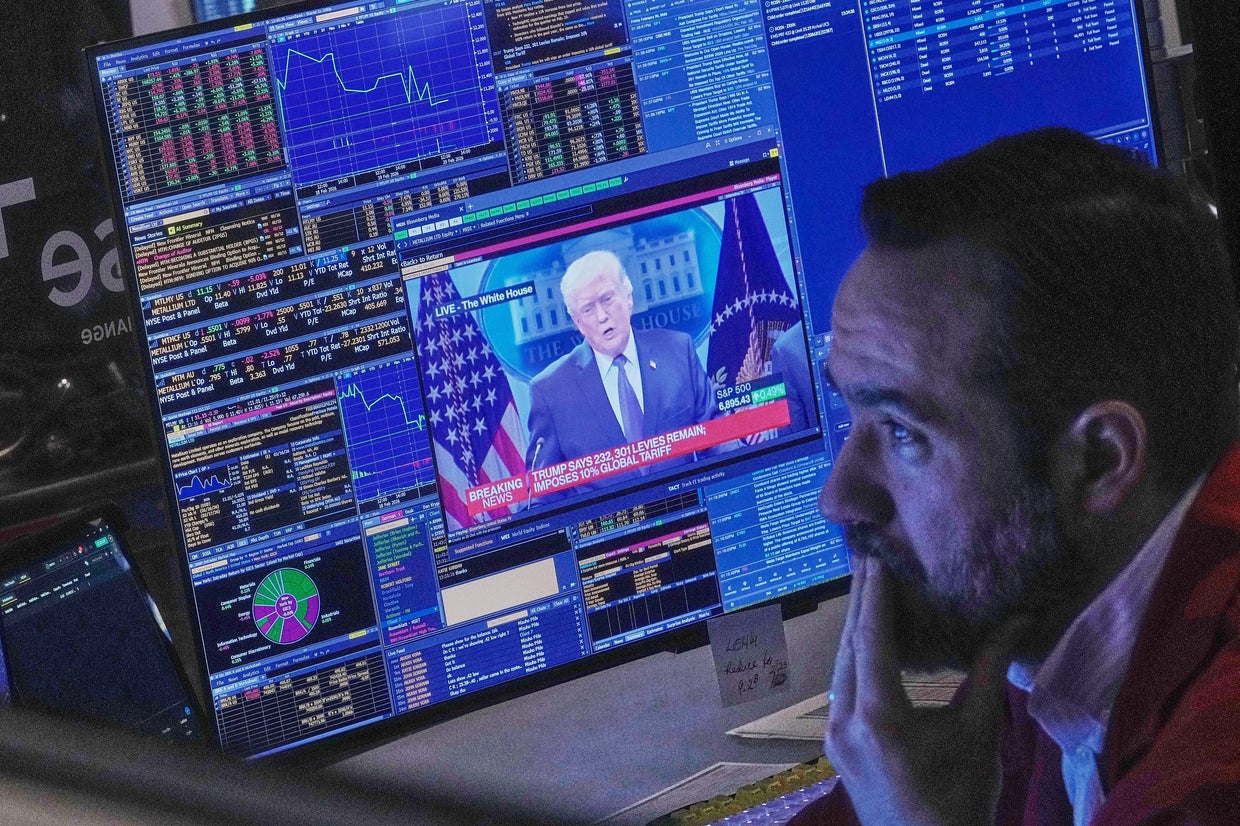
A CBS News piece that examines nearly 3,600 stock trades by President Donald Trump over three months analyzes his financial disclosure in detail. Here the central risk is not physical but politico‑financial: what happens when a person with enormous power actively participates in markets that are sensitive to each of his decisions and even his public comments. Formally, everything looks legal: the president is required by law to disclose transactions, and the filing shows 3,642 trades in stocks and funds, totaling between $212 million and $695 million for the quarter, and the Trump Organization states the president does not manage the portfolio personally — “independent external managers” do.
But the scale and character of the trading — frequent transactions in Microsoft, Amazon, Meta, Nvidia, Palantir, Eli Lilly and others, surges of trades on specific days, huge sums bought and sold — raise doubts among ethics experts and some investment professionals. Senator Elizabeth Warren calls for an investigation into “potential insider trading,” pointing for example to a large Nvidia purchase on January 6, 2026, after which the administration eased export restrictions on its AI chips, objectively a favorable move for the company. Similarly, large purchases of Palantir shares preceded public praise of the company by Trump in a Truth Social post where he specifically mentioned the PLTR ticker: “Palantir Technologies (PLTR) has proven to have great war fighting capabilities and equipment. Just ask our enemies!!! President DJT.” There were also purchases of Eli Lilly that coincided, as KFF Health News noted, with government decisions favorable to its GLP‑1 business (drugs for weight loss and diabetes treatment).
To understand the core of the complaints, it is important to clarify terms. “Insider trading” refers to stock trades made using material, nonpublic information that could affect the price of securities. In the U.S. this is illegal. The president’s situation is legally special: the president is formally exempt from the key conflict‑of‑interest requirement that forces other officials to recuse themselves from matters affecting their personal finances. That is, what would be a direct conflict for a cabinet secretary is not prohibited by law for the president. Yet from an ethical standpoint this is deeply problematic: Columbia University government ethics professor Richard Briffault says directly that the president “is in a position to make decisions and issue statements capable of moving stock prices, down to a single social‑media post — and then the next day contradict the statement, again shifting the market.” In this setup, even without insider information, simple awareness matters: the president “can know what assets he owns, and can know how his actions and words affect them.”
Investment professionals interviewed by CBS News offer a less dramatic but no less troubling explanation in terms of inequality. Wealth manager David Salem sees in the volume of trades “classic tax‑loss harvesting” and “direct indexing.” Tax‑loss harvesting is a strategy where an investor sells losing assets to realize losses and reduce taxes on gains. Direct indexing is a method where, instead of buying an index fund, an investor — using computer algorithms — buys and sells dozens or hundreds of individual stocks so the overall portfolio mimics an index (for example, the S&P 500) while allowing flexible tax management by selling specific positions at a loss and replacing them. Salem explains: there are complex programs that automatically calculate what exactly to buy and sell to “hug the benchmark” (i.e., track the index closely) while minimizing taxes: “You can't do this kind of direct indexing you see in the filing unless you have pretty sophisticated computers, and legal and tax gurus to figure all this out.” He believes the spike in activity on March 23, the day major index providers S&P and FTSE conducted a “rebalancing” (reviewing index constituents and weights), is direct evidence that managers were executing precisely this index‑tracking strategy.
Another consultant for wealthy clients, Eric Diton, by contrast, cannot rationally explain such trading intensity, noting he has “never seen” a strategy that justifies thousands of transactions in a quarter and criticizing it even from the standpoint of tax efficiency. But he agrees on one point: the president cannot physically be day‑trading; external managers are clearly handling the activity.
Legally the defense has a strong position: “neither the president, nor his family, nor the Trump Organization participate in selecting investments,” and they allegedly “do not receive advance notice of trades.” Yet in ethical discourse this is insufficient. In modern practice most presidents either placed assets into a blind trust or retained only diversified funds so they would not know which specific stocks they owned and would avoid potential conflicts. A blind trust is a structure in which a manager acts autonomously and the beneficiary (the president) does not know the specific holdings. Trump consciously chose a different model. Senator Warren notes the president personally signed a 113‑page document detailing his trades, meaning he knowingly had an overview of his positions at the time he made decisions that could affect those assets.
Political reactions to this case are manifesting in legislative initiatives. Senator Andy Kim cites these trades in pushing his “Restoring Trust in Public Servants Act,” which would ban stock ownership and trading for officials across all three branches of government. The bipartisan “HONEST Act,” advanced by Senator Josh Hawley, goes further: it would prohibit trading by members of Congress and the president/vice president and require them to divest assets upon entering the next term. Hawley told CBS News his bill would not apply to the current president and would take effect in 2029, but he affirmed principled support for any realistic restrictions. Against this background, Trump’s critical post on Truth Social calling Hawley a “secondary senator” who supposedly “on a whim” seeks to “target” a successful president shows how personally contested regulation of officials’ financial interests has become.
Returning to the B‑52 crash, we see another facet of the conflict between power, risk and trust. The military traditionally controls and paces information. The NBC News item cites a brief Facebook post from Edwards: the plane fell, there is a debris field in the desert, no passenger traffic, cause unknown, casualties “not reported at this time.” Society is asked to rely on a standardized procedure: there’s an accident — there will be an investigation — conclusions will follow. But the B‑52’s operational history since 1955, its age, its role in the nuclear arsenal and its potential to carry nuclear weapons — all this makes every incident involving such equipment a test of trust: does the safety system really control all risks if a routine sortie can end in disaster? And how complete will the public account of causes be, especially if they point to systemic problems — aging fleets, training or operational errors?
Against this backdrop the third story — about how journalism seeks to serve the public’s right to know and understand what happens in crises — becomes especially significant. Michigan regional station WXYZ reports it won four Emmys from the Michigan chapter of the National Academy of Television Arts and Sciences per WXYZ. Among the awards was a Breaking News Emmy for covering a church shooting in Grand Blanc Township, where the report said at least four were killed and eight injured, and a Special Event Coverage Emmy for broadcasting the Woodward Dream Cruise car festival. The winners list includes dozens of reporters, camera operators and producers — Amanda Horwitz, Carolyn Clifford, Faraz Javed and others — as well as a report on Covenant House Michigan’s aid to homeless people during extreme cold and an investigation into fraudulent Cash App accounts by Alicia Smith.
These awards are more than industry “Oscars.” They signal that society values and rewards the media’s ability to report quickly, accurately and humanely on situations where people’s safety is at risk: extreme cold and vulnerable homeless people, an armed attack in a house of worship, a large public festival that requires responsible organization and coverage. Journalism here acts as a bridge between complex realities of risk and the mass audience: it turns dry bulletins into stories about real people, helps hold power and business accountable (as with the Cash App fraud report), and shapes the public debate about where acceptable boundaries lie.
Thus, in all three stories — from the desert near Edwards to trading terminals on Wall Street and studios in Southfield — the same theme repeats: modern societies are built on trust in institutions that manage risks hidden from view. The military assures it controls lethal equipment and guarantees security. Politicians and their financial managers assure that personal interests are separated from public decision‑making. Media and journalists try to act as arbiters and intermediaries on whether the public will see a full and honest picture.
The paradox is that formal compliance with laws and procedures is no longer sufficient. When a president legally trades Nvidia and Palantir stocks while making key decisions on export controls and government contracts, when a strategic aircraft falls in peacetime near major cities, or when a shooting happens in a Midwestern church, society seeks not only facts but assurances that lessons will be learned and risks reassessed.
From this follow several key trends. First, there is growing political demand to sharply separate personal finances from public power: the HONEST Act and proposals from senators like Kim and Hawley reflect a belief that disclosures alone are insufficient and that institutional measures are needed to shrink opportunities for conflicts of interest, even where no actual insider information was used. Second, complex financial instruments like direct indexing and tax‑loss harvesting highlight unequal access to financial engineering: “The service is only available to the rich and ultra‑rich,” Salem admits. This reinforces the sense that elites play by different, more advantageous rules — making it all the more important to impose at least ethical limits on their behavior.
Third, every major incident — from a military plane crash to a mass shooting — is simultaneously a test for those who manage risk and for those who report it. WXYZ’s Emmy wins for Breaking News and Special Event Coverage show that high‑quality journalism remains one of the few mechanisms of public oversight and sense‑making in crises. Without it, lofty military or financial rhetoric can easily become an opaque backdrop against which decisions are made without real accountability.
Ultimately, the unifying question across all three stories is not only “who is to blame” or “what happened,” but “to whom and under what conditions are we willing to entrust the management of risks that shape our lives and future?” The answer can no longer be purely legalistic or technical. It requires a combination of transparency, real limits on power, and active, professional work by those who explain to the public what happens behind closed doors — from traders’ desks to command posts and boardrooms.