Three articles focus on different events—voting rights, the war with Iran, and a shooting in Pittsburgh—but they share one theme: the consequences of government decisions and the limits of state control. In the first case, the Supreme Court halted rushed federal regulation of mail-in voting because it could violate voters’ rights. In the second, Donald Trump’s administration is facing the high cost of its military policy and rising fuel prices, despite promises to the contrary. In the third, police are investigating localized violence whose motives, perpetrators, and ultimate scale remain unknown. Together, these stories show that security and order do not arise automatically: they require lawful procedures, evidence, technical readiness, and accountability for consequences.
The main political and legal story is the U.S. Supreme Court’s decision to prevent the Trump administration from introducing new rules for mail-in ballots immediately before an election. The Court rejected the federal government’s emergency request and effectively left in place a lower-court ruling that found the regulation most likely unlawful. As NBC News reports, the decision appears to have been 7–2, with conservative justices Clarence Thomas and Samuel Alito dissenting.
The proposed system would have significantly expanded the role of the U.S. Postal Service. States would have had to provide it with lists of voters eligible to receive ballots, while the agency would have checked whether mailed ballots matched those lists and monitored the preparation of envelopes. Election administration normally falls under state authority, so the attempt to introduce new federal requirements just weeks before voting prompted particularly strong objections.
The problem involved not only legal authority but also timing. North Carolina was scheduled to begin mailing ballots on September 4, with other states following soon afterward. Some states said they would not physically have enough time to redesign their procedures. Additional concerns involved the Postal Service’s technical readiness: a whistleblower complaint indicated that the verification system might operate unreliably and cause delays.
U.S. District Judge Indira Talwani of Massachusetts warned of the risk of “significant voter disenfranchisement” and noted that the administration had provided no evidence that the new measures were necessary to combat fraud. This matters because Donald Trump has repeatedly claimed, without providing evidence, that widespread use of mail-in ballots is associated with large-scale violations. In this case, the Court placed the principle of preventing a speculative threat below the proven risk of restricting access to voting.
It is noteworthy that Justice Brett Kavanaugh took an intermediate position. He said the Postal Service might indeed have sufficient authority to introduce such rules, but agreed that they could not be applied so close to an election. In other words, the decision was based not only on a final assessment of the regulation’s legality but also on the principle of stability in election procedures. Changing the rules at the last minute can cause confusion even when the regulation’s stated purpose appears formally permissible.
Justice Alito, by contrast, found the federal government’s arguments more persuasive and complained that the courts had delayed consideration of the case. His position nevertheless illustrates the complexity of such disputes: when courts rule too late, even a potentially lawful measure may be practically impossible to implement. An electoral system requires predictability because ballots, addresses, deadlines, and procedures must be coordinated between federal agencies and states well before Election Day.
In this context, the Supreme Court’s decision was not merely a dispute over the Postal Service’s authority. It demonstrated the limits of federal executive power and confirmed that efforts to combat alleged violations cannot come at the cost of creating a broad risk to voters themselves. California Attorney General Rob Bonta called the decision “a victory for democracy and a powerful affirmation of the rule of law,” while the League of Women Voters described the initiative as an “extraordinary attempt to interfere with voting in all 50 states.” These statements reflect a broader conflict between the center’s desire to standardize rules and the states’ traditional role in organizing elections.
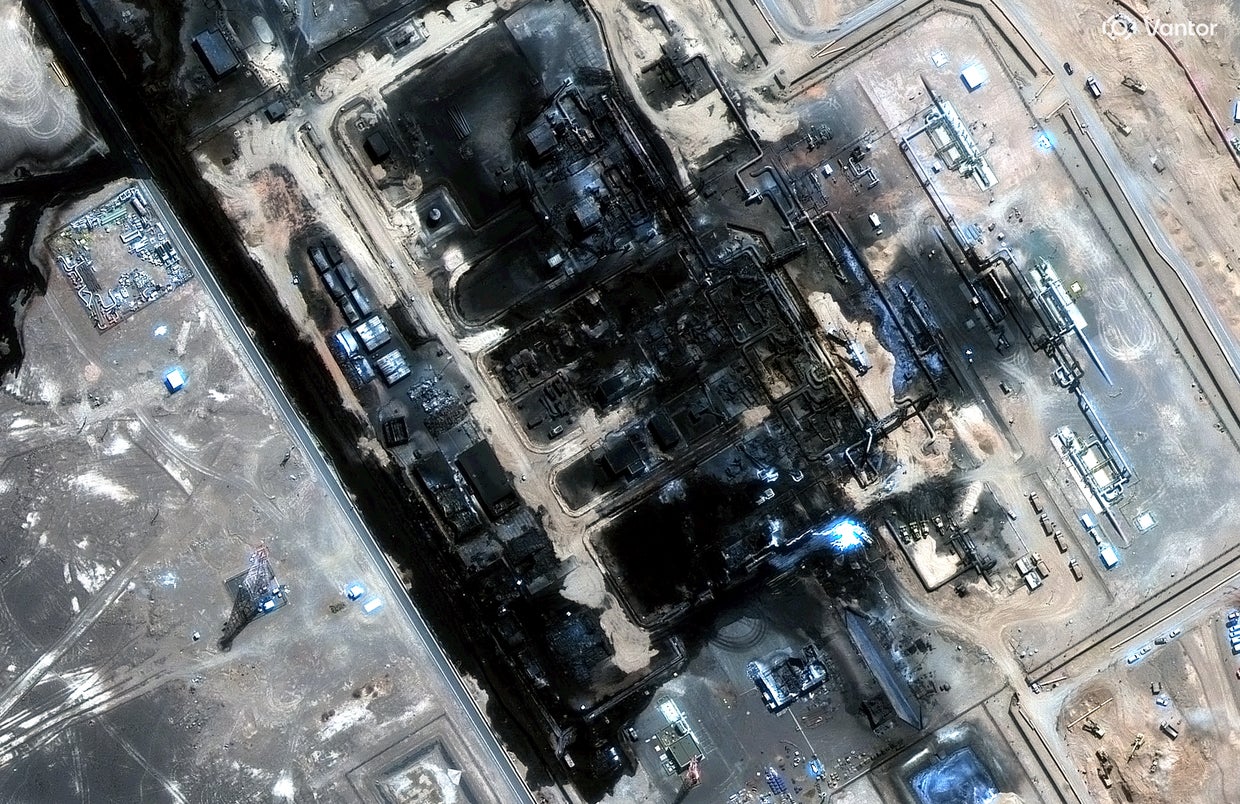
The second article shows another side of the problem—the cost of executive decisions in foreign policy. A brief update from CBS News reports that the cost of the war with Iran has already substantially exceeded $33.4 billion, while the Trump administration continues to promise lower gasoline prices, which have yet to materialize. Here, as in the mail-voting case, political statements collide with practical consequences. Promises of cheaper fuel do not erase the effects of military spending, risks to oil supplies, or tensions surrounding the Strait of Hormuz—a strategic maritime passage through which a significant share of the world’s oil exports travels.
The connection between military action and gasoline prices is not mechanical. Fuel costs are influenced by global oil prices, market expectations, insurance expenses, transportation disruptions, currency exchange rates, and producers’ decisions. But the CBS News report emphasizes the political contradiction: the administration promises an immediate economic benefit for citizens, while war creates additional costs and uncertainty. Even if the government expects to stabilize the market in the future, people judge the situation by current prices and household expenses.
The mention of Trump’s possible willingness to resume discussions with Iran is also significant. It shows that military pressure and diplomacy can coexist in foreign policy, but changing course comes at a cost. After a conflict begins, a diplomatic signal may be seen as an attempt to limit expenses and reduce risks, but it does not guarantee a rapid decline in prices or eliminate costs already incurred. Moreover, any negotiations depend on the terms, the parties’ trust, and the situation surrounding strategic waterways.
The third story—WPXI’s report on a shooting in a residential building in Pittsburgh—shifts the question of security from the national level to a specific neighborhood. Police found a man in the building’s lobby on Centre Avenue at about 2:15 a.m. He had suffered two gunshot wounds—to the chest and arm. Officers provided first aid, using a chest seal and a tourniquet, before the victim was taken to a hospital in stable condition.
According to police, the man had been involved in an argument in an apartment upstairs before the shooting; a crime scene was also found there. Two people were taken to the police station for questioning, but at the time of publication there had been no arrests or charges. This is a crucial qualification: having suspects available for questioning does not mean guilt has been established. The investigation is ongoing, and the motive and circumstances of the shooting have not yet been determined.
In medical terms, a chest seal is an occlusive dressing applied to a chest wound to help prevent air from entering the pleural cavity. A tourniquet is a device used to temporarily stop severe bleeding, usually from a limb. Mentioning these details shows that the outcome depended not only on the investigation but also on timely first aid. Unlike federal political decisions, the state response here was immediate—through the actions of arriving officers and the subsequent work of detectives.
All three articles emphasize the importance of procedural competence. In the election dispute, the risk arose from an attempt to abruptly change a complex system without sufficient time or technical preparation. In the war with Iran, the problem appears as a gap between political promises and economic consequences. In Pittsburgh, security depends on the accuracy of initial information, medical assistance, the investigation, and respect for the presumption of innocence.
The central conclusion is that government power is effective not when it acts as broadly or quickly as possible, but when its actions are proportionate to the threat, evidence-based, and attentive to side effects. The Supreme Court effectively applied this principle to elections: even if federal regulation might theoretically have a legal basis, it cannot be introduced in a way that creates a risk of denying citizens the right to vote. The CBS News report shows the same principle in economics: large-scale decisions related to war affect both the budget and the cost of living. The WPXI story reminds us that at the local level, statements must give way to verifiable facts and a careful investigation.
More broadly, the articles demonstrate the tension between political control and institutional constraints. The Trump administration seeks to strengthen federal influence—whether over elections, foreign policy, or promises to manage the economic consequences of conflict. Yet courts, states, markets, and law-enforcement practices limit the ability to quickly turn political will into a predictable result. These constraints—judicial review, the separation of powers, technical capabilities, and evidentiary requirements—become the main mechanism protecting society from decisions whose consequences may prove more dangerous than the original problem.