At first glance, the three pieces concern entirely different subjects: the trial of Lindsay Clancy, Prince Harry and Meghan Markle’s return to the United Kingdom, and a charity auction of unique Rolex watches. Yet they share a common theme: how publicity changes the value of decisions, increases accountability, and gradually slips beyond the control of those seeking to manage it.
In each case, public attention becomes an independent factor. For the Clancy family, it influences perceptions of the trial and its participants; for the Sussexes, it turns their children’s everyday school life into a matter of public and media policy; for Rolex, it becomes economic capital that can channel collectors’ interest toward charity. These stories show that fame can simultaneously be a threat, a source of pressure, and a tool for public benefit.
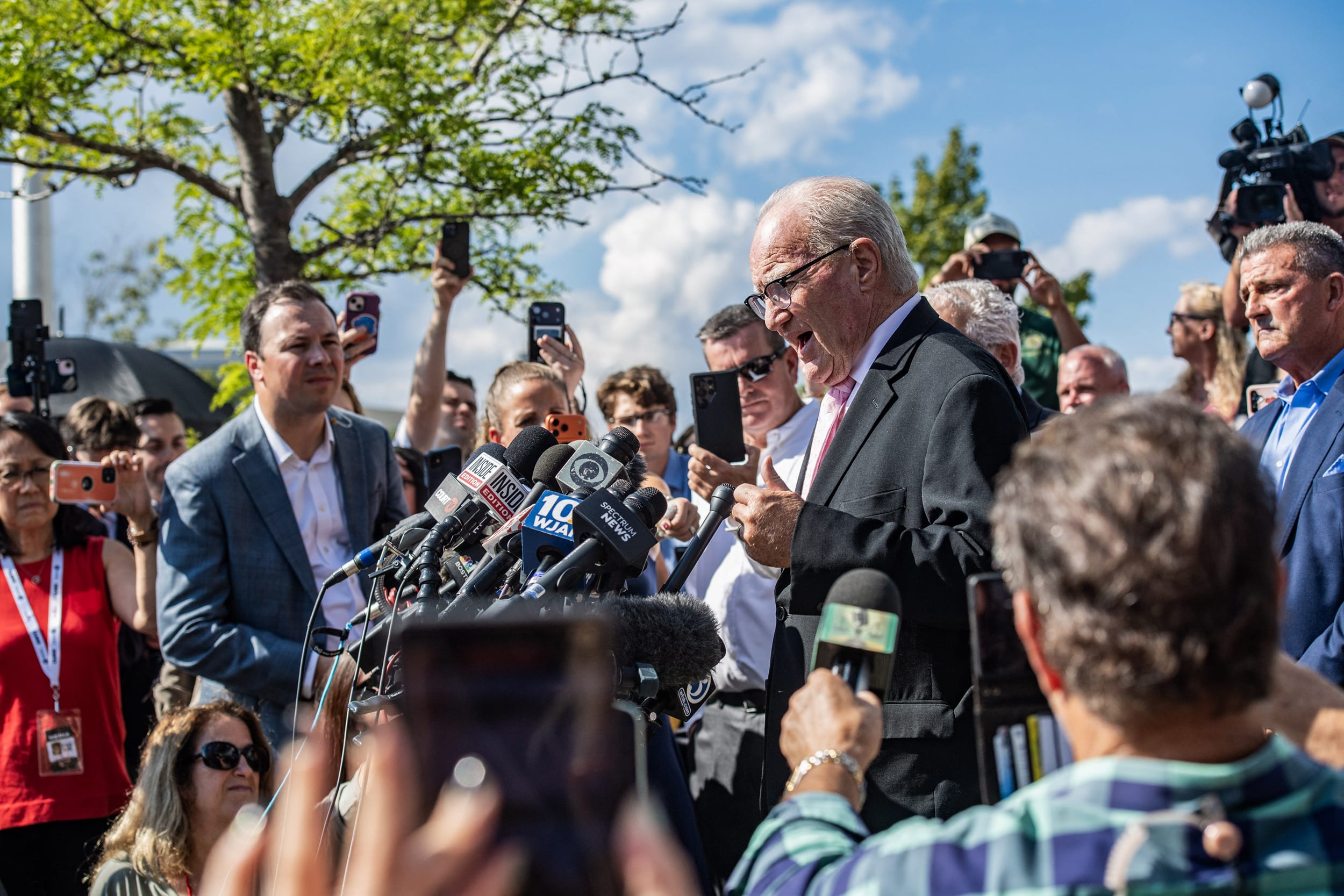
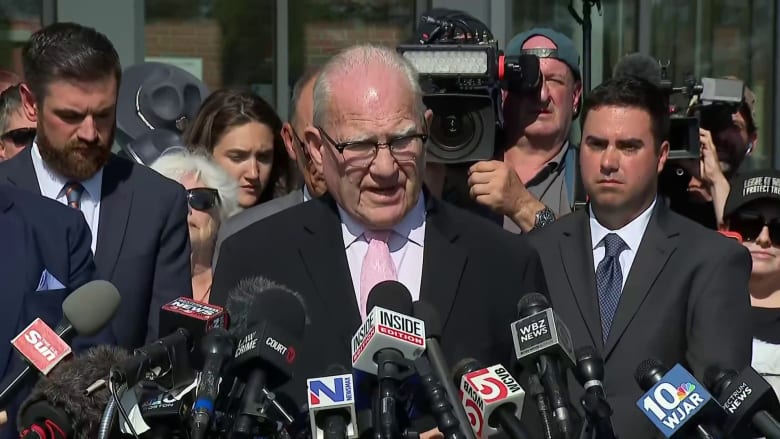
In NBC News’ report on the Lindsay Clancy trial, attention focuses on the consequences of the trial ending unsuccessfully. Clancy’s defense said that after the mistrial was declared, her condition was “not good.” Attorney Kevin Reddington emphasized that his client was grieving the loss of her three children—Cora, Dawson, and Callan—and presented the situation primarily as a family tragedy.
His reaction to the jury’s composition was particularly revealing. According to Reddington, one juror prevented an acquittal, although the attorney said the other 11 were prepared to find reasonable doubt. He said that this person had “stolen seven weeks of life” from the other jurors. The wording demonstrates how emotionally the trial is being experienced by the participants and their representatives. At the same time, it is important to distinguish the defense’s position from an established fact: the attorney’s remarks do not prove that the other jurors actually reached a unanimous view or that an acquittal was guaranteed.
Legally, a mistrial means that the proceedings did not end with a final verdict. The reasons can vary—from the jury’s inability to reach a unanimous decision to procedural violations. Unlike an acquittal, this outcome does not establish the defendant’s innocence; at the same time, it is not a conviction. The attorney’s emotional assessment therefore reflects the interests of the defense but does not replace a judicial ruling. The story shows how public discussion of a tragic case can easily shift from analyzing evidence to judging individuals—jurors, attorneys, and family members.
In the story of Harry and Meghan, publicity is no longer an element of a judicial proceeding but the environment of everyday life. According to a Fox News report, the couple’s children, Archie and Lilibet, are expected to begin attending a private school in the British countryside. Parents of students were reportedly sent letters reminding them not to photograph or record other children without permission and not to post information about pupils or their families on social media.
Such rules are not unusual in themselves: schools have a duty to protect minors and maintain a safe environment. But the presence of a globally famous family changes the scale of the problem. Expert Kinsey Schofield put it this way: “You cannot manage a school like a communications operation.” In practice, children have phones, friends, sporting events, birthday parties, and school celebrations—many situations that cannot be fully controlled through official statements and agreements with the press.
This introduces a fundamental distinction between privacy and control. Privacy is a family’s right to limit access to personal information, protect children from harassment, and prevent unauthorized photography. Control is the desire to manage every photograph, post, or public interpretation. Schofield argues that Harry and Meghan have the right to protect their children, but cannot expect public interest in them to disappear entirely, because that interest is connected to their status.
Selective publicity creates particular tension. On the one hand, the Sussexes try not to show their children’s faces and speak of the need to give them “privacy, autonomy, and protection in the digital world.” On the other hand, photographs of the children periodically appear on Meghan’s own social media accounts. Critics, including expert Hilary Fordwich, view this as contradictory: in their opinion, the family both restricts independent coverage and uses public images on its own terms.
However, this contradiction does not necessarily amount to hypocrisy. There is a difference between a photograph published by parents and an unauthorized image taken by third parties. Parents may believe they can control the context, timing, and content of their own posts, whereas candid photographs taken at school deprive them of that control. At the same time, limited access to images can indeed increase their value to tabloids and social media users. The fewer official photographs that appear, the greater the incentive to obtain unofficial ones.
In this respect, the difference between the Sussexes’ approach and that of Prince William and Catherine is telling. The latter regularly publish official photographs of their children on special occasions, creating a predictable and controlled channel of public access. This does not eliminate interest in the family, but it reduces the scarcity of images and allows them to determine the context themselves. Harry and Meghan’s approach is based on stricter restrictions, which protect the children from some attention but may simultaneously increase the appeal of unauthorized material.
Their return to the United Kingdom therefore becomes more than a family decision; it is a test of their entire relationship with publicity. In California, family life is separated from the British monarchy’s infrastructure and the press’s historical interest. In the Cotswolds, by contrast, royal residences are nearby, and the area has long attracted celebrities and wealthy people. A culture of discretion exists there, but the Sussexes’ arrival could draw additional attention, photographers, and security concerns. According to Schofield, if the move leads to constant conflicts over security and the press, it could revive the old tensions the family wanted to distance itself from.
The third piece presents the opposite strategy for dealing with fame. A Hodinkee article on the Rolex charity auction describes the decision to put four unique Daytona models up for sale. The auction will take place in London with Phillips, and the proceeds will go to Roger Federer’s Federer Foundation and the environmental organization re:wild, associated with Leonardo DiCaprio.
Interest in the set was so strong that, according to the article, more than 1,000 applications had been submitted even before the exhibition ended. Potential buyers included celebrities and influential collectors, while Rolex initially did not know how to select the owners of the watches. The brand ultimately abandoned private allocation and turned high demand into a public charity auction.
This is an important example of how public attention can be institutionalized rather than suppressed. The watches’ uniqueness increases their market value, the participants’ fame generates additional interest, and the charitable purpose gives the purchase social significance. In this case, a luxury item becomes not only an object of prestige but also a fundraising mechanism. The buyer acquires a rare object, while the organization receives funding.
The charitable element, however, does not erase the commercial and symbolic nature of the transaction. Rolex strengthens its brand reputation by associating it with Roger Federer and Leonardo DiCaprio; the foundations gain access to an audience of wealthy collectors; and buyers get the chance to acquire an item that will probably never appear on the ordinary market. It is a mutually beneficial model in which publicity acts as a value multiplier.
The broader conclusion from the three stories is that fame can no longer be viewed simply as a characteristic of a person or brand. It functions as infrastructure: influencing the behavior of others, changing the value of objects, transforming private decisions into public events, and creating additional risks.
In a trial, publicity intensifies emotional pressure and can make it difficult to separate legal facts from personal judgments. In the school story, it turns ordinary actions—taking photographs, posting online, and attending celebrations—into potential threats to security and privacy. In Rolex’s case, by contrast, it mobilizes demand and helps direct resources toward charity.
The key trend is a shift from complete control to the management of boundaries. The Sussexes cannot eliminate public attention entirely, but they can establish rules for what forms of attention are acceptable. A court cannot control public emotions, but it must separate them from the evidence and the legal process. Rolex cannot control collectors’ desire, but it can create a transparent format in which that demand is given a clear purpose.
Another important pattern is publicity’s dependence on scarcity. The less official information is available, the more valuable unofficial information becomes. This is especially apparent in the case of photographs of the Sussexes’ children and the unique Rolex watches. In one case, scarcity increases the risk of intrusion into private life; in the other, it increases the value of the lot and the amount of charitable funding raised. The same mechanism works differently depending on who controls the rules of access.
Finally, all three pieces show that public attention rarely remains neutral. It distributes responsibility among many people: jurors, parents of schoolchildren, teachers, journalists, collectors, philanthropists, and celebrities themselves. The central question, therefore, is not whether publicity can be avoided completely, but who sets its limits, how fair those rules are, and what price others pay.
For Harry and Meghan’s family, that price may be the need to change the behavior of the entire school community. For those involved in the Clancy case, it may be emotional pressure and the risk of premature public conclusions. For Rolex, it is the need to maintain trust in the auction’s charitable purpose and transparency. In every case, fame becomes a collective phenomenon: it benefits some people but almost always creates additional obligations and restrictions for others.