Three stories reveal different but interconnected aspects of life in American cities and communities: the economic value of land, threats to public safety, and the consequences of decisions made by authorities during a crisis. In Pennsylvania, residents are earning millions from the construction of data centers, but the money comes with environmental and infrastructure risks. In Baltimore, a confrontation in a small store ends with a man’s death and once again raises questions about the safety of neighborhoods near schools. In New York, the release of documents about the aftermath of the September 11 attacks shows how costly it can be for society when information about risks is concealed or downplayed.
The common theme in these stories is the distribution of benefits, dangers, and responsibility. Economic development can give people a chance to become wealthy, but it does not guarantee safety. State and local authorities seek to maintain a sense of normality and growth, but public trust depends on how honestly they speak about the consequences of their decisions.
The clearest example of economic transformation is the rural town of Salem, Pennsylvania, where the artificial intelligence boom has sharply increased the value of land. As CBS News reports, nearly 100 families sold more than 1,700 acres to a developer. The total value of the deal was $586 million—more than $300,000 per acre, compared with less than $5,000 per acre just two years earlier.
For some owners, this was an almost unbelievable financial turning point. Michael Hodgson, who bought a 14-acre parcel in 2019, received nearly 60 times its original value. He says the opportunity to retire allowed him to leave behind the demanding work of construction. His question—“Who wouldn’t take that opportunity?”—captures the moral ambiguity of the situation. From the outside, selling the land may look like abandoning the interests of the local community. But for someone who spent years with few significant prospects, it may be the only chance to provide for a family and create “generational wealth.”
Deals like these change not only individual families’ finances but also the social structure of the area. David and Marilee Kiliti’s family received more than $20 million for an 89-acre farm. The couple is building a new home, while their daughter plans to reopen a local brewery that had closed. According to Kiliti, the benefits go “not just to the person who received the money, but to the whole town, the whole area.”
Deal organizer Jack Sordoni says about 80% of the sellers plan to remain in the county. This matters: if the money they receive is spent on local homes, businesses, and services, the land sale could genuinely stimulate the economy. The community compensation provisions in the agreement are expected to direct millions of dollars toward police, fire, and emergency medical services, water and sewer systems, and education. Such arrangements are known as community benefits agreements—legally or politically binding deals under which a major investor compensates the local community for part of the burden created by a project.
But economic benefits do not eliminate the risks. According to data cited by CBS, more than 70% of Americans do not want data centers near their homes. The reasons include noise, electricity and water consumption, pressure on roads and utility networks, and possible environmental damage. Data centers are facilities filled with servers and networking equipment that store and process data. Their numbers are growing rapidly because of advances in artificial intelligence: training and operating modern models requires enormous computing power.
The conflict over such facilities therefore cannot be reduced to “progress versus conservatism.” For landowners, the project represents a rare opportunity to become wealthy; for neighbors, it means the risk of living next to an industrial facility; for authorities, it promises tax revenue and jobs, but also creates responsibility for the project’s impact on infrastructure and the environment. Pennsylvania Governor Josh Shapiro, who previously supported data-center development, said he had heard residents’ concerns and was now prepared to consider projects only when they had community support, environmental safeguards, and reliable energy supplies.
This is where a question common to all three stories emerges: Is formal consent enough, or do people need to be fully informed? A land sale may be voluntary, but the consequences of the project affect people who sold nothing. Similarly, in Baltimore, the actions of a teenager and an adult man in a store affected the safety of an entire school and neighborhood.
According to WBAL-TV, 41-year-old Kinsey Chatman died three days after a shooting at A&Y Grocery Store. Preliminary information indicates that he and a 16-year-old teenager got into a fight over a black backpack. The teenager shot the man and was then wounded in the arm himself. After the incident, nearby Green Street Academy was temporarily placed on lockdown.
This story differs from the data-center report in scale and nature, but it is connected to it by the way public safety depends on local decisions. A small store, a school, a street, and the surrounding infrastructure form a single space where a private dispute can quickly become a public event. Even when a crime occurs in one building, its consequences are felt by children, parents, teachers, and residents of the entire block.
The informational aspect is also important: investigators are relying on surveillance footage, a recovered weapon, and physical evidence. The public has only a preliminary picture, while law enforcement must establish the final circumstances. This underscores the need for caution: unlike political statements, an investigation must distinguish confirmed facts from assumptions. At the same time, the temporary lockdown shows that safety requires not only the punishment of those responsible but also advance coordination among police, schools, and local institutions.
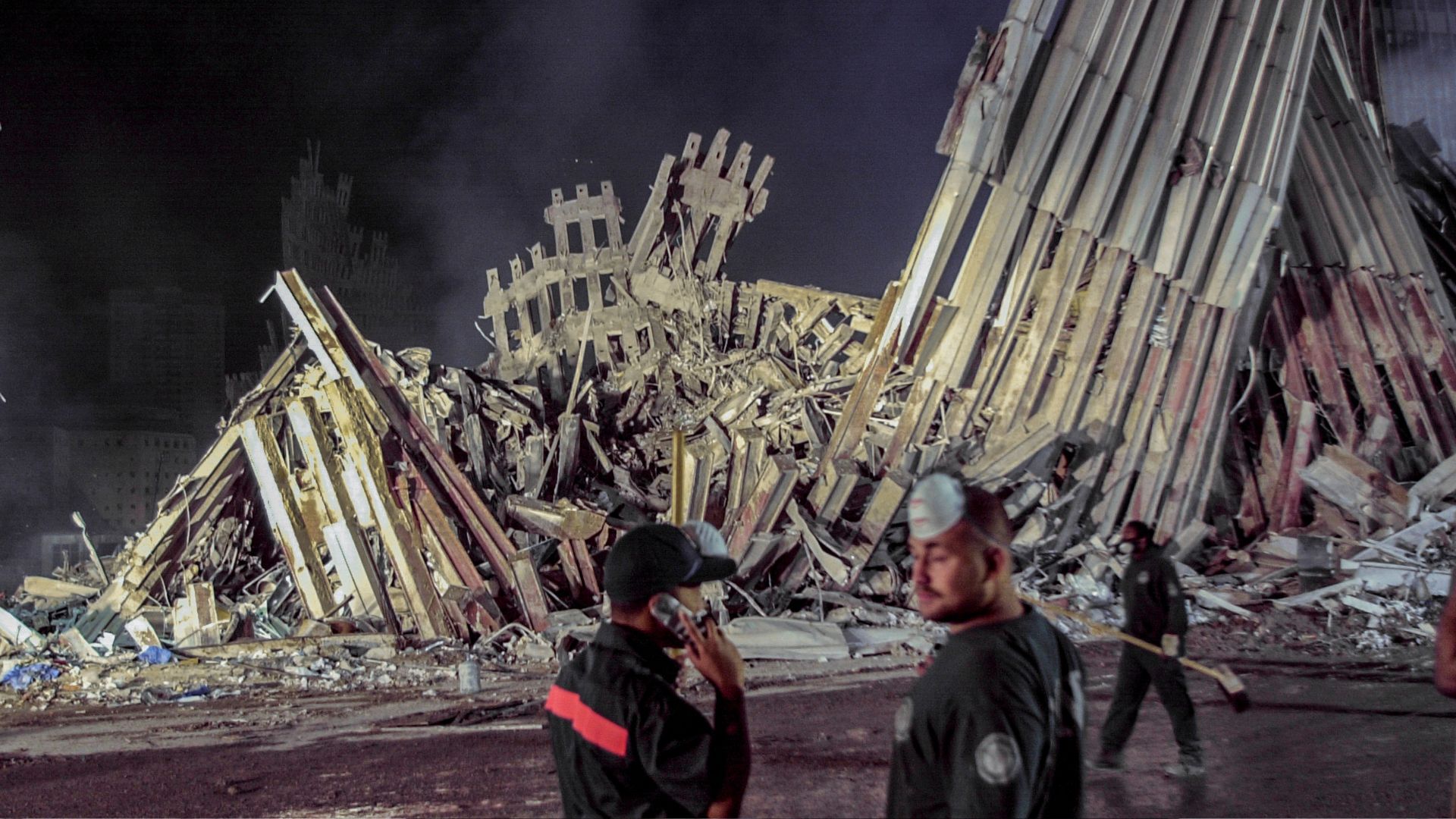
The third story—the release of more than 170,000 pages of documents about air quality after the September 11 attacks—moves the discussion from current risks to historical responsibility. As ABC7 New York reports, the documents include air-quality reports, pollution data, and correspondence among officials. Many of the materials had been stored in 68 boxes and were discovered only last year.
According to the documents reviewed so far, city leaders understood that toxic substances were burning at the site of the destroyed World Trade Center towers and that there was a risk of chemical exposure. Yet the public and rescue workers were told that the air was safe. The authorities also apparently feared future lawsuits related to exposure to the pollution.
New York Mayor Zohran Mamdani said that city residents had “long known the truth, but could not see it in the documents.” He accused previous leaders of misleading people by saying that the toxic air was safe. Activist and comedian Jon Stewart expressed the same idea more emotionally: “There was poison in the air, on the ground, on the windowsills, and in the air conditioners.”
These statements reflect an important problem: during a crisis, the government may seek to prevent panic, maintain economic activity, and return people to normal life. But if risks are minimized to achieve that goal, short-term calm can turn into long-term harm. Thousands of rescue workers, Lower Manhattan residents, and others later developed serious illnesses, including cancer. Releasing the archives cannot undo the damage, but it can help establish what officials knew and when they knew it.
New York City Corporation Counsel Stephen Banks acknowledged that releasing the documents could lead to new lawsuits, but placed transparency above concerns about the legal consequences. This is a fundamental choice. Public information matters not only to historians but also to people who need medical care, compensation, or official recognition that their suffering was connected to exposure to a hazardous environment.
In all three stories, information determines people’s ability to make decisions. A landowner in Pennsylvania needs to know not only the value of the deal but also the environmental consequences of a data center. Baltimore residents need reliable information about neighborhood safety and police actions after the shooting. Rescue workers and New York residents needed to know the truth about air quality so they could assess medical risks and seek help in time.
The main conclusion is that public trust is built not through promises of development or attempts to conceal troubling facts, but through transparent rules and verifiable data. Data centers can become a source of a “gold rush” for rural families, but only if the benefits are distributed fairly and the risks are controlled. Stronger rules in Pennsylvania show that public opposition can change the political course. However, strict regulations alone do not guarantee trust: residents must see the results of oversight and have an opportunity to influence decisions.
The Baltimore story is a reminder that safety is not an abstract statistic but a daily characteristic of specific places: a store across from a school, a street, a transit station, or a residential neighborhood. A single act of violence can disrupt the operation of an entire institution and make residents question whether their neighborhood is protected.
Finally, the September 11 documents demonstrate the cost of delayed transparency. If authorities know about contamination but tell the public that there is no danger, they effectively deprive people of the opportunity to protect their health. Releasing archival records decades later may restore part of the truth, but it cannot restore the health of those who became ill.
Together, the three stories form a unified picture of American society, where major economic projects, local crime, and the consequences of a national tragedy converge on one question: Who makes the decisions, and who bears their consequences? People are willing to accept risk if they understand it and receive a fair share of the benefits. But when danger is concealed and decisions are made without community participation, even a potentially beneficial project or official assurance of safety becomes a source of distrust.