British Columbians are traveling to the United States less often, the housing market is recovering slowly, and municipal leaders are discussing scooters and Indigenous rights.
British Columbia Turns Its Summer Routes Away from the U.S.
This summer, Metro Vancouver residents are traveling to the United States less often—both by land and by air. Data from several sources confirms a persistent trend that began well before the current vacation season and, apparently, shows no sign of reversing. Passenger traffic between Vancouver International Airport (YVR) and U.S. cities has fallen for 19 consecutive months, while southbound traffic at the Lower Mainland’s four border crossings continues to lose vehicles. Overall travel, however, is not declining—people are simply choosing different destinations.
According to data from the Vancouver Airport Authority (VAA), transborder flights—in other words, flights between YVR and all destinations in the United States—fell 2.8 percent year over year in July, to 667,118 passengers. During the first seven months of the year, the figure declined by a cumulative 4.3 percent, to 3,534,616 passengers. Airline representatives told Business in Vancouver that they began reducing the number of U.S. routes and flight frequencies as early as 2025, redirecting capacity to domestic Canadian routes as well as Mexico and the Asia-Pacific region.
It is important to understand that this does not mean people have stopped flying. On the contrary, Vancouver International Airport is becoming increasingly busy. Total passenger traffic through YVR rose 2.6 percent in July, to 2,732,171 passengers, and reached 16,105,221 passengers during the first seven months of 2026—3.7 percent more than during the same period a year earlier. Domestic traffic increased 4.2 percent in July, to 1,360,642 passengers, and was up 5.1 percent over the first seven months, to 7,918,865. But the most impressive growth came from the Asia-Pacific region: up 10.6 percent in July, to 431,472 passengers, and up 14 percent over seven months, to 2,936,885. In other words, U.S. flights are losing market share while Asian routes are actively gaining it.
The picture is even clearer on the ground. According to the Cascade Gateway Border Data Warehouse and the Whatcom Council of Governments, which track the Lower Mainland’s four border crossings—Peace Arch, Pacific Highway, Lynden and Sumas—southbound traffic for all vehicles fell nine percent year over year in August, to 252,256 vehicles. Compared with August 2024, the decline reached 33 percent. When all vehicles other than passenger cars with British Columbia licence plates are excluded from the data, the August decline is again nine percent, to 135,720 vehicles. In other words, the trend cannot be explained by through-traffic from other regions: local residents themselves have stopped traveling south.
In July, as Business in Vancouver previously reported, southbound traffic involving vehicles with British Columbia licence plates at these crossings fell 11 percent compared with July 2025 and 36 percent compared with July 2024. Because of technical problems with the platform used by data collectors, some days were not recorded at all from March through June. The publication therefore decided not to release statistics for those months in order to avoid distorting the picture. The last “clean” month before the problems was February, when southbound traffic by B.C.-plated vehicles fell 16.6 percent, marking the 13th consecutive month of decline.
Several factors are driving this shift, and they overlap. The first is economic. The Canadian dollar was slightly weaker in August than a year earlier—about 1.39 Canadian dollars per U.S. dollar, compared with roughly 1.38 a year earlier, according to X-Rates. For the average traveler, the difference is small, but combined with overall inflation, it makes a trip to the United States noticeably more expensive. The second factor is political. On Aug. 21, trade talks between the United States and Canada broke down, and Washington imposed 50 percent tariffs on a broad range of goods the following day. Although the tariffs do not directly affect tourists, they have intensified the general cooling in bilateral relations and, the publication notes, may have further discouraged travel to the United States.
The term “transborder” requires some explanation. In aviation statistics, it refers to flights crossing the Canada-U.S. border that operate under special customs procedures. When the number of such flights declines for 19 consecutive months, it is a signal not only to travelers but also to airlines, airports and border businesses—from hotels in Seattle to duty-free shops. It is also significant that growth in domestic and Asian traffic is fully offsetting losses on U.S. routes: overall passenger traffic at YVR is increasing, meaning Vancouver residents are not staying home but redirecting their travel to Toronto, Calgary, Tokyo, Seoul or Mexico City.
The key conclusion for businesses and policymakers is clear: the United States is becoming less attractive to British Columbia residents, and this is no longer a seasonal fluctuation but a structural shift, reinforced by 19 months of declining air traffic and a multiyear drop in land travel. Airlines adapted first, shifting capacity to Asia and within Canada—and, judging by the July figures, they made the right decision. Border communities in Washington State, by contrast, will have to accept that the flow of Canadian shoppers and tourists on which they relied for decades continues to dry up.
British Columbia Housing Market: Slow Recovery Amid Tariffs and Higher Rates
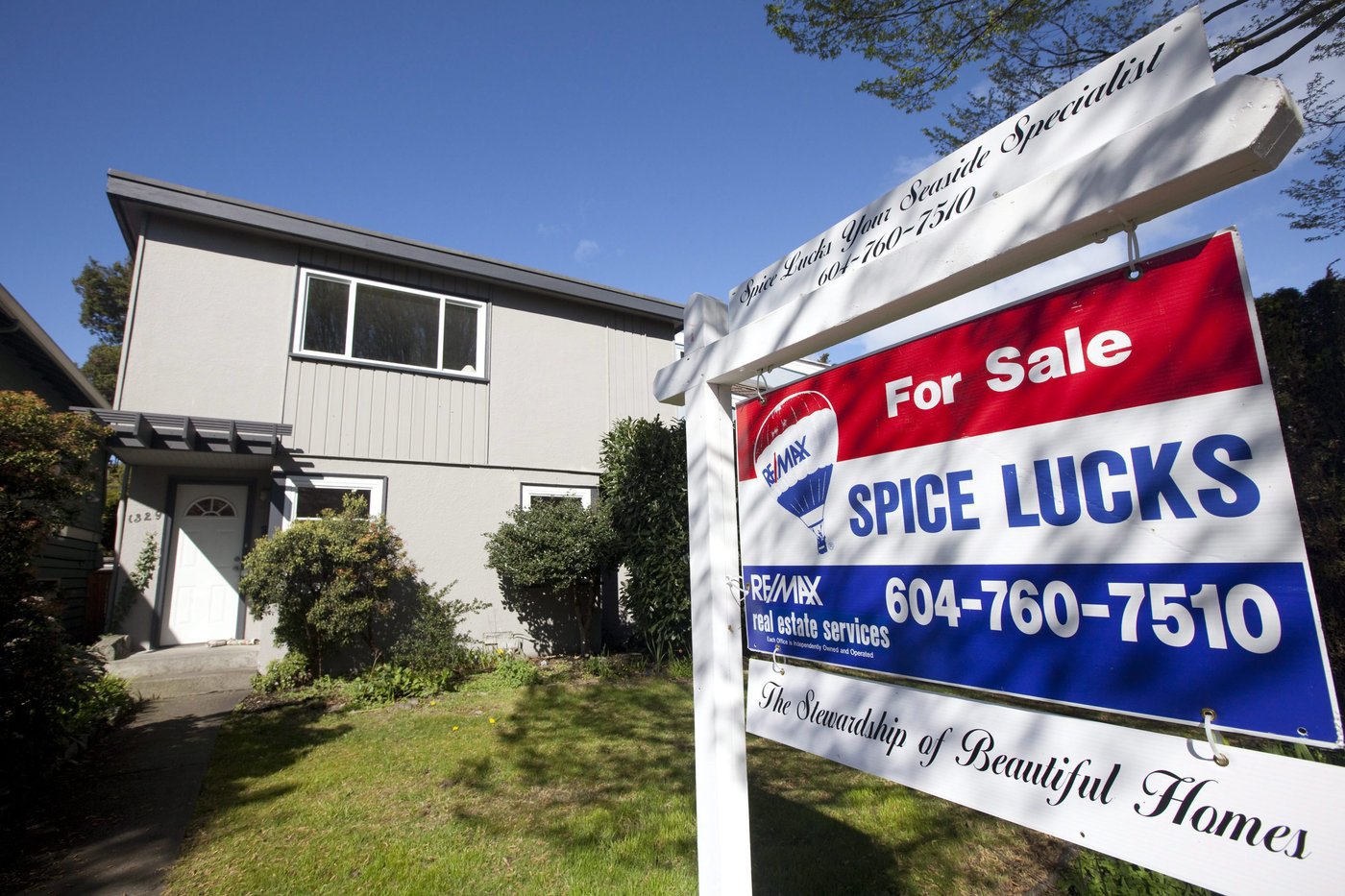
British Columbia’s real estate market continues to send mixed signals. On the one hand, home sales in August were again lower than a year earlier and remained well below historical norms. On the other, experts insist that a recovery is underway, albeit at a glacial pace. That is the contradictory picture described by the British Columbia Real Estate Association (BCREA), which released fresh August data.
According to the report, the total value of homes sold in the province during the month was $5.2 billion. That was 4.8 percent lower than in August 2025 and 25.4 percent below the 10-year average for the month. In other words, this August was one of the weakest in the long history of available records, even after seasonal factors are taken into account. BCREA chief economist Brendon Ogmundson sought to combine cautious optimism with a realistic assessment of the risks in comments to CityNews Vancouver: “Home sales in the province remain well below long-term averages, but have been steadily improving over the past year. We expect the gradual recovery in sales to continue, although new tariffs and the recent jump in long-term interest rates add a layer of risk to this outlook.”
The figures confirm that “improvement” is a relative term. The average price of a home listed for sale across the province was $924,826, approximately one percent below last year’s level. The number of transactions fell 5.5 percent compared with August 2025, with a total of 46,069 properties changing hands. At the same time, trends varied across the largest metropolitan areas. In Greater Vancouver, the average price was $1,213,418, down 1.3 percent year over year, while sales fell 3.6 percent, to 1,869 units. In the Fraser Valley, the average price declined to $949,354, a drop of 4.7 percent, while in Chilliwack it rose 1.5 percent, to $746,289. This divergence shows that the market is not uniform: in some places, prices are still supported by limited supply, while elsewhere buyers have finally seen the long-awaited correction.
The cumulative total for the year is also disappointing. Since the beginning of 2026, transactions worth $43.26 billion have been completed in the province, 6.5 percent less than during the same period last year. For those less familiar with macroeconomics, two key terms in the report deserve explanation. “Long-term interest rates” refers to government bond yields and rates on long-term mortgages; when they rise, monthly mortgage payments increase and buyers become more cautious. “Tariffs” in this context are trade duties that can hurt employment and household incomes and, in turn, people’s willingness to take on large loans.
The key takeaway from the BCREA report is this: the market is not collapsing, but neither is it recovering with confidence. It is balancing between buyers’ gradual return and pressure from external factors—trade policy and borrowing costs. If rates continue to rise and tariff threats materialize, the “gradual recovery” could be delayed indefinitely. If long-term rates stabilize and the province’s economy withstands tariff pressure, the current low sales figures could prove to be the bottom from which a more substantial upswing begins. For now, buyers and sellers continue to proceed cautiously, waiting for clearer signals.
From Scooters to Indigenous Rights: What Worries B.C. Municipal Leaders
The annual Union of B.C. Municipalities conference, which brought nearly 2,000 delegates to Vancouver, would seem to be focused on serious issues—housing affordability, crime and the future of the Indigenous rights law. But when New Westminster Mayor Patrick Johnstone was asked about the main concern among older residents in his city, the answer was unexpected: seniors are afraid of electric scooters on sidewalks. The detail, raised amid sweeping political debates, illustrates how local governments are forced to juggle issues ranging from the deeply everyday to the constitutional.
Speaking to reporters outside the convention centre, Johnstone called e-scooters a “relatively new threat” compared with cars, but emphasized that the provincial government has been testing their use in individual communities for seven years and still has not introduced uniform safety rules. In his view, the province should establish regulations that apply across all municipalities while investing in education and active-transportation infrastructure. The problem is genuinely growing: e-scooter collisions have already prompted British Columbia police to issue warnings, and several school districts have restricted their use. It is telling that this seemingly local issue appeared on the same agenda as much weightier subjects—this is how municipal politics works, where a specific retiree’s fear for their safety on a sidewalk carries no less weight than the fate of a foundational law.
The conference’s main political event, however, is expected to be the future of British Columbia’s Declaration on the Rights of Indigenous Peoples Act, known as DRIPA. Deputy Premier Niki Sharma will take part in an expanded plenary session on the legislation Tuesday. The context is tense: in April, Premier David Eby backed away from a plan to suspend or amend the law after strong opposition from many Indigenous leaders, while members of the provincial Conservatives are calling for the law to be scrapped altogether. Eby and Conservative Opposition Leader Trevor Halford will both speak at the convention later this week—their speeches will likely indicate how intense the standoff over DRIPA remains.
Several points are worth clarifying to understand what is happening. DRIPA is a provincial law requiring the British Columbia government to bring all its laws into alignment with the United Nations Declaration on the Rights of Indigenous Peoples. In practice, this means coordinating decisions affecting the lands and rights of Indigenous communities, which has drawn opposition from those who see it as a threat to investment and resource projects. E-scooters, meanwhile, belong to the category known as micromobility—light electric devices that have fallen into a legal gray area in most Canadian provinces because they were created under rules for cars and bicycles, not for a new class of transportation. This vacuum creates a paradox: devices intended to reduce pressure on roads have become a source of concern for the most vulnerable pedestrians.
The story’s central value is that it exposes the real hierarchy of local problems and the gap between provincial and municipal agendas. Mayor Johnstone effectively issued a criticism of the province: seven years of testing without uniform rules is an example of regional government shifting risks onto municipalities without giving them the necessary tools. At the same time, the DRIPA case shows how fragile the compromise remains between Indigenous rights and right-wing political pressure. Eby’s retreat in April was seen as a concession, but it did not satisfy Conservative demands for the law’s complete repeal. The conference is therefore becoming a forum where local leaders are asking the province for concrete decisions—whether traffic rules for scooters or clarity on DRIPA’s constitutional status—rather than yet another delay. The way Eby and Halford’s speeches unfold later this week will show whether the province is prepared to respond to those demands or prefers to continue leaving difficult questions to municipalities.