This digest covers British Columbia’s housing market, where sales are gradually rising but prices are edging down amid tariff risks and higher interest rates. It also looks at calls from West Kootenay residents to stop the closure of a popular backcountry road, as well as Vancouver’s discounted tree-seedling sale held during Forest Week, an initiative aimed at expanding the city’s tree canopy by 2050.
British Columbia Housing Market: Slow Recovery Amid Tariff Risks
British Columbia’s housing market is showing mixed trends: sales are gradually increasing, while prices are declining, albeit slightly. According to a recent report from the British Columbia Real Estate Association (BCREA), 5,653 transactions were recorded through the Multiple Listing Service in August 2026, down four percent from the same period in 2025. At the same time, the average home price fell by just one percent, from $925,917 to $924,826. Total sales amounted to $5.2 billion, 4.8 percent below last year’s figure. These numbers depict a market caught in uncertainty: buyers are returning cautiously, while sellers are reluctant to significantly reduce their prices.
BCREA Chief Economist Brendon Ogmundson notes that current sales remain well below long-term averages, although he expects conditions to gradually turn around. In comments published in the association’s report, he identified two key risk factors that could disrupt this fragile balance. “We expect the gradual sales recovery to continue, although new tariffs and the recent jump in long-term interest rates add a layer of risk to this scenario,” Ogmundson said. The new tariffs refer to trade restrictions introduced by the administration of U.S. President Donald Trump, which are putting pressure on the Canadian economy as a whole and on consumer confidence in particular. Rising long-term interest rates, meanwhile, directly affect the cost of mortgage borrowing, making home purchases less affordable for potential buyers.
The overall picture looks even more subdued since the beginning of the year. Total sales fell 6.5 percent to $43.26 billion compared with the same period last year. The number of residential units sold declined 5.5 percent to 46,069. Notably, none of the regions covered by the BCREA report recorded sales growth during the first eight months of the year; all posted declines. This indicates that the slowdown is widespread rather than the result of isolated local fluctuations.
In terms of price geography, Greater Vancouver remains the most expensive area, with an average price of $1,213,418. At the other end of the scale are the province’s northern and Interior regions, where average prices are considerably lower. This gap highlights the structural diversity of British Columbia’s housing market, where urban centres continue to maintain high price levels even as the market cools overall.
For context, several terms require explanation. The Multiple Listing Service (MLS) is a shared database used by real estate agents in Canada and the United States to exchange information about properties listed for sale. BCREA, the British Columbia Real Estate Association, is a provincial organization that brings together real estate boards and publishes monthly statistics. In this context, “long-term interest rates” generally refers to yields on long-term government bonds, which directly influence fixed mortgage rates. The tariffs mentioned by Ogmundson are duties on Canadian goods imported into the United States, introduced as part of the Trump administration’s trade policy. They could slow economic growth and, consequently, cool the housing market.
The key takeaway from the BCREA report, published by Daily Hive, is that British Columbia’s housing market is in a fragile balance. Sales remain below historical norms, but a gradual recovery appears to be taking shape. Prices are nearly stable, while external factors—including U.S. trade policy and interest-rate movements—are creating substantial uncertainty. For buyers, this may mean that opportunities to negotiate remain available, but current data do not suggest that a major price collapse is likely. For sellers, the situation calls for realistic pricing, as the market is no longer showing its previous growth momentum.
Calls to Stop the Closure of a Backcountry Road in British Columbia
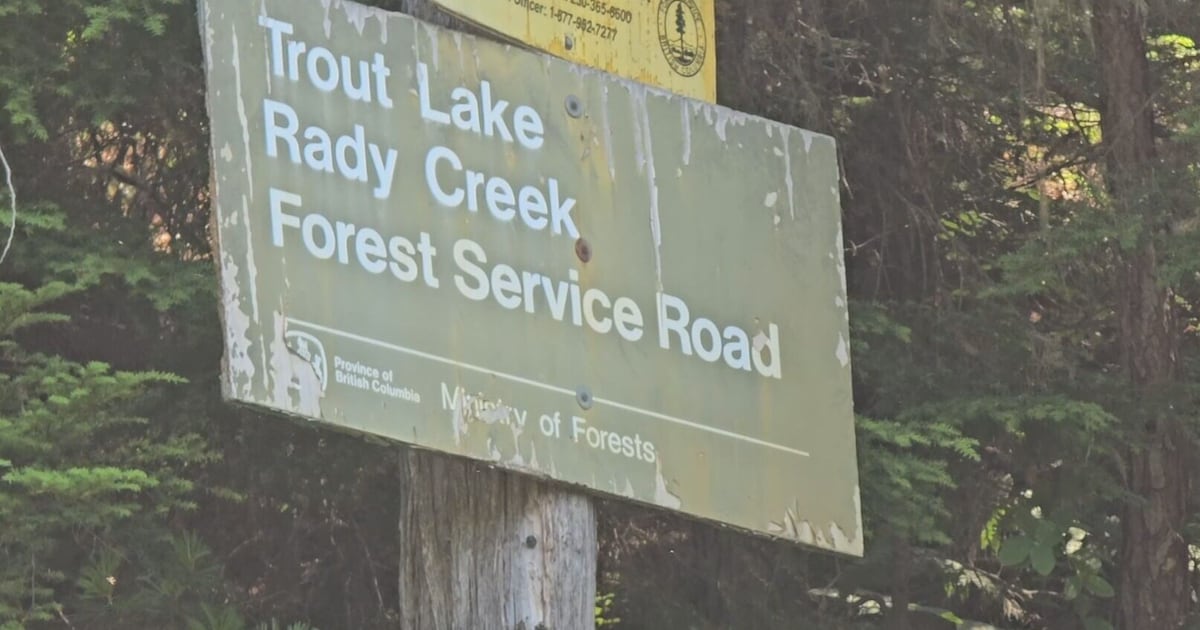
Residents and outdoor enthusiasts in southeastern British Columbia are facing an unwelcome possibility: a popular road in the West Kootenay backcountry could be closed, and they are now asking the provincial government to reconsider the decision. According to CTV News Vancouver, the issue was the subject of a recent news segment about access to wilderness areas.
The conflict is straightforward yet deeply troubling for the local community: a road that has served for decades as a route for anglers, hunters, ATV riders, hikers and families heading outdoors is facing closure. The brief report does not detail the official reasons, but such decisions are typically connected to safety concerns, logging activity, environmental protection or changes in land status. For West Kootenay residents, a region known for its lakes, mountains and dense forests, the road is more than a transportation route. It is part of a way of life and of the local economy, which depends on tourism and recreation.
The response was immediate. The phrase “begging the province to hold off” suggests that the decision is being viewed as rushed and as failing to consider the interests of those who use the road. In such cases, people commonly raise concerns about inadequate public consultation, a lack of transparency and potential harm to small businesses, from guides to campgrounds and equipment-rental operators.
The term “backcountry” refers to remote, lightly developed areas beyond cities and major roads, where people go to enjoy nature. Closing even one such road can severely restrict access to large areas of forest and mountains, effectively cutting them off from visitors.
The key question now is whether the province will be willing to engage in dialogue. Similar disputes are not uncommon in British Columbia: balancing industrial use of forests, ecosystem protection and the rights of recreational users is a persistent source of tension. If the authorities refuse to compromise, the decision could set a precedent in which local communities’ voices are ignored and access to natural heritage is reduced. The next step will be to see whether officials heed the appeals of those for whom this road is more than just a line on a map.
Vancouver Sells Discounted Trees for British Columbia Forest Week
Vancouver City Council and the Park Board have launched an online fall tree sale to mark National Forest Week in British Columbia, which runs from September 20 to 26. According to the official announcement on the city’s website, residents are being invited not simply to buy a plant, but to become part of a long-term effort to green the city. This year’s selection includes 21 varieties of trees: ornamental, deciduous, coniferous and fruit-bearing species. They include Japanese maples, magnolias, yuzu, figs, plums and cherries. City forestry specialists selected them for their suitability to the local climate, their ability to produce fruit and their value in creating habitat for pollinators.
The price is $28 per tree, including taxes and fees. That is considerably below the market price of many of the listed species, especially less common regional citrus varieties such as yuzu and warm-weather plants such as figs. The limit is three seedlings per household, available only through online purchases. Plants must be picked up in person on Sunday, September 27, between 9 a.m. and 2 p.m. at the south gravel parking lot by Hillcrest Nat Bailey Stadium. Organizers emphasize that supplies are limited, so buyers should make their decisions quickly.
The campaign’s main goal extends far beyond a seasonal sale. Vancouver aims to increase its urban tree canopy from the current 25 percent to 30 percent by 2050. This figure is not an abstract statistic but a measurable indicator of urban environmental quality. Tree canopy refers to the area covered by tree crowns when viewed from above; the greater the coverage, the better a city can manage summer heat, stormwater runoff and air pollution. The announcement also specifies that trees purchased through the sale are intended for planting on private property. This is an important point: a significant share of Vancouver’s land is privately owned, and reaching the 30 percent target will simply be impossible without residents’ participation.
Vancouver’s urban forest consists not only of parks and tree-lined streets but also of trees in private yards, which perform the same functions: cleaning the air, absorbing rainwater, providing homes for birds and small animals, and affecting people’s physical and psychological well-being. Discounted seedling sales are essentially a soft urban-policy tool: instead of imposing bans and requirements, the municipality is inviting residents to become co-creators of green infrastructure. This model also has a vulnerability—it depends on residents’ awareness and ability to pay, and therefore cannot replace systemic measures such as protecting existing trees from being cut down for development. Nevertheless, in Vancouver, where increasing development density is constantly putting pressure on older neighbourhoods, even a single maple planted in a backyard is a contribution to the long game, with 2050 as the target.