The digest features three notable stories from Canada: in Vancouver, a police officer will stand trial on an assault charge; in British Columbia, a battle is unfolding for the Abbotsford-Mission riding in a byelection; and the Vancouver Whitecaps are seeking a historic fifth consecutive title in a match against Montréal.
Vancouver Police Officer to Stand Trial on Assault Charge
Another scandal involving law enforcement officers is brewing in Canada. According to CBC, Vancouver constable Jason Grewal has been formally charged with assault. The incident that led to the criminal proceedings occurred on September 9, 2025, but the British Columbia Prosecution Service has only now approved the charge. Grewal has already been removed from operational duties and transferred to a desk position, which is standard practice in such cases.
Interestingly, the justice system’s response in this case illustrates how Canada’s system is intended to work. When information about the incident reached the Vancouver Police Department’s professional standards section, its leadership immediately transferred the investigation to the independent New Westminster Police Department. This was done to avoid a conflict of interest—after all, colleagues might not investigate a case involving one of their own with the necessary impartiality. The administrative proceedings under the Police Act have now been suspended until the criminal case is concluded. This approach—allowing the court process to come first, followed by an internal review—helps avoid putting pressure on witnesses and preserves objectivity.
VPD representatives have declined to comment on the details, citing the fact that the case is before the court. The first hearing is scheduled for October 1, when at least the basic circumstances of the incident are expected to become known. For now, it is possible only to speculate about what happened that September day. It is important to understand that, under Canadian law, the term “assault” covers a broad range of conduct—from threats and attempts to use force to actual physical contact without the victim’s consent. For a police officer, such charges are especially damaging to one’s reputation, since the job is directly connected with the use of force and any abuse of authority is subject to particularly intense public scrutiny.
This case fits into the broader context of growing public oversight of police conduct in North America. In recent years, Canadian provinces have increasingly referred investigations of such incidents to independent bodies in an effort to restore public confidence in law enforcement. Statistics nevertheless show that only a small number of cases reach court; many are closed during the preliminary investigation stage. The fact that prosecutors approved the charge indicates that there is sufficiently substantial evidence. It is hoped that the proceedings will be transparent and shed light on all the circumstances of the case, while serving as a reminder that the law applies equally to everyone—regardless of whether they wear a badge and uniform.
Battle for Abbotsford-Mission: What British Columbia’s Byelection Is About
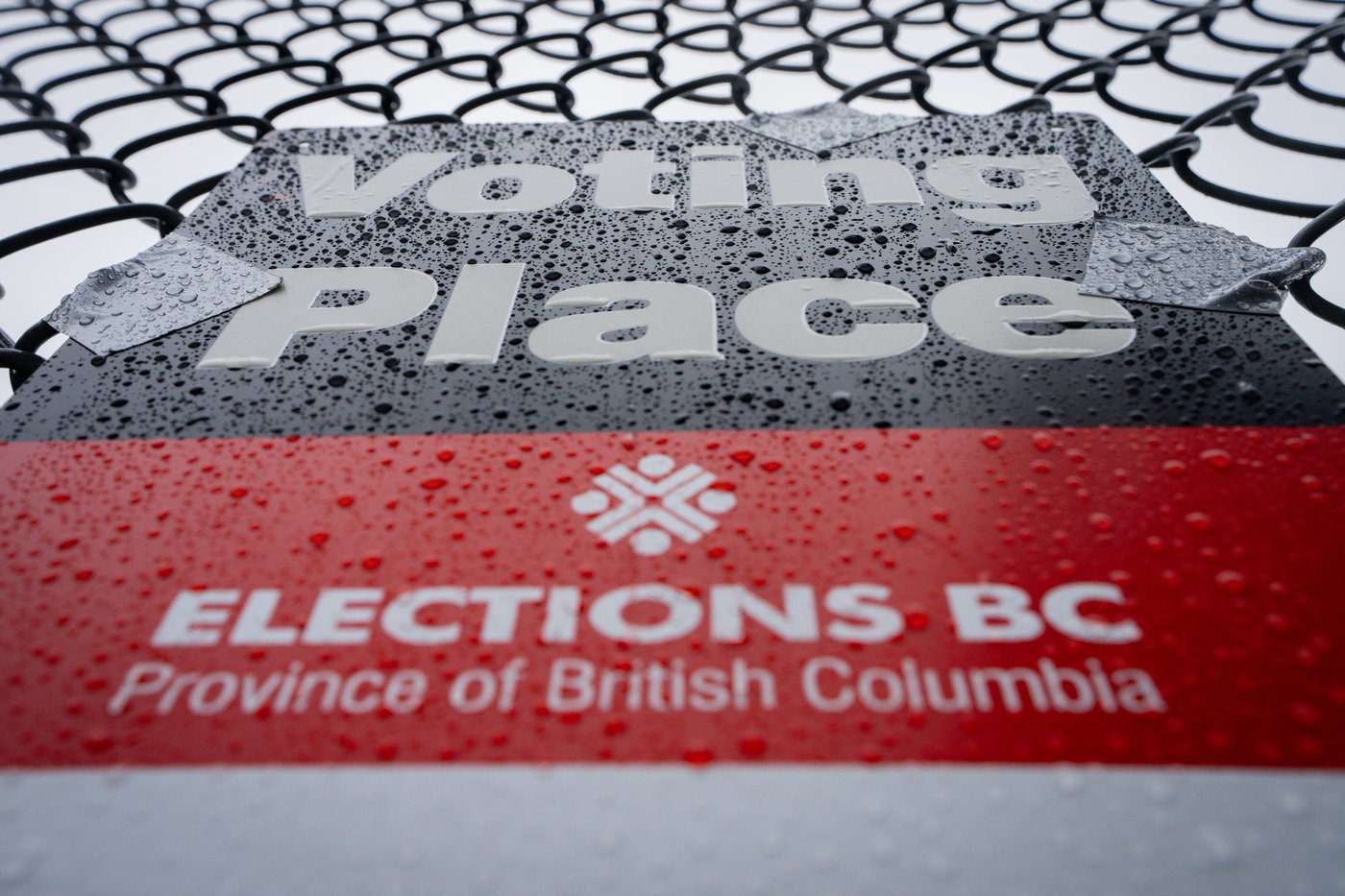
In Canada, and particularly in British Columbia, byelections are always moments of truth for political parties. The Abbotsford-Mission riding, located in the picturesque Fraser Valley, has drawn attention after the final list of candidates for the provincial legislature was announced. The event is notable not only for its local importance but also because it reflects deep tectonic shifts in the province’s political landscape.
The main intrigue lies in the confrontation between two political heavyweights. Representing the British Columbia New Democratic Party (BC NDP) is Pamela Alexis, a woman with an impressive record of public service. She has already represented the riding, winning the 2020 election, and previously served as the province’s minister of agriculture and food and as mayor of Mission. Her deep roots in the local community, reinforced by memberships in the Chamber of Commerce and Rotary Club, make her a classic establishment candidate, relying on continuity and experience.
Her main opponent, however, is Conservative Party of British Columbia leader Karin Kirkpatrick, a figure with a federal profile. Kirkpatrick is a former member of Parliament who represented several ridings in the province and, notably, was the first woman in the history of Canada’s federal Conservatives to serve as opposition whip under Pierre Poilievre. Her move into provincial politics is a strong signal that the Conservatives are pursuing major expansion and attempting to bring the federal agenda to the provincial level.
But the most interesting aspect lies in the broader context. Kirkpatrick’s candidacy comes amid a serious internal crisis within the provincial Conservatives. Since she became leader, nine members of the Legislative Assembly have left the party, joining either the ranks of independents or a new political force. This fragmentation points to a deep split: some party members reject the new leader’s direction, raising questions about her ability to unite the right even in the face of such an important election. In effect, Kirkpatrick must fight not only opponents on the left but also an internal opposition that could undermine her campaign from within.
The other candidates are also revealing. The riding reflects the full diversity of the province’s political spectrum. The Greens have nominated Stephen Fowler, a local high-school teacher who is running on his party’s traditional left-wing platform: affordable social housing, expanded free public transit and investment in community health centres. His candidacy highlights the fact that even in a relatively conservative agricultural region, there is demand for progressive solutions.
The CentreBC candidate, Lakhwinder Judge, also deserves attention. Her political biography is unique: she has previously run for both the NDP and the federal Liberal Party. The party presents this ability to “change political jerseys” as an advantage—a willingness to work beyond traditional party lines. The strategy is an attempt to occupy the political centre and attract voters tired of polarization between the left and right. Skeptics, however, may see opportunism rather than principle.
Finally, the race includes Libertarian candidate Jeff Mondes, who has run in various elections several times before. His participation is a reminder that Canada always has room for ideological “maximalists” who advocate minimal government intervention.
In essence, this byelection will be a litmus test for several trends. For the NDP, it will test the party’s ability to retain power amid growing dissatisfaction with the economic situation. For the Conservatives, it will test the viability of their new leader and strategy. Observers note that the result in Abbotsford-Mission could indicate voter sentiment ahead of the next provincial general election. This is a contest in which local issues—agriculture, transportation and health care—are closely intertwined with big politics, while federal trends overlap with provincial realities. Will the riding become a launching pad for a Conservative breakthrough or a stronghold of stability for the NDP? We will find out soon. More details about the candidates and the campaign are available in the CityNews Vancouver report.
Whitecaps vs. Montréal: A Battle for History and a Fifth Straight Trophy
The semifinal round of the TELUS Canadian Championship is getting underway in Vancouver, promising to be a highlight of the Canadian soccer season. The local Vancouver Whitecaps will host their fierce rivals CF Montréal. The first match of the two-leg series will take place at BC Place on Wednesday, September 2, with the return leg scheduled for two weeks later, on September 16, at Stade Saputo in Montréal. The matches are particularly important for the home side: the Whitecaps are close to writing their names into Canadian soccer history.
The Whitecaps are on the verge of a unique achievement—a fifth consecutive Voyageurs Cup, the trophy awarded to the winner of the national championship. No team has ever accomplished this in the tournament’s history, while Vancouver have already won the trophy in 2015, 2022, 2023, 2024 and 2025. They now want to extend their dominance to six trophies, which would automatically secure them a place in the 2027 Concacaf Champions Cup. Standing in their way is their longtime rival from Montréal, with whom Vancouver share one of the country’s oldest professional soccer rivalries. The matchup dates back to 1993, when Vancouver played as the 86ers and Montréal were known as the Impact. Since then, the teams have met 80 times, with Montréal holding a slight edge: 37 wins to Vancouver’s 28, along with 15 draws. In the TELUS Canadian Championship specifically, however, the Whitecaps have the advantage, with seven wins, four losses and six draws.
Both teams faced difficult paths to the semifinals. Vancouver comfortably defeated Cavalry of the Canadian Premier League, winning 5–2 on aggregate over the two matches. Montréal, meanwhile, overcame another CPL team—Vancouver FC from the same city—by a 4–2 aggregate score. The winner of this two-leg series will earn the right to host the Cup final, scheduled for Wednesday, October 21. This became possible because an official draw determined in advance that the winner of this matchup would host the decisive game.
The format remains traditional for a cup competition of this kind. The teams play two matches, one at home and one away, and the winner is determined by the aggregate number of goals scored across both games. If the score is level after two matches, the series will be decided in extra time, followed, if necessary, by a penalty shootout. Fans planning to attend the match at BC Place should note that tickets are already included for Whitecaps season-ticket holders. Tickets for the general public will go on sale Monday, August 10, at 10 a.m. Pacific time through the official Ticketmaster website. Information about group tickets and premium packages is available on the club’s website.
One notable innovation is the introduction of so-called Football Video Support in the tournament’s semifinals and final. The system, which replaces traditional video review, will assist referees in making decisions during the competition’s five final matches. It is also worth noting that referees have used the new IFAB rules in effect since the 2026–27 season from the start of the tournament. In the broader picture, the TELUS Canadian Championship is Canada’s key domestic competition, effectively serving as the country’s national cup. It determines the nation’s strongest club and provides a route to international competition. The tournament is particularly important for MLS teams, as it gives them access to the championship for clubs from North and Central America. For fans, it is always a major occasion—a fierce derby between western and eastern Canadian soccer, where emotions run high and every touch of the ball could prove decisive in the fight for a historic trophy. More details about the match can be found in the announcement on the official portal.