The spotlight is on three key topics: a successful World Cup kickoff in Vancouver on natural turf, a large-scale strike by Metro Vancouver infrastructure workers, and a forecast of potentially record heat in the region.
Australia Praises BC Place Pitch: "Perfect Playing Conditions"
The natural grass pitch installed at BC Place in Vancouver for the FIFA World Cup received high marks from world-class players after passing its first test in a group-stage match. On Saturday Australia earned a surprise 2-0 win over Turkey, and the game was the first-ever men’s World Cup match held in this Canadian city. BC Place, which will host seven tournament games, was one of eight stadiums where artificial turf had to be replaced with natural grass to meet FIFA’s strict requirements.
Australia midfielder Aiden O’Neill, who in April played on BC Place’s usual artificial surface for New York City against the Vancouver Whitecaps, called the temporary World Cup turf “incredible.” He said organizers had done massive work to get the field into that condition and he’s confident the quality will hold throughout the tournament. O’Neill noted the ball rolled well, the surface was neither too hard nor too soft, and overall the pitch was ideal. Australian goalkeeper Patrick Beach added that the team inspected the field a day before the match and everyone gave positive feedback, and on match day the pitch performed superbly, especially when wet, when the ball slides particularly well. Turkey captain Hakan Çalhanoğlu also praised the stadium and pitch quality, saying the field was in perfect condition and pleasant to play on.
This World Cup is the most geographically spread in history: 16 host cities are located across Canada, the United States and Mexico. The complex logistics required FIFA to ensure each field met strict criteria for characteristics including ball bounce and shock absorption, and behaved consistently despite stadiums being in three different climate zones and at varying elevations. To solve this, FIFA enlisted turf specialists from the University of Tennessee and Michigan State University, who spent five years and $5 million researching and developing the tournament’s surfaces. As explained in The Globe and Mail piece, BC Place’s grass mix was chosen to be Kentucky bluegrass and perennial ryegrass, known for its resilience in a temperate climate. The grass was grown for a full year on a dedicated farm in Abbotsford, Canada, to ensure maturity and uniformity. The turf was laid on a 340 mm layer of sand and peat, underlain by a foundation of polymer geo-cells, a waterproof membrane and a network of sensors linked to irrigation and vacuum ventilation systems. Special grow lights help the turf recover between matches, and industrial fans prevent root rot and fungal development.
Some skeptical fans had criticized North American pitches before the tournament, arguing that thin turf rolls and tight installation schedules after construction would produce a terrible and even unsafe surface. But the first matches showed otherwise. BC Place is now preparing for its next match: on Thursday Canada meets Qatar at the stadium. The Canadian team is still seeking its first win in the tournament after a 1-1 draw with Bosnia and Herzegovina on Friday, which earned them their first-ever point at a men’s World Cup.
Strike in Metro Vancouver: Outdoor Workers Walk Off After Months of Stalemate
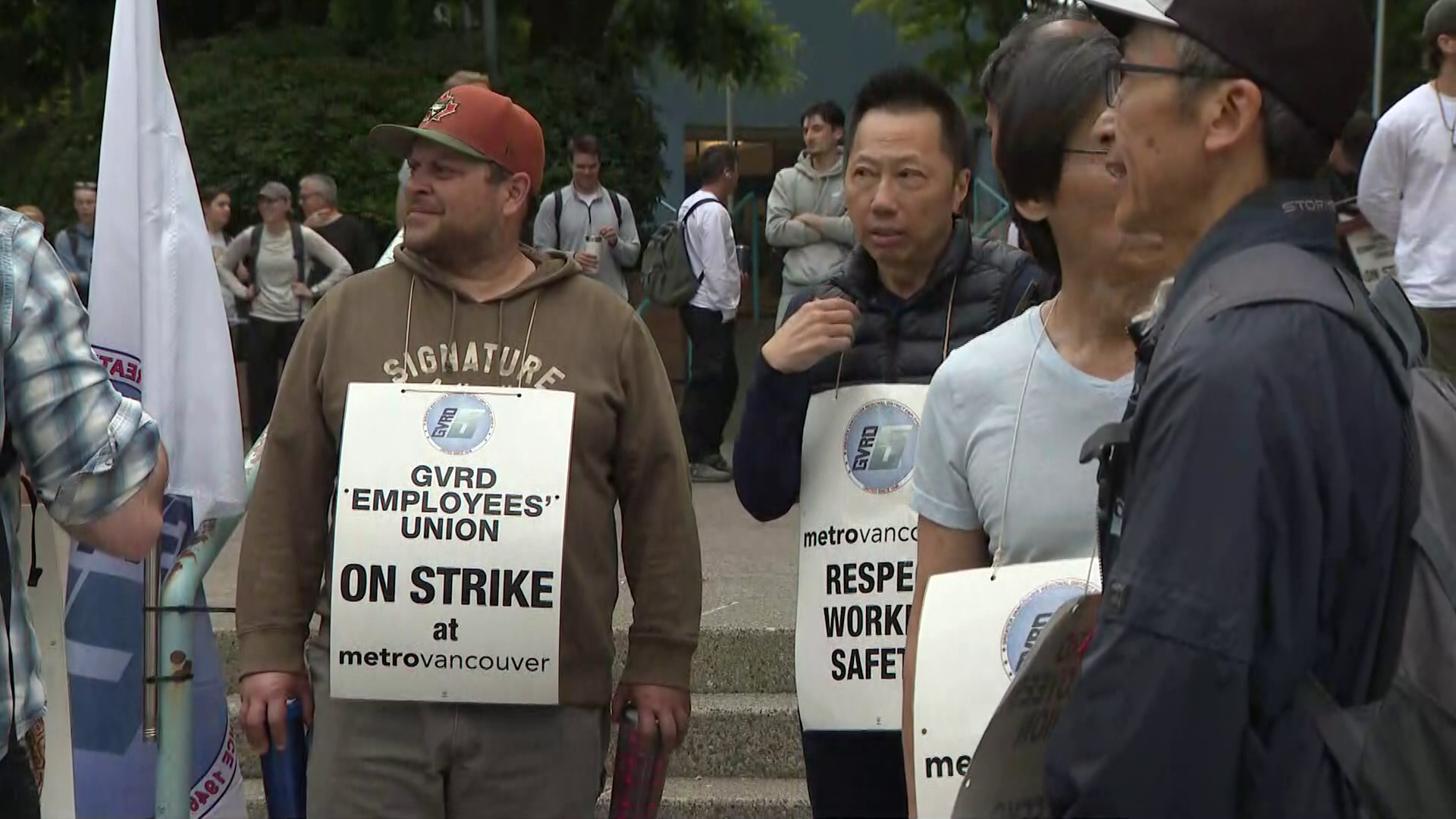
A full-scale strike by workers maintaining Metro Vancouver’s civic infrastructure began Monday. The decision to stop work was made by the GVRDEU union, which represents employees of the regional district. This followed a two-week escalation of the labour dispute, during which rotating job actions were held at key sites including water treatment plants, reservoirs and regional parks. Union leader Jesse Medeiros said only employees performing critical functions would remain on site — a directive issued by the British Columbia Labour Relations Board. He said members were “angry and frustrated” after 17 months without a contract. In an interview with CityNews Vancouver he emphasized that Metro Vancouver management “continues to ignore the concerns of frontline workers who deliver essential services across the region.”
Medeiros also criticized management’s stance of refusing to return to talks without the union first agreeing to mediation. He called that condition “surrender, not bargaining.” Metro Vancouver representatives, for their part, previously said they were willing to resume talks with a mediator involved: their statement noted that 10 additional dates for negotiations had been offered beyond five earlier rejected by the union. They insist mediation is not a precondition but “an important and practical step” after nearly a year of unsuccessful bargaining attempts. Under the employer’s latest offer, wages would rise by more than 10% over three years, which they say aligns with recent agreements with other unions in the region, including the Teamsters, and even exceeds terms with some public-sector employers.
As of Monday striking workers are not reporting to regional parks, reservoirs, water and wastewater plants, construction sites and operations yards. Medeiros acknowledged this will cause inconveniences for residents, but stressed “we cannot wait forever to get a new contract for our members.” Metro Vancouver has assured the public that critical services — water supply, wastewater treatment, solid waste disposal, air-quality monitoring, access to regional parks and housing — will be maintained without interruption. In practice, however, reports of park closures and restricted access to recreational areas have already begun to appear, raising questions among locals about how uninterrupted services will actually be. The dispute continues to unfold, and neither side has shown readiness to compromise without external pressure.
Vancouver Weather Forecast: Potential Record Temperatures and a Sunny Week Ahead
Vancouver is bracing for unusually hot weather: forecasters warn Sunday, June 14, could be a record-warm day for this time of year. According to Vancouver Is Awesome, Environment Canada meteorologist Nan Lu links the warming to a ridge of high pressure settled over the region. She says daytime temperatures in southern British Columbia could break historical highs. In Vancouver the standing record is 25.6°C, and the forecasted 25°C is close to that mark, while inland communities further from the ocean, such as Maple Ridge, could see temperatures reach 32°C, exceeding the previous record of 30.5°C.
That intense heat will be short-lived. By Monday the ridge of high pressure is expected to weaken, and a weather system forming to the north of the province will influence the south coast. Although skies will cloud over, no precipitation is expected — the cloud cover will be high level. Daytime temperatures in Vancouver will be around 23°C, still above seasonal averages but far from record highs. Interior regions of the province can warm to roughly 28°C.
The remainder of the week looks mostly sunny for residents and visitors. Clouds will quickly clear, and from Tuesday through the end of the week and into the following weekend sunny days will dominate. However, the meteorologist notes that any new heat will not be driven by a strong ridge of high pressure, so occasional cloud intrusions are possible and maximum temperatures should top out around 22–23°C. A light sea breeze will also help restrain the heat: gusts up to 40 km/h are expected Tuesday, with winds easing by week’s end, which will also help keep temperatures comfortable.
Thursday, June 18 — when Canada plays Qatar in the World Cup — looks especially notable. The forecast calls for ideal conditions: sun, about 23°C and a light breeze. Experts warn, though, that despite the mild appearance ultraviolet levels will be high. As Lu says, many people will watch matches outdoors, so sun protection is essential. With average June temperatures in Vancouver’s coastal areas around 18°C, any day above 22°C is already felt as a heat wave, and residents should prepare with hats, SPF sunscreen and adequate hydration.