
British Columbia is preparing for one of the strongest El Niño events on record, which could make winter warmer and wetter, while the provincial government is delaying the expansion of the PST to professional services amid the trade war with the United States. Meanwhile, six restaurants from the province have reached the finals of the Air Canada awards, showcasing the diversity and autobiographical nature of the region’s modern cuisine.
What One of the Strongest El Niño Events on Record Could Mean for British Columbia
Winter in British Columbia is a subject that rarely leaves anyone indifferent—not Vancouver residents, mountain-resort communities or farmers in the Okanagan Valley. The season affects everything from the ski season in Whistler to supermarket vegetable prices and the risk of flooding in low-lying areas of the Fraser Valley. Now, climatologists are sounding the alarm: one of the strongest El Niño events in the history of instrumental records is developing in the tropical Pacific Ocean. According to an article published by CTV News Vancouver Island, the phenomenon could significantly reshape the usual winter weather on Canada’s west coast, with millions of people feeling the effects.
To understand what is happening, it helps to define the term itself. El Niño is a climate anomaly in which surface waters in the central and eastern equatorial Pacific become unusually warm. This warm water acts like a giant radiator: it alters atmospheric circulation, shifts storm tracks and ultimately affects weather across much of the globe. Its opposite phase, La Niña, is associated with cooler water and produces largely reverse effects. When climatologists refer to a “strong” or “major” El Niño, they generally compare current conditions with historical events, particularly those of 1982–83 and 1997–98, which have become benchmarks for extreme intensity.
For British Columbia, El Niño traditionally means a warmer and often drier winter than usual. Milder temperatures and less snow in the mountains are typical scenarios. That may sound appealing to people who dislike freezing temperatures and icy conditions, but there is a downside. Ski resorts that depend on a stable snowpack could face a shorter season and financial losses. Hydroelectric power, which relies heavily on mountain snowpack as a natural water reservoir, could see reduced reserves in the spring. Farmers who depend on a predictable moisture cycle would also face greater uncertainty. At the same time, a warm winter does not always mean drought: El Niño can sometimes bring warmer atmospheric rivers—powerful currents of moisture that strike the coast with heavy rain. It is precisely the combination of “warmer temperatures plus abundant precipitation falling as rain rather than snow” that creates a heightened flood risk, especially in low-lying areas.
The key point emphasized by specialists in the CTV report is that no two El Niño events are alike. Even when the overall pattern is similar, local effects can vary considerably depending on the event’s strength and duration, as well as its interaction with other climate factors, including the much-discussed warming of the oceans and atmospheric fluctuations in the northern Pacific. In other words, a forecast is a probability assessment, not a guaranteed scenario. That is why meteorologists are urging people to prepare for several possibilities: a mild winter with little snow, as well as sudden storms bringing intense rainfall and flooding.
The practical implications for residents are clear. Property owners in risk areas should inspect drainage systems in advance and stock up on flood-protection supplies. Winter-sports enthusiasts may have to accept that there could be less snow than usual, while resorts may need to make greater use of snowmaking equipment and offer alternative activities. Energy companies and utilities should reconsider water-management plans in light of a potentially reduced snowpack. Farms may also want to adapt to a warmer and wetter season, which could affect planting schedules and crop selection.
Such forecasts inevitably attract broad attention—not only because of their scientific importance. British Columbia’s economy is closely tied to weather conditions through tourism, forestry, agriculture and shipping. Every indication of a possible climate shift is therefore viewed as a warning requiring a response. The CTV News report asks readers to consider how prepared the region is for this kind of weather instability. Although the exact winter scenario remains uncertain, the development of a powerful El Niño is already prompting climatologists, officials and residents to monitor forecasts more closely. Ultimately, the strength of this natural phenomenon is a reminder of how fragile the balance can be between familiar daily life and the whims of the global climate.
British Columbia Backs Down: Professional-Services Tax Delayed Indefinitely
The government of the Canadian province of British Columbia has found itself in a situation where economic considerations have prevailed over budget plans. The expansion of the provincial sales tax (PST) to a range of professional services, which was scheduled to take effect on Oct. 1, has officially been put on hold. The formal reason is the trade war with the United States, but behind the decision lies a far more complicated story involving pressure from businesses, hidden costs and political calculation.
The decision was reported by CityNews Vancouver, which noted that the delay will remain in effect until the trade conflict between Canada and the United States ends. Provincial officials have openly said they want to give businesses “room to breathe” amid mounting economic pressure.
The measure—cancelled for now—would have required a broad range of previously tax-exempt services to begin paying PST. The list included accounting and bookkeeping, architectural and engineering services, geological work, commercial real estate, as well as security and private-investigation services. In other words, these were sectors that support construction, development and corporate infrastructure—in effect, fundamental economic costs rather than minor consumer purchases.
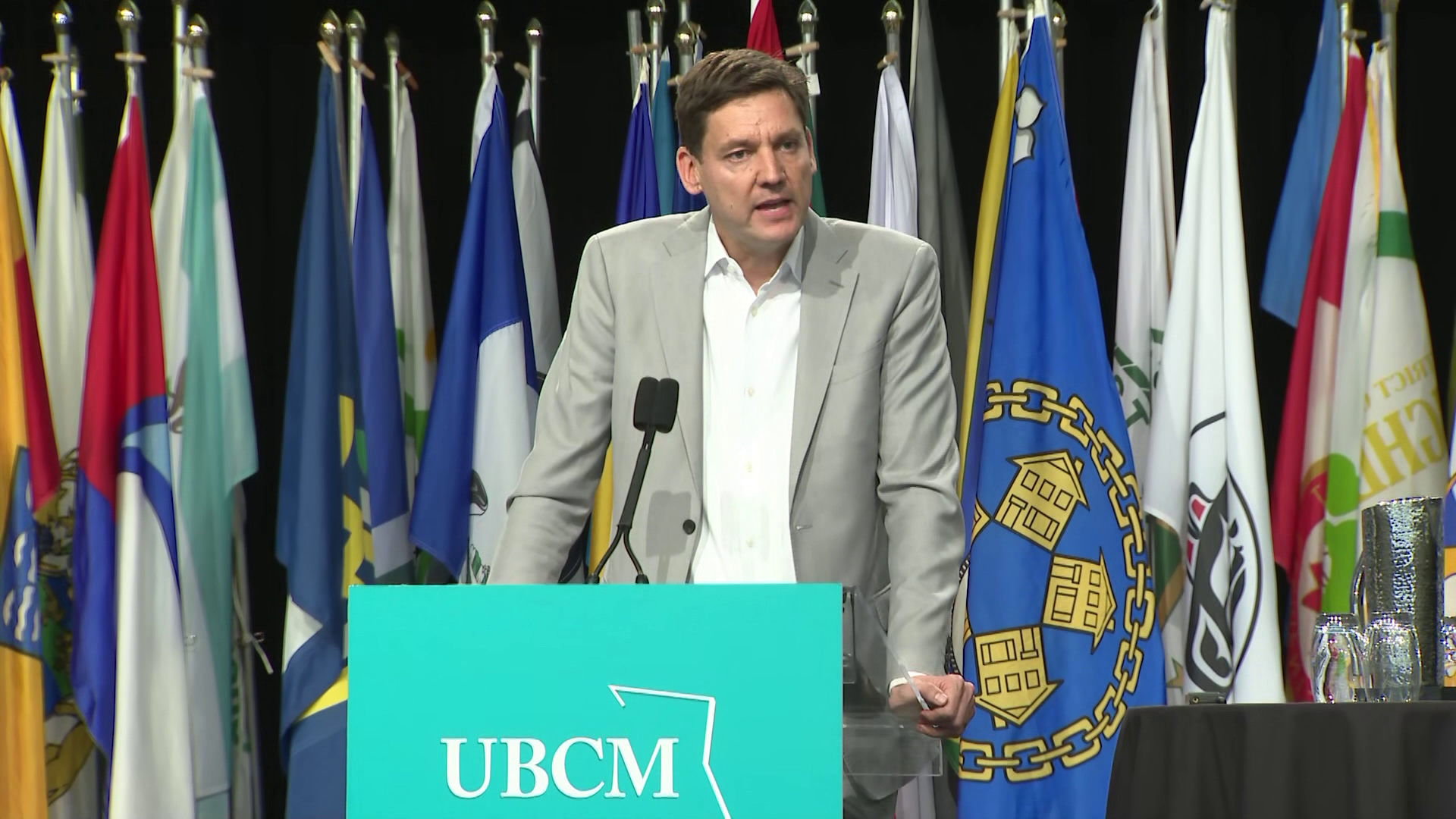
Premier David Eby stated the government’s position plainly: “There is a time to stay the course, and there is a time to adjust. This is a time to adjust.” He added that delaying the changes “until Trump’s destructive trade war is behind us” would give businesses an opportunity to manage tariffs and restrictions while redirecting their efforts toward other markets. The statement reflects not only economic concerns but also politics: the government is shifting part of the responsibility for its reversal onto an external actor.
For the province’s small businesses, the news came as a relief. In February, when the tax expansion was first announced, Chris Gardner, president and CEO of the Independent Contractors and Businesses Association (ICBA), told CityNews that the initiative was another way to make construction more expensive. His argument proved prescient: “Putting PST on engineering, architectural and professional services is not clever tax policy; it’s a hidden construction tax that will show up in every project budget in the province.” Gardner warned that contractors would build the costs into their estimates, but that people buying homes would ultimately pay.
That is the central paradox of the situation. The tax was presented as a technical measure bringing British Columbia into line with other provinces where similar services are already subject to sales tax. Yet amid a housing crisis and rising construction costs, any increase in the cost of design and engineering work inevitably feeds into the price per square metre. The PST expansion threatened to become not a source of government revenue but an additional inflationary factor in the province’s most sensitive sector.
The context in which the decision was made also deserves attention. The same budget that announced the tax expansion included a temporary, refundable 15-per-cent tax credit for businesses investing in buildings, equipment and machinery for manufacturing. In effect, the government was trying to encourage manufacturing investment while taxing the services needed to carry out those investments. Putting the PST expansion on hold removes that internal contradiction, although at the cost of foregone tax revenue.
Several concepts make this story less straightforward than it might initially appear. PST, or Provincial Sales Tax, is a provincial sales tax, similar in some respects to a value-added tax but imposed at the provincial rather than federal level. Its key feature is that it applies to the end consumer; when business services are subject to it, companies must either absorb the cost or pass it on through their prices. In the case of engineering and architectural services, that means a direct increase in the cost of construction projects. The refundable tax credit mentioned above is a mechanism through which the government reimburses part of a business’s investment, effectively subsidizing capital spending. The trade war with the United States, in this context, refers to the combination of tariffs and restrictions that make Canadian exports more expensive and force companies to seek new markets—particularly painful for manufacturers and the construction sector.
The main conclusion is simple: the British Columbia government recognized that a tax measure that looked reasonable on paper would, in practice, have hit the economy’s most vulnerable links. Delaying it until the trade war ends is not a rejection of the idea, but an acknowledgment that the timing was poor. It remains unclear whether the government will return to the PST expansion once trade relations normalize, or whether the pause will become a quiet cancellation under a more acceptable pretext. For the province’s developers, architects and engineers, the answer will carry a very real financial cost.
Six British Columbia Restaurants Reach the Air Canada Awards Finals
Canada’s restaurant scene is experiencing an interesting moment as the country’s culinary map becomes both more diverse and more personal. Air Canada’s Best New Restaurants has long been one of the main reference points for anyone following the country’s culinary trends, and the 2026 finalist list offers a clear picture of where the scene is heading. This year, British Columbia is particularly well represented: six establishments from the province are among the contenders for a place on the final list of Canada’s 10 best new restaurants. Four are in Vancouver, with one each in Victoria and Revelstoke.
The list is a snapshot of what drives the region’s food culture today. It includes an inventive tasting menu with pasta in East Vancouver, Korean home cooking, Cambodian-Canadian cuisine, regional Indian cuisine, and intimate Italian restaurants in Victoria and Revelstoke. As Vancouver Is Awesome notes, this range of styles and formats shows that exciting food is being made not only in downtown Vancouver but also far beyond it. The Top 10 will be announced later this year, while the full national list of finalists has been published on the Air Canada enRoute website.
One of the most revealing participants on the list is Kavita, led by chef-owner Tushar Tondvalkar. Speaking with the author of the article at CooksCamp in Pemberton, he said that reaching the finals was recognition of the hard work, long hours and faith the team had invested in the project from day one. For Tondvalkar, Kavita is a deeply personal story. His cooking draws on the food and memories of Mumbai, where he grew up, and Malvan, a coastal town in Maharashtra, while making extensive use of British Columbia’s local produce, seafood and seasonal ingredients. He says Mumbai’s cuisine reflects a multicultural city shaped by Marathi, Gujarati, Parsi, Muslim, Jewish, East Indian and many other communities, while Malvan adds seafood, live-fire cooking and home-style traditions. “Through Kavita, I want to share these stories and memories that shaped me,” he says. This approach can be seen in dishes such as paneer saag, made with house-made buffalo-milk paneer from Tesfa Farms and locally foraged nettles, as well as in the coastal notes of recheado prawns.
Another Vancouver finalist with an equally personal story is Touk. Chef Chanthy Yen explores Cambodian-Canadian cuisine at his downtown restaurant through local ingredients, combining family recipes and traditions with British Columbia seafood, vegetables and meat. The article’s author says they have followed Yen’s cooking for years, and that Touk feels like a concentrated expression of his perspective, where Cambodian flavours meet the ingredients of the coast he now calls home. Yen makes no secret of his ambitions: he says he wants to pave the way for other Cambodians so they can finally take pride in their cuisine. The statement is significant given that Cambodian food has long remained in the shadow of better-known Asian cuisines in the region.
The other British Columbia finalists each offer their own reason to book a table. At Angela Pastificio, chef-owner Calvin Vogstad has built an eight-course menu around handmade pasta, with diners able to watch from the dining room as the dough is rolled, filled and shaped. On Main Street, Nui is a small, thoughtful restaurant from chefs JJ Hwang and Kyle Mackintosh devoted to Korean home cooking; gomtang, a pork-bone soup served with house-made kimchi and seasonings, is one of the dishes drawing visitors. In Victoria, Lumache is a 16-seat Italian tasting-menu restaurant from chef James Frost and sommelier Heather Dosman. In Revelstoke, Alfred’s has brought a warm, family-style Italian menu to the ski town, with fresh pasta, cheese buns and pork meatballs among its best-known dishes.
Seen more broadly, the 2026 finalists reveal several important shifts. First, cuisine is becoming increasingly autobiographical: chefs use menus to tell stories about their families, migration and identity, rather than simply demonstrate technique. Second, the geography of food is expanding: Revelstoke and Victoria are competing on equal footing with Vancouver, while small formats such as the 16-seat Lumache are attracting no less attention than larger projects. Third, British Columbia’s local ingredients—from buffalo milk to wild nettles and seafood—are becoming not a backdrop but a full culinary language spoken by chefs with a wide range of culinary roots.
For readers unfamiliar with the restaurant industry, a few terms are worth explaining. A tasting menu is a format in which guests do not order individual dishes but receive a preset sequence of several, often small, courses; the eight-course dinner at Angela Pastificio is an example. Gomtang is a Korean pork-bone soup simmered for a long time until the broth develops a rich, milky colour. Paneer is a fresh Indian cheese, similar to cottage cheese, often made in-house. Recheado is a spicy marinade originating in Portuguese cuisine that took root in India’s coastal regions, particularly Goa and Maharashtra. Finally, enRoute is Air Canada’s in-flight magazine, which administers the awards, explaining why the finalist list is published on its platform.
The main takeaway is simple: Air Canada’s Best New Restaurants considers new establishments across the country, from tasting-menu restaurants to neighbourhood eateries, and this year’s British Columbia finalists prove that vibrant, thoughtful food is being made both in Vancouver and far beyond it.



.png)