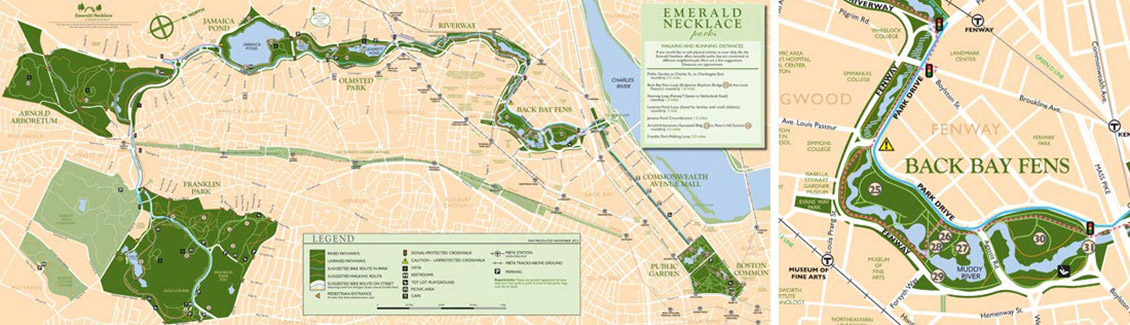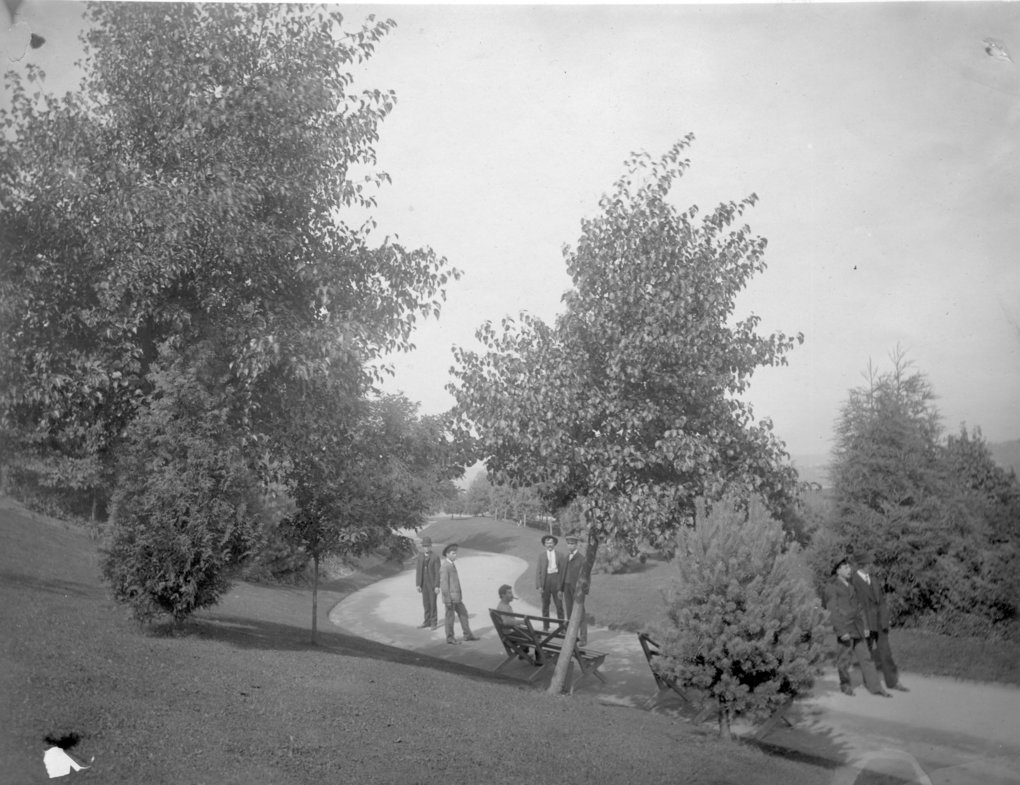
Imagine you take a big sheet of paper, draw a map of your city on it, and say: “Here there should be a park. And here. And here. And between them— a green pathway so you can walk from one to the other.” Now imagine that adults look at your drawing and say, “That’s too expensive. It’s impossible. It’s just a dream.” And now imagine that one hundred and twenty years pass—and children are playing exactly where you had drawn. That’s what happened in Seattle in 1903.
Two Brothers and Their Famous Father
The brothers were John Charles and Frederick Law Olmsted Jr. Their father, Frederick Law Olmsted Sr., was one of the best-known people in America. He is the one who came up with Central Park in New York—an enormous green island in the middle of a stone city where millions of people go today. When their father got older, the brothers carried on his work and opened their own parks design firm.
By then, their name was known all over the country. Cities eagerly invited the brothers: “Come visit, take a look, come up with something beautiful for us!” In 1903, such an invitation came from Seattle—a young, loud, slightly wild city on the shores of the Pacific Ocean. Back then Seattle was nothing like it is today. Hills, steep slopes, dense forests right in the middle of the streets, bays and streams that constantly flooded roads. The city grew very quickly: new people arrived, factories and shops were built, streetcar tracks were laid down. But there were almost no parks. And children played right in the streets.
The older brother, John Charles, got on a train and traveled across America—just to see what kind of city this really was.
A Green Necklace for an Entire City
John Charles arrived in Seattle and... fell in love. Not with the city itself—though he liked it—but with what this city could become. He walked the hills, looked at lakes and bays, climbed to the highest points, and thought. Then he sat down and wrote a big report—an entire book on what Seattle should be.
His idea was simple and at the same time incredible. He proposed not just creating a few separate parks scattered around the city, but an entire system—like a necklace made of green beads, threaded onto one strand. Parks connected to one another by beautiful boulevards and pathways where you could stroll, ride a bicycle, or simply walk through the trees from one end of the city to the other. John Charles even wrote it out clearly: every child in Seattle should live no more than a half-hour walk from a park. Every child—without exception.
In 1903, this sounded like a fairy tale. No one had thought about parks that way before—parks as a right for every child, not as a luxury for the wealthy. John Charles drew a map: a park on a high hill overlooking the bay, a park by the lake, a long green strip along the shoreline, and a boulevard that connects them all. He went back home, but the map stayed.
Why Adults Said “No”
Seattle’s city council looked at Olmsted’s plan and frowned. Money— that’s what they thought about first. The city was young, there wasn’t much money, and here they wanted parks, boulevards, pathways... “We’d better build a new factory,” some said. “We need roads, not flowerbeds,” others said. “Who’s even going to walk around in these parks?” asked still others.
The arguments went on for several years. Some officials were “for it”—they understood that a beautiful city would attract new residents and make Seattle famous. Others pushed back: too expensive, too complicated, too many hills and ravines. The Olmsted firm sent updated plans, answered questions, and explained again and again. It wasn’t a battle of swords, but it was a battle of papers and words—and just as real.
In the end, the city began to act—slowly and carefully, as if they didn’t fully believe in what they were doing. The first parks didn’t appear right away, and not all at once. Funds were allocated in small amounts. Sometimes the plan changed—something was removed, something was moved. But the main idea—the green necklace, connected parks—remained.
How a Dream Became Real
Years passed. Then decades. And this is what happened: the parks were built. Not all at once, and not without disputes and delays, but they were built. Volunteer Park on a high hill with a brick tower from which you can see the whole city and distant mountains. Seward Park on a peninsula that juts into the lake—there are still trees there that are more than a hundred years old. Lincoln Park right by the waterway, where you can watch ships. And the boulevards—long green corridors that connect these places exactly the way John Charles Olmsted had drawn them on his 1903 map.
People grew to love these places so much that, in different years, whenever someone suggested demolishing or rebuilding something, residents took to the streets and said: “No. This is ours.” The parks became more than green spots on a map—they became the heart of neighborhoods, places where people meet, become friends, hold celebrations, and simply breathe fresh air among the trees.
Today, urban planning specialists from around the world visit Seattle to see this park system. They call it one of the best in America. And whenever someone asks, “How did you manage it?” the answer is always the same: one person came to an unfamiliar city, fell in love with what it could become, and drew a map of a dream.
A Lesson Worth Remembering
The story of the Olmsted brothers is the story of how big dreams almost always first seem impossible. “Too expensive,” “too complicated,” “what’s the point”—that’s what people say about almost every good idea at first. But if the idea is right—if it truly improves people’s lives—then sooner or later it wins.
John Charles Olmsted thought about children when he drew his map. He thought about the fact that every child—no matter whether rich or poor, living in the center or on the outskirts—should have a place to run on grass, climb a tree, and look at water. He didn’t live long enough to see all the parks built. But the children who today play in Seattle among century-old trees—that is his real answer to all those who once said “no.”