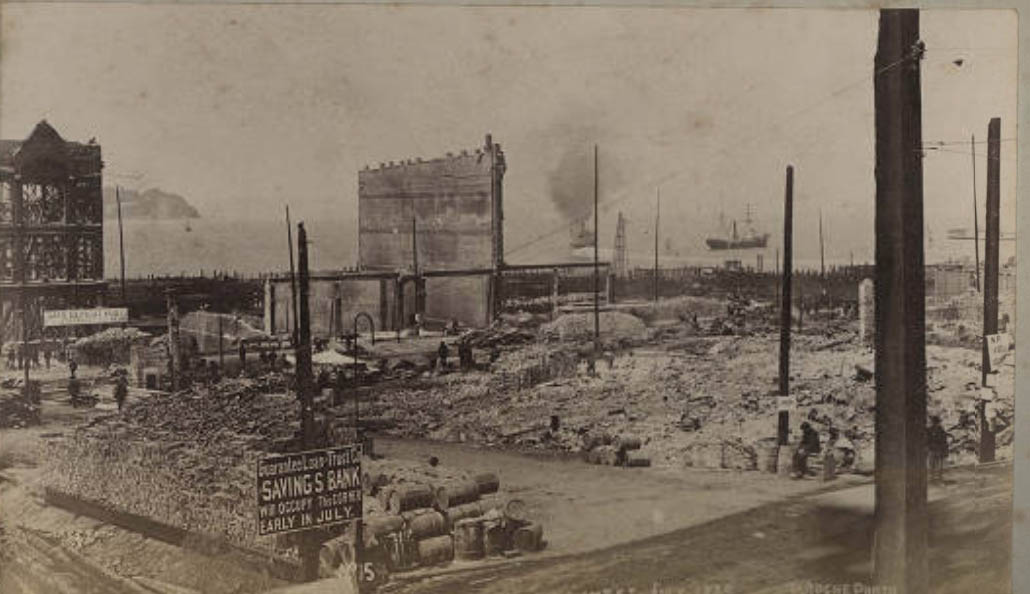
A pot of glue overheated in an ordinary workshop. Because of it, almost all of downtown Seattle burned down on June 6, 1889. But the most interesting part happened not during the fire, but afterward: the city’s residents figured out how to make their community stronger—and did it together.
How It Began
It was around half past two in the afternoon. A pot of glue was heating in a carpenter’s workshop at a downtown street corner. The glue overheated and caught fire, and dry wood shavings lay all around it. The flames ran across the floor, then up the wall. The workers tried to put them out with water, but according to one account, the water simply spread the burning liquid, making the fire worse.
For Seattle, this was a double disaster. In those days, the city was almost entirely made of wood: homes, shops, warehouses, sidewalks, piers, even parts of the streets. Imagine an entire city built out of matchsticks. One spark was all it took for everything to catch fire.
What’s more, firefighters were mostly volunteers at the time. They had other jobs and rushed to fires when the alarm sounded. There wasn’t enough water in the pipes: the pressure was weak, and when crews began fighting fires in several places at once, it dropped even further. The fire spread from block to block, reached the waterfront, and was stopped only by nightfall. Some buildings were blown up to create a firebreak the flames couldn’t cross.
A City in Tents
About 25 to 30 blocks burned. No one who died in the fire was ever found. It’s said that rats, which were plentiful in the wooden warehouses, fled the city alongside the people.
What happened next is what historians call the “Seattle spirit.” The very next day, business owners set up tents where their shops had burned and started trading again. Bankers, merchants, and barbers worked under canvas. People understood that if they stopped and waited, the city might never recover. Money and aid came from neighboring cities, including Tacoma and Portland, while people in Seattle raised funds for those who had lost everything.
The mayor at the time was Robert Moran, a shipbuilder. He and his assistants made quick decisions: clear the rubble, allow temporary structures, and help those in greatest need. This is my favorite part of the story. No one said, “That’s not our problem.” Everyone did what they knew how to do.
New Rules Forged by Fire
Once it became clear that the city would survive, residents asked themselves a serious question: What would we do differently? Here was the answer.
Build with brick and stone. New wooden buildings were banned in the city center. That’s why beautiful brick buildings with arches and decorative details still stand in the Pioneer Square neighborhood. They were built in the early 1890s.
Create a proper fire department. Instead of relying on volunteers, the city hired paid firefighters who worked every day, trained, and lived near the fire station. It’s like the difference between a school club and a professional team: you can count on a club to do a lot, but a major emergency requires people who are always ready.
Improve the water supply and streets. The city soon began upgrading its water system, and later raised the street level considerably so the streets wouldn’t flood at high tide. That’s how “Underground Seattle” came to be: the old ground floors ended up below the new sidewalks.
| Before the fire | After the fire |
|---|---|
| Wooden buildings | Brick and stone buildings |
| Volunteer firefighters | Paid fire department |
| Low water pressure | Improved water supply |
What It Means for Us
Historians generally believe that the 1889 fire made Seattle stronger. The city grew: people came to build, work, and trade, and a few years later Seattle became an important port for those heading to Alaska in search of gold.
To me, the main lesson of this story is simple. The fire took people’s homes, but it didn’t take away their determination. When people work together, help one another, and learn from their mistakes, even the greatest disaster can become the beginning of something better. If you ever see an old brick building in Seattle with a faded sign, remember: once, there was a tent on that spot, where someone was doing business the day after the fire.