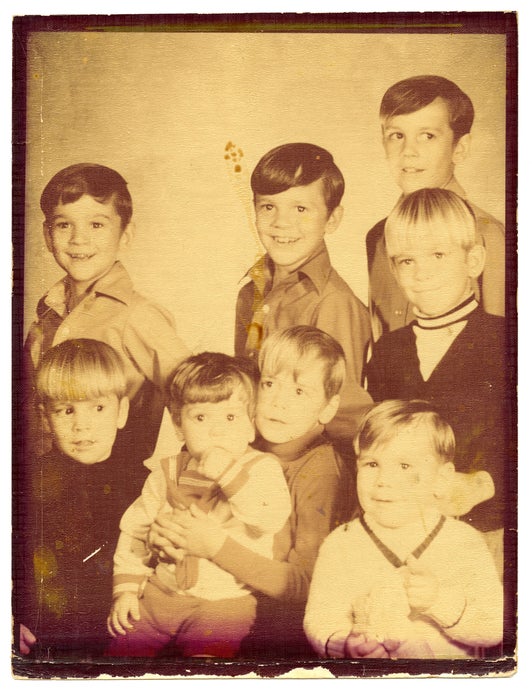
Imagine your grandmother telling an amazing story about how her family moved to a new city, or about how to cook a special dish whose recipe was passed down through generations. Now imagine that story might disappear forever because no one recorded it. That’s what happened to thousands of stories in Seattle—until small bookstores figured out how to turn ordinary children into real "memory detectives." And it all happened thanks to simple technology and kind hearts.
When big stores nearly beat the little ones
In the early 2000s, Seattle faced a real crisis. Huge online retailers (one of which, incidentally, was born in Seattle—Amazon) began selling books very cheaply and delivering them straight to people’s homes. People stopped visiting the small cozy bookstores where shopkeepers knew every customer by name and could recommend the perfect book. One by one those shops closed.
Independent bookstore owners in Seattle faced a difficult choice: give up or come up with something special. They chose the latter. They realized they couldn’t beat the big companies at their game—selling cheaply and quickly. But they could do what big companies couldn’t: preserve the stories of their neighborhood, their neighbors, their city.
One of Seattle’s best-known bookstores, Elliott Bay Book Company, came up with an incredible idea. They installed special scanners—smart machines that could turn old yellowed pages, photographs and handwritten notes into digital files. But most importantly, they invited children from nearby schools to become “keepers of memory.”
How the bookstore detectives worked
The program had a simple name: "Stories of Our Home." Every Saturday children came to the bookstore with treasures they found at home: old photo albums from grandparents, yellowed letters, notebooks with recipes, diaries. Shop staff taught the kids how to carefully scan these documents, then helped turn them into small books.
A ten-year-old girl named May brought her great-grandmother’s old notebook; she had come to Seattle from China in the 1920s. The notebook contained recipes, but not just recipes—each one included little stories. For example, a noodle soup recipe was accompanied by a tale of how she made it on the first snowy day in Seattle when she missed home terribly. May scanned every page, and the bookstore helped her create a small book. Now that book is in the local library, and anyone can read May’s family story.
Another boy, Jacob, found a box of letters his grandfather wrote from the army. His grandfather was a member of the Duwamish tribe—the very people after whom a river in Seattle is named. In the letters he described how his tribe lived on this land long before the city existed. These stories had never been included in history textbooks. Thanks to Jacob and the bookstore, they are now available to everyone.
Technology with a human face
The bookstore owners used fairly simple technology—scanners and computer programs for creating books. But they applied it in an unusual way. Instead of merely selling books, they helped create new ones. Instead of competing with large online retailers, they did what those companies never could—collect the real stories of people in their neighborhood.
Interestingly, the idea spread to other independent bookstores in Seattle. Third Place Books created a "Wall of Forgotten Voices"—a special shelf holding books produced by local families. Queen Anne Book Company launched an "Immigrant Stories" project where children helped their parents and grandparents record stories about moving to America in their native languages—Russian, Vietnamese, Spanish, Somali.
A girl named Anna, whose family came from Russia, helped her grandmother record memories of life in Siberia. The grandmother spoke in Russian, Anna translated to English, and together they created a bilingual book. Now Anna’s younger siblings can read their grandmother’s stories in both languages.
What happened next
The "Stories of Our Home" program and similar projects helped Seattle’s independent bookstores do more than survive—they became more important than ever. People realized a bookstore is not just a place to buy books. It’s a place where a neighborhood’s memory is kept, where neighbors meet, where children learn to cherish their family stories.
By 2015 more than 500 children had taken part in these projects. They created over 300 small books of family stories. Many of those stories told of people not mentioned in ordinary textbooks: women fishermen, the workers who built Seattle’s first homes, musicians who played jazz in small clubs, chefs who opened the first Chinese and Japanese restaurants.
I think the most remarkable thing about this story is how simple technology (a scanner!) in the hands of kind people can do something truly magical. The bookstores didn’t try to become as big and fast as Amazon. Instead they became something entirely different—keepers of memory, bridges between generations, places where technology serves human stories.
A lesson for all of us
The story of Seattle’s bookstores teaches an important lesson: sometimes the smartest way to face a big problem is not to try to beat it at its own game, but to find the special thing only you can do. Big online retailers could sell millions of books, but they couldn’t sit beside a ten-year-old girl and help her scan her great-grandmother’s recipes. They couldn’t create a place where children become keepers of their family’s memory.
Today, when you hear your grandmother’s or grandfather’s stories, think: what if those stories disappear? What if in a hundred years no one knows how ordinary people lived in our time? Seattle’s bookstores showed that anyone can preserve those stories—you only need attention, care, and a bit of technology used with a kind heart.
And you know what? Many of the children who scanned their grandmothers’ notebooks and grandfathers’ letters are now parents themselves. They bring their children to the same bookstores to continue this beautiful tradition—preserving voices that otherwise might be forgotten forever.